
“I did notice the beauty of Hong Kong at night. But it doesn’t last.”

Drake’s rating: Yes, I do own a Mark coat
Drake’s review: Action movies were undergoing a change in the 1990s. The ‘80s had redefined the genre, and action stars became a bankable reliability at the box office. Arnold Schwarzenegger was at the top of the heap, of course, and had boomed into the new decade with Total Recall and Terminator 2: Judgment Day.
But in 1993, Arnold had a big screen fumble with The Last Action Hero, an overstuffed action/comedy that reveled in its excess and, instead of entertaining audiences, left them exhausted by the ridiculous amount of promotional hype and bemused by the unruly mess that spewed out onto theater screens across the globe. And the problem was not confined to Schwarzenegger: Sylvester Stallone hit a career low point with 1992’s Stop! Or My Mom Will Shoot and Bruce Willis had a similar cinematic misfire a year earlier with Hudson Hawk.
Of course, all of those actors continued to have success over the ensuing decades, but those early ‘90s failures showcased the fact that they were no longer bulletproof at the box office. Times change and so do the movies. But while these would-be blockbusters were floundering, action movie fans were taking note of a cinematic industry over 7,000 miles away, with filmmakers who were turning out hi-octane, adrenaline-fueled flicks that were a veritable antithesis to the big-budget Hollywood efforts. Hong Kong cinema was making its presence known, and the fans were there for it.
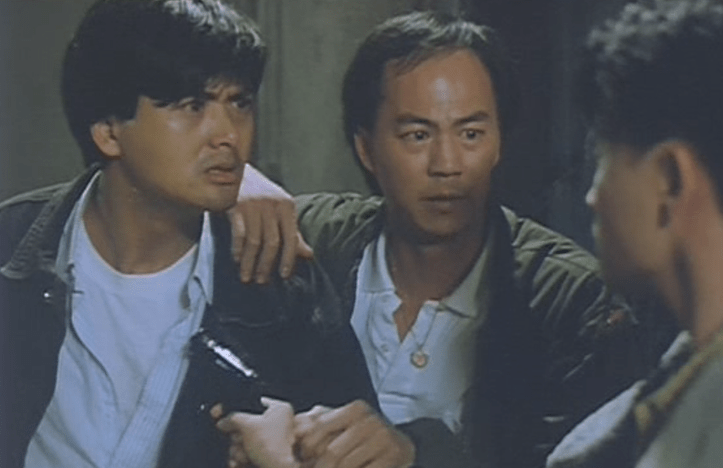
Now you’ll note, of course, that the movie I’m reviewing is from 1986, yet here I am opening my meanderings talking about action flicks from the 1990s. And you’re no doubt thinking, “Welp, Drake’s finally lost it!” And you might be right. But in my defense, Hong Kong movies weren’t readily available in the U.S. in the 1980s, especially in a subtitled or dubbed format. They finally began to trickle into the States in the early ‘90s, making their way onto VHS and into video stores. It was here where a casual browser might spot titles like The Killer or Bullet in the Head, rent them on a Friday night, and then spend the rest of the weekend watching them because, late fees be damned, these movies were beyond awesome!
And while Hong Kong action cinema was being discovered by American fans as the new decade dawned, it all kicked off a few years earlier with A Better Tomorrow.
Things are looking bright for Sung Tse-Ho (Lung Ti) and his longtime friend and enforcer Mark (Chow Yun-fat). Running a thriving counterfeit business for a Hong Kong triad, Ho nevertheless promises his ill father that he will leave his criminal ways behind. He’s getting weary of the life in any event, and tired of lying to his brother Kit (Leslie Cheung, A Chinese Ghost Story), who is on his way to becoming a policeman. Things go wrong when Ho goes to Taiwan for one last deal, however. Betrayed by an unknown party, the police close in on Ho and his protege Shing (Waise Lee, then going by Lee Chi Hung). Ho lets himself be captured, giving time for the young Shing to escape.
The fallout is immediate. The triad, fearful that Ho may turn on them, send a thug to kidnap his father. The kidnapping turns violent and, despite the best efforts of Kit and his girlfriend Jackie (Emily Chu), the older man is killed. Meanwhile, furious at the gang boss who let his friend get captured, Mark goes to the restaurant where the man is celebrating with his underlings and, in the first display of John Woo’s particular brand of stylized violence, pulls out a pair of pistols and kills every gangster there.
Three years later, Ho is released from prison. He finds a brother that now hates him and resents him for his father’s death, while Mark is reduced to menial jobs for the triad thanks to having his knee shattered by a pair of bullets in the restaurant gunfight. Most shocking of all, Shing has taken Ho’s place in the triad. Shing wants Ho to come back, since Ho still has contacts that the younger man lacks. When Ho resists, he’s put in a vise between his old criminal life and the constant pressure of Kit and another police inspector, who suspect Ho of going back to the triad. And then there’s Mark, who hates his current circumstances and wants nothing more than the opportunity to have one last chance to prove he’s still the best. It all comes to an incredibly violent conclusion where hundreds of bullets fly, fuel barrels explode into massive balls of fire and men fly through the air under the furious assault of a John Woo action scene.
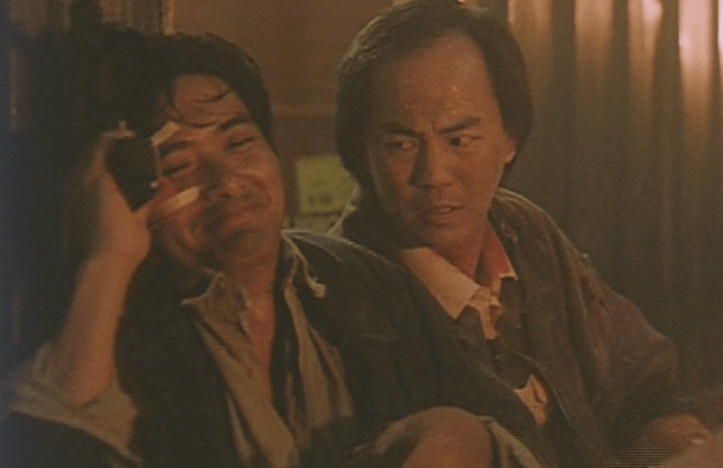
A gangster film centered around the themes of brotherhood, betrayal, and the duality of cops & robbers (subjects the director would return to time and again), A Better Tomorrow was a breakthrough picture for both director John Woo and star Chow Yun-fat. Woo had long been a director of martial arts movies as well as comedies, while Chow was a noted television star whose film career until that point was lackluster at best. Both men were looking for something that would elevate their careers, and in A Better Tomorrow they found it. A low-budget film released with little fanfare*, A Better Tomorrow exploded across the Hong Kong landscape, broke box office records and gave birth to the “gun fu” genre that remains popular to this day.
Although Hong Kong’s effect on Hollywood was not instantaneous, it was pervasive. While various Hong Kong stars made the trek to the United States with varying levels of success, it was the movies themselves that awed action fans and influenced young filmmakers. Robert Rodriguez, Quentin Tarantino, and Lana & Lilly Wachowski all wore these influences on their sleeves as the ‘90s progressed**, and their films turned a very staid Hollywood on its head. While it’s certainly raw and rough around the edges, A Better Tomorrow kicked off an exciting time in action cinema. So go on, grab a black longcoat, put on a pair of cool shades and settle in for a film that leans into wrenching melodramatics one moment, and then unleashes the carnage with a pair of Berettas the next.
*As opposed to The Last Action Hero, which spent $500,000 to advertise on the side of a rocket. No, I have no idea what they were thinking, either.
**More recently, Chad Stahelski’s John Wick literally channels the energy that fueled the Hong Kong action films, and Wick himself is very much an anti-hero in the Chow Yun-fat mold.
Intermission!
- The black longcoat that Mark wears became such a popular style with young men in Hong Kong that it came to be known as the “Mark Coat.”
- While the American release of the film is titled A Better Tomorrow, the original title translates as “True Colors of a Hero.”
- Lung Ti had had a lengthy career in films before starring in A Better Tomorrow, and was a regular fixture in Cheh Chang’s martial arts films.
- John Woo himself appears in the film, as Inspector Wu, the policeman putting pressure on Ho.
- Co-producer Hark Tsui, who was a director himself, also appears in a cameo as a music judge when Jackie has a disastrous cello audition.

