There was about a decade where something incredibly interesting happened to the superhero genre. Sandwiched between what I’ll call the “Batman era” of the ’90s and the explosive beginning (well, sort of, but more on that later) of the MCU with Iron Man in 2008, we got 10 years where superhero movies were gaining in popularity and budget but were also all over the place.
Since we’ve covered a heck of a lot of these interesting oddities and genuine blockbusters on the site, I thought it’d be interesting to go year by year from 1998 to 2008 to see how this genre developed. And it all really started with…
1998
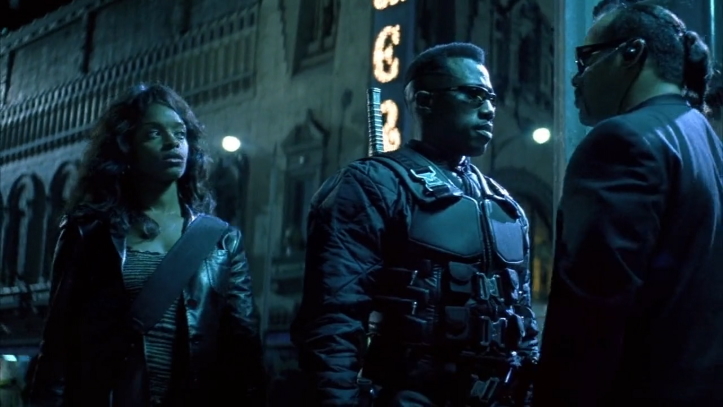
…Blade. I feel that Blade is not remembered and recognized enough for its monumental achievement in (a) bringing about the modern era of the superhero movie that could be dark, edgy, and cool as anything, and (b) putting a black character in the lead role — something that would take the MCU a lot, lot longer to do. Blade made an impressive $130M for being a largely unknown IP about a half-vampire superhero that went hard-R. The dark leather outfits (adhering to the ’90s Cool aesthetic), industrial-techno soundtrack, and generally well-made action made people sit up and take these kinds of movies far more seriously instead of seeing them as cheap Batman knock-offs.
Blade was a pioneer, but it would take a while for the industry to catch up. In the meanwhile, the rest of the year only saw a few small entries: Jim Lee’s Gen¹³ (which Disney shelved), Nick Fury: Agent of SHIELD (which the MCU would love you to ignore), and the animated Batman & Mr. Freeze. The ’90s belonged to Batman, but that was about to change in a couple years.

1999
And while 1999 was one of the most significant years for cinema in a lot of ways, the industry was still, by and large, ignoring superheroes. The one notable exception was more like a joke — but a well-told joke — with Mystery Men. It was probably too soon to start lampooning the very genre that still existed out on the fringe, but those of us who sought it out found a lot of laughs in this group of weirdos with questionable powers. I mean, the lead guy gets really angry and his best friend shovels (well). It became a tidy little cult film, but its existence showed that the system was still mocking superhero movies as silly fluff.
2000
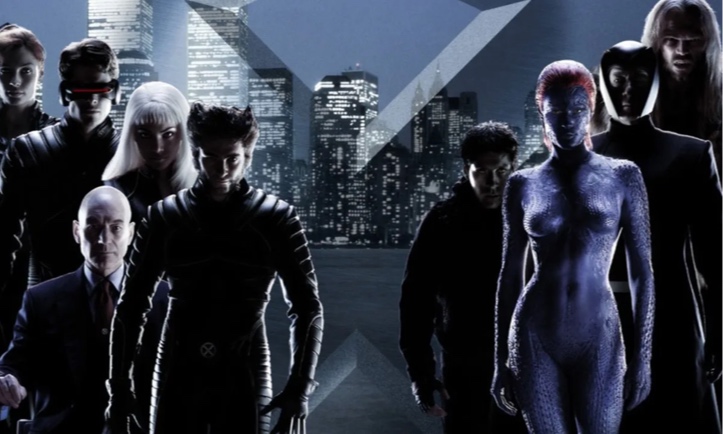
And then came along a little film called X-Men that proved that Blade wasn’t a one-off oddity. Bryan Singer’s adaptation of the popular Marvel comic books might seem a little toned down and quaint today, but it was a revelation to moviegoing audiences in 2000. It did the comics right with superb casting (Hugh Jackman’s Wolverine became a breakout hit) and a sliiiiightly more realistic attitude with a focus on the humanity and struggles of these characters. It was a smash hit at the box office, taking in nearly $300 million that summer, and suddenly superheroes on the big screen were the coolest thing ever.
Was there any other movement in this sector that year? Just a couple of outliers, including James Gunn’s very first superhero flick The Specials and the only Batman Beyond movie to date, Return of the Joker.
2001
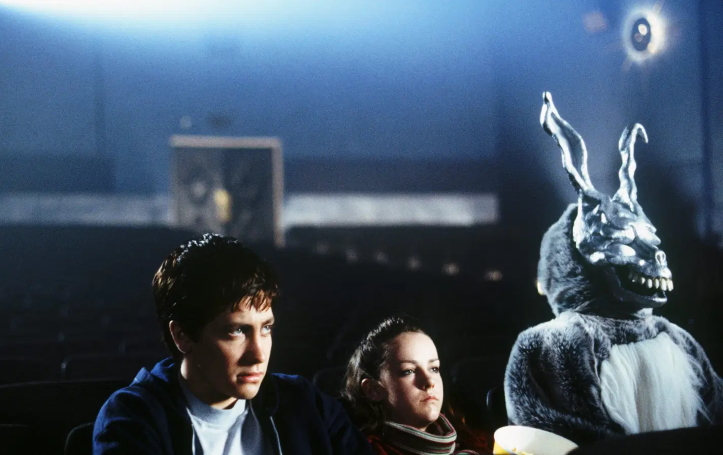
Don’t let the relative quiet of 2001 fool you — Hollywood was fast-tracking all kinds of superhero projects, but those took time and money to make. While all that was brewing in the background, we fans simply talked about how awesome X-Men was and whether or not Donnie Darko counted as a superhero flick. I say it does. Fight me.

2002
Proving that superhero movies could be colorful and relatable, Spider-Man swung into our lives and floored us to the tune of $826 million. Sam Raimi knew the comics well, Toby Maguire was a great fit for Peter Parker, and the CGI was… well, let’s just be glad it was fast so that we weren’t questioning it too much. A couple years into the new millennium, and we had the start of two huge film franchises in the superhero space. On top of that, Blade II proved to be a very respectable follow-up ($155M), and the Powerpuff Girls made a movie. Yes, that counts.

2003
Remember how I said there was that lull after 2000 when the studios were revving up scores of superhero projects? This was the year that the first wave of those crashed onto the scene, for better and for worse. Hulk ($245M) was a middling first take on the famous green dude, Daredevil ($180M) saw Ben Affleck suiting up as a superhero for the first time, The League of Extraordinary Gentlemen ($179M) ended up being a critical flop, Underworld ($95M) proved to be a sleeper hit, and Batman: Mystery of the Batwoman kept the animated saga going. But who are we kidding? There’s no doubt that 2003 belonged to X2 all the way, as the series peaked early and raked in $407M. So yeah, we got one really great film there, but the flood of stinkers showed that Hollywood didn’t fully understand this genre.

2004
Oh baby, the superhero race so on by this point, and we were getting sprayed with every type and level of quality. Definitely the best thing to come out of 2004 was Spider-Man 2 ($797M), which gave us Doc Oc and a terrific storyline for Peter Parker, although Pixar’s The Incredibles ($631M) was the Fantastic Four movie we always wanted and Hellboy ($99M) ended up being surprisingly solid. On the flip side of all of that was the extreme disappointment of Blade Trinity (hey look at that, Ryan Reynolds wants to be in a superhero movie!), the muddled PG-13 mess of The Punisher, the not-technically-connected-to-the-Batman-IP Catwoman, and whatever the infantile hell that Superbabies was trying to be.
I feel compelled to point out that while we had some sidequels and sequels, there weren’t any connected universes as of yet; these were all self-contained tales. Hulk and Punisher weren’t going to team up, as interesting of a thought that may be.

2005
After being out of the live-action scene since 1997, the Dark Knight returned for a reboot with Christopher Nolan’s excellent Batman Begins. While it only made $375M, the decent box office and strong critical success ensured that we’d be getting a sequel. In the meantime, Fantastic Four ($333M) was a popular if shaky debut for Marvel’s first family, Constantine proved to be a popular outing to hell at $$230M, the superhero comedy Sky High made $87M, and Daredevil spin-off Elektra bombed hard at $57M. Oh, and there was Man-Thing, but I’m the only person who remembers that film. It was weird.
2006
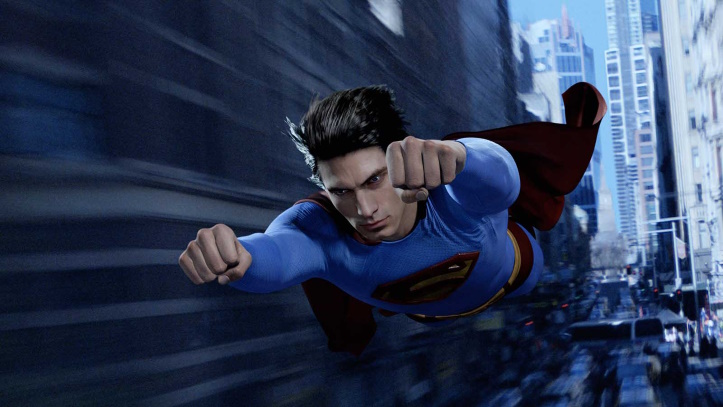
It was the Man of Steel’s turn at bat to be the year’s tentpole superhero movie, and while Superman Returns pulled in an OK $391M, nobody was that impressed with it. Maybe don’t fight Lex Luthor for the hundredth time? Try a different villain? More disappointing sequels emerged this year, including Underworld Evolution ($113M) and the brutally bad but popular X-Men: The Last Stand ($430M, while we also got a few animated flicks such as Hellboy: Sword of Storms and Ultimate Avengers.

2007
Looking back at 2007, it kind of feels like the film industry was taking a judicial pause before going all-in on superhero movies for the rest of the universe’s existence. Spider-Man 3 definitely was the major tentpole of the year, bringing in $895M despite it stumbling in several ways and effectively ending the Sam Raimi trilogy. Fantastic Four: Rise of the Silver Surfer ($301M) wasn’t a slouch either, but it also marked the end of that series’ run. And then there were a few oddities, including the surprisingly successful Ghost Rider ($229M), the strange one-off TMNT computer animated flick, and another Hellboy cartoon.
2008
And then we come to that landmark year for superhero movies, 2008. Yes, Iron Man ($585M) was a smash hit and got the MCU off to the races, but it wasn’t the only heavy-hitter during this period. The Incredible Hulk came out a month later to make $295M, but it is largely forgotten by the Marvel crowd today, probably because of the replacement of Edward Norton. DC hit back with its legendary Dark Knight (the first $1 billion superhero movie), so it wasn’t that Marvel had no competition.
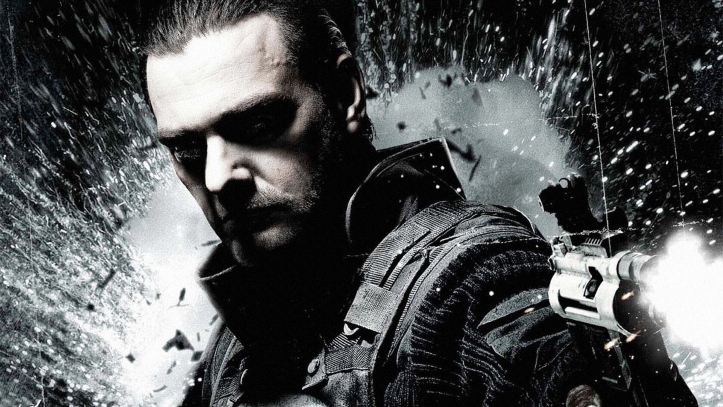
Punisher: War Zone was a certified bomb ($10M) as was The Spirit ($38M), Jumper ($225M) was a cool idea that could’ve been a franchise but wasn’t, Hellboy II: The Golden Army underperformed at $168M, and a couple of animated flicks were released with Batman: Gotham Knight and Justice League: The New Frontier. There was also a spate of flicks that aimed to deconstruct or lampoon this growing genre with Superhero Movie and Hancock.
And there we go! Eleven years that took us from Blade to Iron Man, and the industry hasn’t been the same since.

