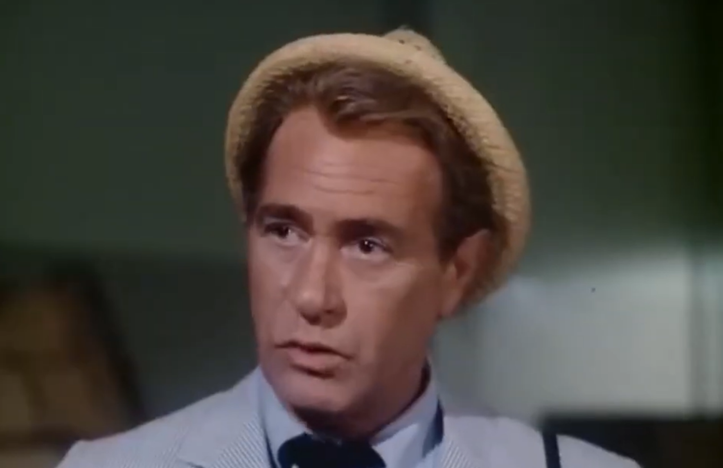
Grab a mug o’ mystery and sit down with Drake and Sitting Duck as they revisit Kolchak: The Night Stalker — and its outsized influence on the cult genre to follow!
Sitting Duck: I didn’t watch Kolchak back when it originally aired on account of not having been born yet. I first became aware of the title through a video catalog (I’m thinking maybe Columbia House) in which it was listed. What caught my eye at the time was the fuzzy image of what was probably a fuzzy VHS cover with a red-tinted Darren McGavin. At the time, it struck me that he sort of resembled Sylvester McCoy as the Seventh Doctor.
I would then go on to hear about its influences on other productions (particularly The X-Files). When I discovered the now defunct TV Shows on DVD web site, I signed up to receive a notification for any Kolchak news. Once the DVD set was released, I added it to my Netflix queue. Since I enjoyed it, I purchased my own set. Alas it came out at a time when Universal was using double-sided disks on their television releases (they also did that with the rebooted Battlestar Galactica miniseries, Season One of The Munsters, and American Gothic).
Drake: Admittedly, I was old enough to watch Kolchak: The Night Stalker when it popped up on ABC on a dark and stormy Friday the 13th. My mother was a fan of Darren McGavin and so we caught that first episode and we were both hooked. It was initially a late-night show (10 pm), but my parents were already realizing that this particular young Mutant was a night owl, and any talk of a normal bedtime was met with blank stares (on my end) and sighs of defeat (on theirs).
I can safely say that it was unlike anything else on TV at the time. Sci-fi was still a network staple in one form or another, with shows like The Six Million Dollar Man rolling right along, but horror was another matter. But with horror films having huge theatrical hits in the era, it isn’t surprising in retrospect that a shot was going to be taken by one of the networks to capitalize on those successes.
Sitting Duck: Not just the theaters. If you check out Mary Jo Pehl’s Movie Jo Night channel, you can see that she’s been on a Seventies horror TV movie kick for some time. It’s certainly not like she’s hurting for material. Gargoyles, Don’t Be Afraid of the Dark, Satan’s Triangle, Moon of the Wolf, Devil Dog: Hound of Hell. And that’s just a taste of what the networks were cranking out at the time. But the thing about horror stories is that they tend to be one shots. That works fine for anthology shows like Night Gallery. But it’s trickier if you want a series with recurring characters.
Drake: Oh, sure, the networks were desperate to stay relevant in the Seventies and were perfectly willing to follow the theatrical trends. But that desperation meant that they were also willing to take some swings that they might not have in a safer environment, so quite a few of those movies turned out to be pretty good.
And that desperate energy does find its way into the original TV movie of The Night Stalker. I think producer Dan Curtis (of Dark Shadows fame) really had his finger on the pulse of the TV horror of the time.
Sitting Duck: Also involved in the TV movie was writer Richard Matheson, who among other things wrote four of Roger Corman’s Poe films.
I saw the TV movies after I had gone through the TV series. So my perspective was probably different from someone going in completely blind. I was struck by how in the first movie, Kolchak didn’t always wear his signature white seersucker suit. He also apparently had an apartment (for all we knew in the TV series his yellow Ford Mustang could have been his home). But most jarring was how he initially believes the vampire is a deluded guy who just thinks he’s a vampire. Rather than immediately latching onto the supernatural explanation.
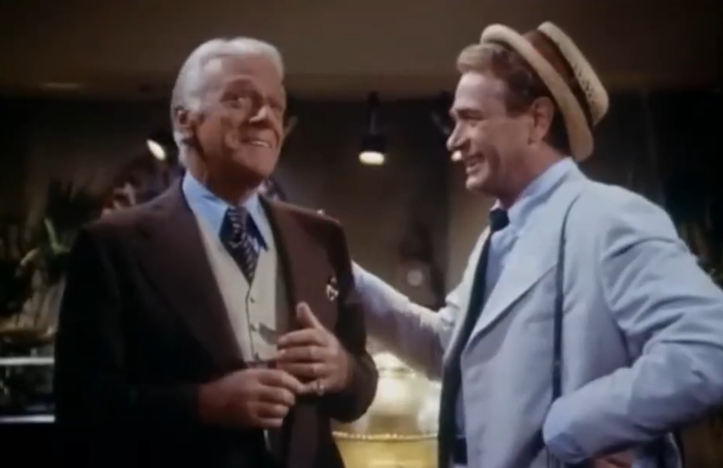
Drake: I recall seeing the movies after I saw the series, so it was interesting to see the “secret origin” of Kolchak, so to speak. I appreciated the fact that they went with an Eastern European vampire, but did not make him Dracula. The character of Dracula had been done over and over by that point over at Hammer, and Skorzeny had some real menace to him. Barry Atwater was very good in the role, and not having it be Dracula meant that he didn’t have to compete with Christopher Lee’s interpretation of that character, which was the prevailing one of the time.
Sitting Duck: The Night Strangler stands out in how it makes use of its setting, with much of the narrative centered around the Seattle Underground. In reacquainting myself with this movie, I now recognize the female lead as Jo Ann Pflug. Through binging episodes of Seventies Match Game, I’ve come to know her as one of the more frequent occupants of the Pretty Girl Seat (the one to Richard Dawson’s right).
Drake: Jo Ann Pflug was fun! I remember her most from the movie M*A*S*H, but she would pop up here and there in movies and TV. I’m from the Pacific Northwest (although not Seattle), and quite a few people still thought the Seattle Underground was something that was just made up for the movie. I was like, “No, that actually exists!”
I think the big surprise for me as a kid was seeing The Six Million Dollar Man’s own Oscar Goldman as the baddie. He was a likable actor, so seeing him as the villain was a fun surprise. He was good! The use of a flawed immortality potion was a great concept. It gave Kolchak the impetus to go digging around and find out about the murder sprees that happened right on cue every 21 years.
My wife, an amateur belly dancer when she saw the movie years ago, was less impressed by the killer’s choice of victims.
Sitting Duck: There were apparently plans for a third movie called The Night Killers set in Honolulu but it got nixed in favor of producing the TV series. Just as well. The plot sounds like a knockoff of The Human Duplicators, and I personally regard the more science fiction-oriented stories to be among the weaker episodes of the show. Though a novelization would be included in a Double Feature book published by Moonstone Books (more on them later), paired with a story on how Kolchak and Vincenzo came to end up working in Chicago.
Getting back to setting, the choice of Chicago for the TV series was inspired. The Windy City did and still does have a reputation for local politics that are more crooked than a tertiary road in Appalachia, along with a significant Mafia presence. Which makes it the perfect place for a hardnosed reporter like Kolchak to ply his trade, even if he may long for the prestige of New York City.
Drake: Oh, I loved Chicago as a setting because it was different. The exterior shots looked unique compared to shows shot in L.A., and that certainly gave Kolchak a unique visual appeal. You could also have seasons there, unlike Los Angeles, which becomes a plot point when Kolchak is eager to escape the snow in one episode.
Sitting Duck: On the matter of the characters, Kolchak could be seen as a sort of reporter ideal of the Seventies. He seeks to publicize the truth, regardless of how bizarre it may sound or who it might inconvenience or embarrass. The sort who sticks to his guns in the face of ridicule and slander from those above him in the power structure.
Meanwhile, it can be easy to dismiss Vincenzo as a simple killjoy. But that’s not entirely fair. A more charitable interpretation (which gets hinted at in “The Devil’s Platform”) is that he’s just as interested in getting to the bottom of a potential news story as Kolchak. However, he requires them to be supported by verifiable facts. And Kolchak’s evidence has a tendency to get confiscated or destroyed or turned into goo or otherwise be insufficient, leaving nothing but an insane-sounding account.
Drake: Well, casting Simon Oakland was always a great decision. He was great at playing “gruff but sincere” and he and McGavin were fun to watch together. I think the writers were pretty fair with Vincenzo. He could have been played off as nothing more than Kolchak’s foil, but like you said, he was driven to find the story as well. He just wasn’t the one coming face-to-face with vampires and werewolves.
And I should mention that, in “The Werewolf,” the episode I mentioned where Kolchak wants to get out of the snow, it was actually Vincenzo who had the ticket to go on a cruise. A singles cruise. I’m not sure what sort of pick-up line Vincenzo would have used, but we’re spared from finding out when he gets audited and has to stay in Chicago, and Kolchak goes on the trip.
Sitting Duck: Vincenzo also had what you think would have been his catchphrase, “Kolchak, come back here!” But to my recollection, he only used it twice. The first was in “The Ripper” when Kolchak storms out after getting fed up with his new assignment of writing an advice column. The other I believe (though I’m not fully sure) was “Firefall”, when Vincenzo finds out that Kolchak had purchased some specialty film on the company dime.
Let’s turn to the actual episodes and which ones really stick out to us. My first choice might surprise you after my disparaging remarks about the more science fiction oriented episodes. However, “They Have Been, They Are, They Will Be…” is very different from the intended storyline of the canceled Night Killers TV movie. The space alien here isn’t a precursor to a full invasion. Instead, it got lost and had a breakdown. So it does what many of us would do in a similar situation. Stops to fix the problem, get a road map, have a bite to eat and go on its way. It’s vaguely Lovecraftian in its depiction of its indifference to the lives of the humans it disrupts, regarding them much how humans might regard ants, at worst an annoyance. And speaking of Lovecraft, the description of the landing site after it left brings to mind the blasted heath in “The Colour Out of Space.”
Though the truly insane part of this episode is the idea that there would be a World Series matchup between the Cubs and the Red Sox back in the Seventies.
Drake: Well, I mean, I can’t avoid mentioning “Chopper,” since it dealt with a decapitated biker coming back from the dead to avenge himself on his killers. It was not at all my introduction to biker flicks (or bikers, for that matter) but I enjoyed the concept and the updating of the Headless Horseman to the modern day. Of the Seventies. Hmm. Moving on…
Sitting Duck: “Chopper” is a solid episode, though hampered by how difficult it is to do a convincing headless person, especially on a Seventies television budget. And perhaps Larry Linville might have started to worry about getting typecast. While this may or may not have been the first instance of a biker spin on the headless horseman, it is far from the last. The one that immediately comes to mind is the light novel and anime series Durarara, in which the main character is a motorcycle-riding Dullahan (one of the earlier takes on the headless horseman concept) that operates in Tokyo’s Ikebukuro district.
Drake: Speaking of biker flicks, the undisputed king of that genre, William Smith, shows up as Jim Elkhorn in “The Energy Eater.” The episode probably plays a bit loose with its depiction of Native American mythology, although Kolchak and Elkhorn do learn that the spirit they’re tracking down is even more ancient than they first believed. This one goes on my must-watch list due to the presence of Smith alone, but as a bonus he gets to speak a little French, one of the half-dozen languages he was fluent in.
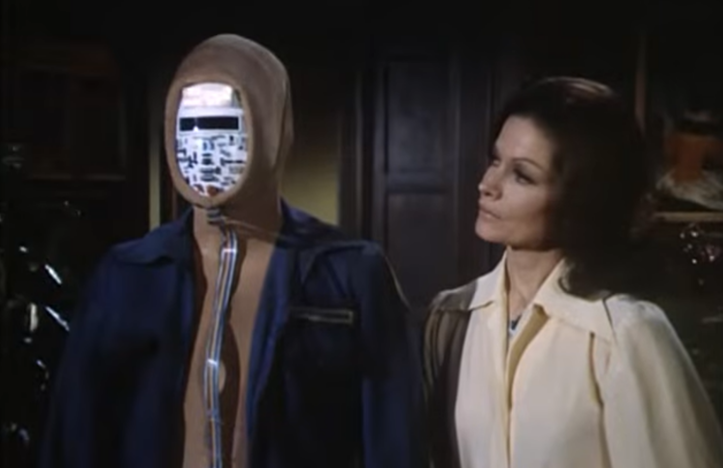
And in a last bit of biker flick trivia, the episode “Mr. R.I.N.G.” featured an android that was played by Craig Baxley, who would go on to direct that cinematic masterpiece known as Stone Cold. Granted, it was not a great episode, but I’m never going to pass up the opportunity to mention Stone Cold.
Sitting Duck: Glad to know I’m not the only one who thinks “Mr. R.I.N.G.” blows. Though a point of interest, the name Terrell Institute is suspiciously similar to a certain other android manufacturing organization.
Drake: “Mr. R.I.N.G.” was not one of the high points of the series, but honestly the show had a pretty strong run over all.
Sitting Duck: Now for the episode with the highest ranking on IMDB at the time I write this at 8.4 out of 10, “Horror in the Heights”. First off, it was written by Hammer legend Jimmy Sangster. So right there it has some serious horror cred. The rakshasha is an interesting monster, a human flesh-eating shapeshifter that lures in its prey by appearing as the person the victim trusts most. And the one person who knows how to deal with the threat unintentionally gives the neighborhood’s elderly Jewish population plenty of reason to distrust him. When Kolchak goes to face it while claiming he doesn’t trust anyone, that assertion is proven false when it appears to him as the spinster advice columnist Miss Cowles. The fact that this was the only instance where it talked could throw off viewers. I know it did for me when I first watched it.
Drake: “Horror in the Heights” was a good one. Kolchak playing the loner only to be shown that he does trust someone after all was a fun bit, and showed that he maybe didn’t know himself quite as well as he thought he did.
It’s too bad that the show only lasted that single season, but I do know that even Darren McGavin was feeling the stress of having to force in “the monster of the week.” The show could really have used an overarching metaplot to tie it together, but that was still some years off in the TV landscape.
Sitting Duck: Which is as good a time as any to talk about the shows it would influence. The obvious one as mentioned earlier was The X-Files, which Chris Carter attributes to inspiring about thirty percent of the show. But IMO the series that really adheres to the same formula (at least at first) is Supernatural. In fact, while much of the early concept was identical to what the show would eventually become (monster hunter travels across America in a muscle car), the protagonist was originally going to be a tabloid reporter instead of two brothers. Ultimately, I did not care for the direction it went and gave up about halfway through the fourth season.
Drake: Yeah, Supernatural didn’t draw me in either, but I put that down to seeing a plethora of horror movies and shows over the years. But to be fair, I think it’s probably a pretty decent gateway to horror for a lot of fans.
The “monster of the week” format is a fun idea, though again having a seasonal build really helps it from becoming too stale. Buffy the Vampire Slayer felt like they took that idea and ran with it. Even though the main threat was ostensibly vampires, the show made it clear early on that there were going to be a wide variety of threats. But they still had the “Big Bad” that was central to each season’s story.
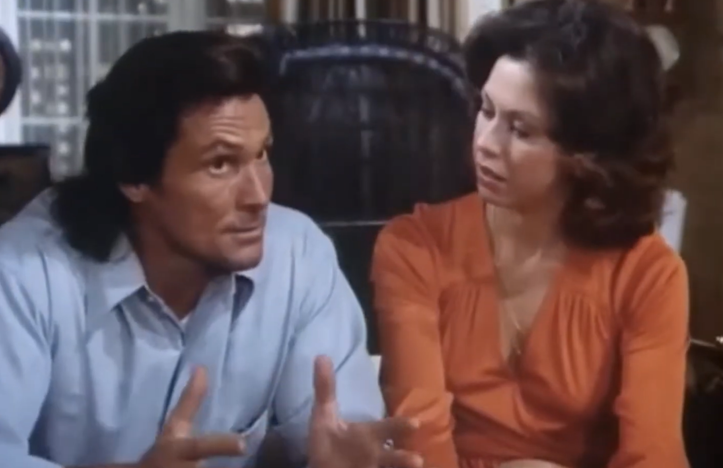
Sitting Duck: Since this feature won’t truly be complete if we don’t at least acknowledge it, I’m afraid we must confront the trauma that is the ill-conceived abomination known as the 2005 remake series (which incidentally premiered just a couple of weeks after Supernatural). How did it bite? With the aid of some notes I made Back in the Day when I rented the DVD set from Netflix, let me count the ways:
- While listening to the commentary track of the pilot episode, executive producer Frank Spotnitz was curiously insistent that he wasn’t trying to replicate The X-Files. Turns out The Producer Doth Protest Too Much. Because for all intents and purposes, it ended up being X-Files at a Newspaper.
- As if to double down on the X-Files mimicry, new character Perry Reed is introduced to function as Kolchak’s Scully. Which further serves to mute what supernatural trappings are featured.
- Vincenzo is demoted to a background character, a Grade A misstep if there ever was one. A significant element of the original show’s appeal was the contentious relationship between Kolchak and Vincenzo.
- Look, I get that Darren McGavin is a tough act to follow. So no matter who they cast, he would pale in comparison. But Stuart Townsend of Queen of the Danged? It’s almost as if they wanted viewers to hate him. Not that the character writing did him any favors, as every trait that makes Kolchak Kolchak has been gutted. Now it can be said that this version of Kolchak is being smarter by being more discrete about what he includes in his news stories. But the original’s quixotic drive to bring out the truth and damn the consequences is arguably one of his core character traits.
- No humor, something the Seventies version had in spades. Well maybe a bit, but it’s rather perfunctory. Certainly nothing on the level of, “Kolchak, my brother-in-law has a fourteen year old who he’s constantly bailing out of juvenile hall. But I have you, and you are worse!”
- Seventies Kolchak is notable for having some real pulse-pounding climaxes. Pouring salt into an inert zombie’s mouth and sewing it up when it could become active at any moment. Fumbling to reload a shotgun as a werewolf is lurking in the dark. Wading through the sewers to confront a bayou moss monster while armed with a makeshift gumwood spear that may or may not be effective. This is some really tense material. The best 2005 Kolchak has to offer is the occasional mildly creepy moment. That’s not going to cut it.
When all is said and done, the Sci Fi Channel series The Chronicle was more in the spirit of Kolchak than this. ABC cancelled it in the middle of a two-parter, which TV Guide had noted in their Cheers and Jeers column at the time as a Jeer. But TVG was in the wrong this time. Because sometimes shoddy treatment from the network suits is deserved.
Drake: Oof. I have to say, you’re braver than I am, my friend. The closest I ever got to watching an episode of the 2005 travesty was catching a single commercial, which was enough for me to nope right out of it right then and there. Just that brief glimpse told me that the tone was wrong, it was miscast and the producers knew nothing about Kolchak the character, much less Kolchak the series.
But I have to say, canceling it in the middle of a two-parter is just viciously hilarious. The series must have been drawing numbers so low that the execs just figured no one would even notice.
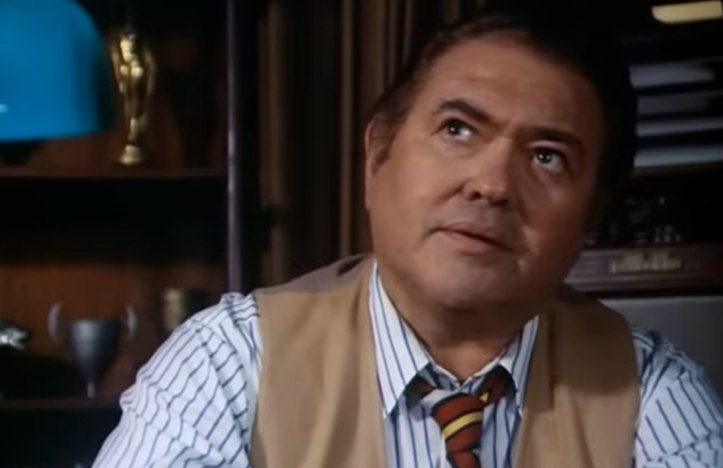
Sittin Duck: As mishandled remakes go, it doesn’t provoke in me the sort of rage I felt over the travesty that was Trigun: Stampede (something I have trouble stringing two coherent sentences about). But yeah, it was a pretty sad effort.
However, there have been other media outlets for Kolchak, and it’s largely thanks to Moonstone Books. If you’ve never heard of them, they’re a publishing company who handle vintage IPs, adapting them into short stories, novels, and comic books. Their primary genres are pulp (The Phantom, Buckaroo Banzai), noir (Pat Novak For Hire, Yours Truly, Johnny Dollar), westerns (The Lone Ranger, The Cisco Kid), and horror, the last of which included Kolchak.
My first Moonstone Kolchak was a comic book adaptation of an unproduced screenplay called “Get of Belial”, which features a surprising foray into folk horror. With a bit of tinkering, the basic premise could be a John the Balladeer story. In it, Kolchak has been assigned to cover a coal miner strike in West Virginia where a series of gruesome killings occur seemingly without rhyme or reason. Here’s a sample page featuring some back and forth between Kolchak and Vincenzo.
Drake: That’s some nice work, and it sounds true to the characters. I’m not familiar with the comics (or really anything past the series) but they do capture the feel of the characters.
I had to look up the artist, and it appears to be Gordon Purcell. He’s known for being able to accurately depict well-known characters and you can see why. With Kolchak especially you need an artist who can carry off a wide range of emotions and some subtle body language, and Purcell really does that well.
Sitting Duck: If there’s one thing I might fault Moonstone for in their handling of Kolchak, it’s how (aside from the unproduced screenplay adaptations) the setting is contemporary rather than vintage. Now there have been plenty of IPs that successfully make the transition from one decade to the next, from Batman to The Hardy Boys. But I’m not sure Kolchak is entirely suited for that sort of changeover.
Drake: They took Kolchak out of the Seventies? Sacrilege!
Sitting Duck: A bit strong there. Even so, it wasn’t really the best creative choice, though it wasn’t as obtrusive as it could have been.
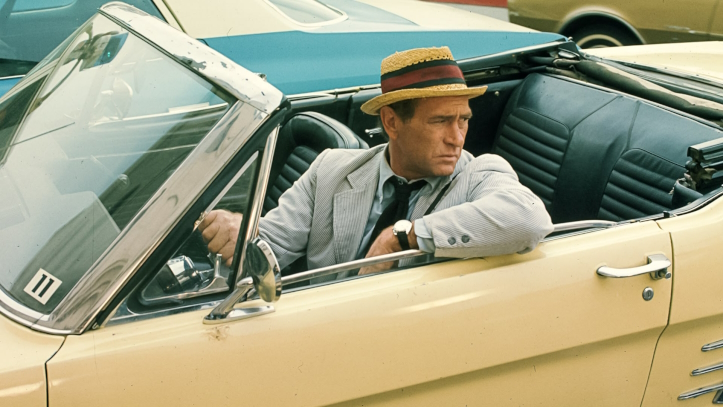
Drake: But, yeah, I don’t see Kolchak going online and Googling “Werewolf-related cruise ship deaths” or whatever. The character is very much a product of the Seventies, and removing him from that era diminishes the feel of the material.
Sitting Duck: To get what I’m talking about, consider The Shadow. A while back, I went on a Shadow kick, in particular checking out the comic books published by Dynamite Entertainment. Of particular note is how, like the 1994 movie, they all take place in this Thirties-esque neverwhen. Though with occasional forays into the Forties for wartime shenanigans. Because ultimately, The Shadow is just too anchored to the Thirties to gracefully make the shift to more modern times. And I believe Kolchak has a similar attachment to the Seventies.
Drake: I do have to say that, on the subject of The Shadow, writer/artist Howard Chaykin did a pretty great update of the characters to the Eighties in a mini-series back in the day. But that’s Chaykin. I wouldn’t trust anyone else to do it.
Sitting Duck: The chief issue with plunking Kolchak in a contemporary setting is that he is at heart a newspaperman. And nowadays newspapers are all but dead. Especially when it comes to local news. Which is a real handicap, since so many of Kolchak’s cases begin with or prominently feature dubious city government shenanigans.
Drake: Yeah, I think the concept has continued on in various forms, but the character is very much a product of his time. He’s tied to the newspaper, the office and Vincenzo, and removing or substantially altering those elements changes Kolchak to such a degree that you might as well create something new in any event.
And speaking of something new, I know Justin is anxiously awaiting my next review of one of those classic flicks from the Teen Agers series…
Sitting Duck: And with Halloween coming up, I should get back to the Writing Pits and finish those Stat Sheets for Dark Gathering. Because I’m pretty sure I’ll be seeing the business end of the Mutant Thwack Stick if I try to pass them as another Ghost Story for Christmas.
If you’re this deep into Kolchak, check out our idea of how this character would translate into an RPG game!

