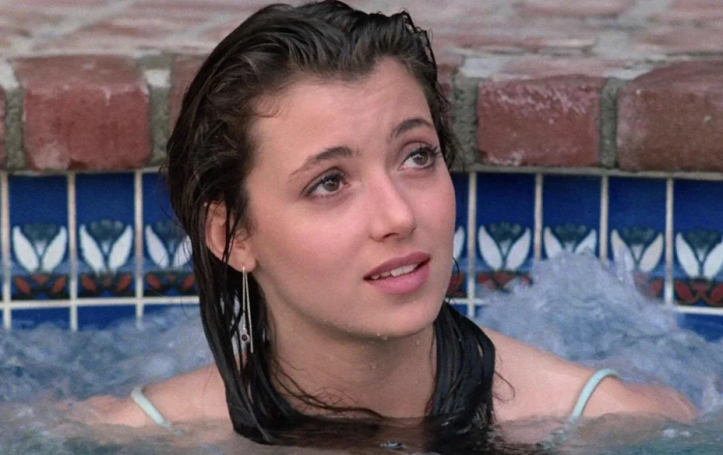
Ever pause to think, “Whatever happened to that actor who used to be all over the place?” Us too! This month, we asked the team to ruminate on popular actors who fell off the radar:
Anthony: I have to go with Mia Sara. I first “met” her back in 1986 when Ferris Bueller decided to skip school for a day, and I. Was. Smitten. I made a point of looking up her work until then, and I cannot praise enough her work in Legend. You need a bowling ball bag to carry the cojones it must’ve taken not lose your shit working alongside a demonic Tim Curry at the very top of his form. And then… poof.
Honestly, she’s been so absent of any screen this millennia, save for a few roles like having first brought Harley Quinn to live-action in the quickly-cancelled WB series Birds of Prey, that I almost forgot about her. And then she resurfaced in last year’s much talked about The Life of Chuck, and I. Was. Smitten. Ah-gain.
I know she’s a mom and I assume she put her career on the back burner to focus on family. I did that myself and I’m not nearly as famous or gorgeous as she is. But there’s an ache deep down inside that wishes to know if that’s all it was, and what might have been, had she decided to go for it and chase all those big roles that her contemporaries went for.
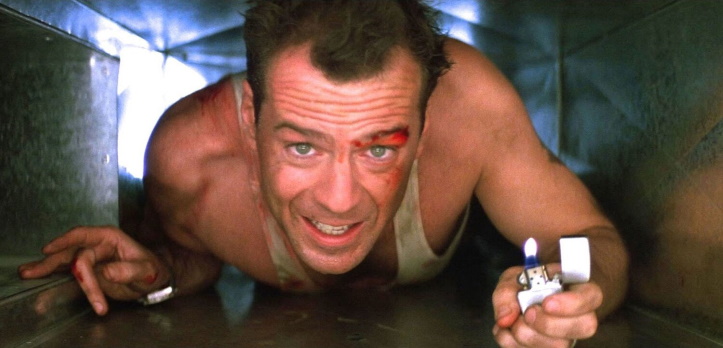
Justin: What’s always blown my mind is how huge Bruce Willis was in the ’90s and 2000s — mostly as an action star, but also for outliers like The Sixth Sense and Hudson Hawk — and how fast he slid into straight-to-video fare in the 2010s. Obviously, his declining health (aphasia, dementia) played a huge part in that, but there has to be more explanation as to the choice of terrible roles and the steep drop-off from being a headlining name to cameos that generated no buzz.
I’d say that 2012’s Looper might be his last really good role and his last good year. The next year, 2013, saw a slew of lackluster sequels — Die Hard 5, Red 2, GI Joe 2 as well as 2014’s Sin City 2 — that didn’t do his reputation any favors. After that, he started taking any generic action/scifi/crime flick that came his way. About the only notable role he took after that was reprising his Unbreakable character of David Dunn in 2016’s Split and 2019’s Glass. I haven’t watched these and can’t tell you if he was able to rise to the occasion and do that character justice. Honestly, I haven’t seen anything he’s done 2013.
I don’t really blame Bruce Willis for his choices, but it’s not the way you want to see one of your favorite actors wrap up his career by slumming it with so much forgettable garbage. If he had retired after 2012, would we really have missed out on anything significant?
Drake: This is kind of a loaded question, since a valid reply could be, “Well, all of them.” Because that’s just the nature of the movies. Actors become stars, have their run in the limelight, and then they’re replaced by new stars. Sure, some names are more or less legendary and outlive their careers, but they’re the exceptions. Take Charlie Chaplin, for instance. Everyone knows the name, but how many in a current audience have seen even one of his movies? More, he was not even the most popular comedy star of his era. That honor went to Harold Lloyd, whose films and character were so indicative of the culture of the 1920s that his star faded when the decade ended and the Depression era of the ‘30s began.
Chaplin’s name lived on, though, ingrained in popular culture like John Wayne, Marilyn Monroe, and a very few others. But most popular actors have a given period of time that they are in the public eye, and after that it’s on to smaller roles and/or smaller movies. Or doing psychic hotline commercials. Hey there, Billy Dee Williams! Could you ask Miss Cleo where I left my sunglasses…?
Buuuut… Since the Great Mutant Overlord has threatened to give me a big, fat INCOMPLETE on this assignment if I don’t throw out a name from this century, I’m just going to reach into my hat and pick one out at random. And let’s see, here, who have we got? Taylor Kitsch? Hmm. I’m not sure he was ever that popular. John Carter pretty well sealed his fate. Let me try again. Emilio Estevez? No, I said this century.
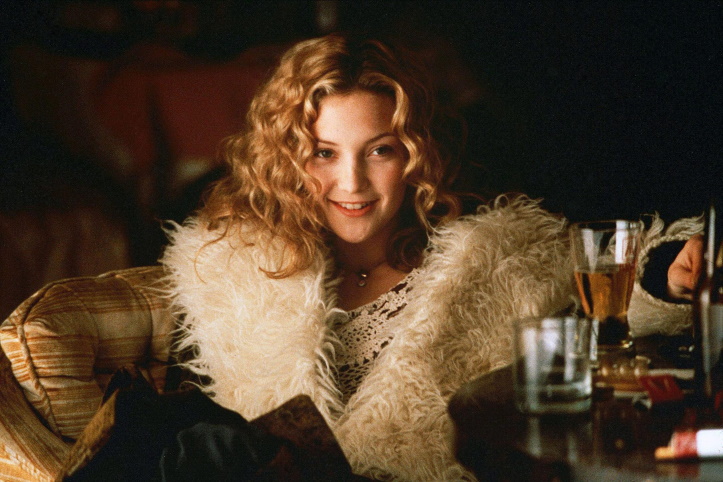
Oh, here we go! Kate Hudson. OK, Hudson is a pretty good example, really. She made a pop right off the bat with Almost Famous in 2000 and then co-starred with Matthew McConaughey in a few romantic comedies. She was a pretty big name for a few years and then just kind of disappeared. Obviously she’s still around, and doing a fair amount of TV as well as some film work from the look of it. But she kind of faded from the spotlight after a fairly short run and went from being nominated for an Academy award to appearing on some reality TV show called “The Voice.”
So, yeah, I have to admit to wondering just what the heck happened there.
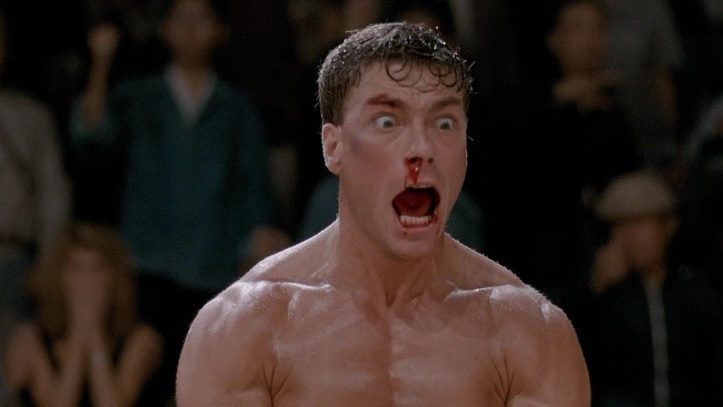
Josh: Let’s talk about Jean-Claude Van Damme, or JCVD for short. The “Muscles from Brussels” has been a staple in my household since I was a child. I thought he was a badass dude with a cool accent, and my mom thought he was “hot” and knew he never shied away from showing his bare ass on screen.
One of my strongest childhood memories is my mom holding her hands over my eyes any time an erotically charged scene was about to hit. Kickboxer, Sudden Death, Street Fighter, and (my favorite) Universal Soldier were regularly rotating through our VCR. Even though we watched plenty of Chuck Norris, Arnold Schwarzenegger, and Steven Seagal movies, in my heart I knew Van Damme could kick all their asses. He was always around.
As I got older and more interested in film, I started to realize these movies were just entertainment and did not set out to create a great story. Or, maybe they tried but never really came close. Not only did a lot of his movies have a shallow plot and characters that made decisions no normal person would make, the quality seemed to go down at a steady pace through the years.
In the late 90s and into the 2000s, JCVD’s movies had dropped off into the straight-to-video world where the ghost of Seagal’s career haunted the shelves. Around this time, I was also getting into Jackie Chan, Jet Li, Sammo Hung, and Bruce Lee movies and realized there were even better martial artists out there doing some really amazing things, both in action/stunts, and artistry in filmmaking.
Years later, when I was feeling nostalgic, I returned to the comfort of Van Damme’s muscly legs and let them embrace me. Wait, I mean I came back to watch some of the titles I hadn’t seen. I actually set out to watch every one of his movies and while I haven’t kept up with it, at the time I did just that. After 1994, there are a slew of unforgettable titles where the plots and characters with vaguely French sounding names are easily confused, but there are a few stand outs like 1997’s over-the-top Double Team where JCVD partners up with Dennis Rodman to battle Mickey Rourke and they blow up the Colosseum after fighting a tiger but are saved by a Coca-Cola machine. Ringo Lam’s In Hell from 2003 offers a good performance from a sullen Jean-Claude that is worth checking out.
It looks like when he was at his height he let the fame go to his head, and the drugs he was abusing at that time didn’t exactly lead him to make the best decisions. Van Damme is pretty open about his substance abuse and the havoc it caused in his personal and professional life. Since getting sober he has launched a series of different ventures including advocating for the ethical treatment of animals and safeguarding the environment. He has a strong relationship with his kids Bianca, Nicolas, and Kris who have all acted with him in newer films. And most recently he has started painting. Seriously, you can check them out on his website.
In the last 20 years, Jean-Claude Van Damme has made a bit of a comeback which, as a fan, warms my heart. It starts with 2008’s JCVD, which is an intimate film where Van Damme shows us a side of him that we’ve never seen. He gives a beautiful performance, bearing his soul and it really feels like he is talking directly to you, the fan.
From there he goes on to make some sequels to his more famous films and collaborates with others like Scott Adkins, Dolph Lundgren, and Sylvester Stallone. While I wouldn’t call most of his newer movies original or particularly good, it is nice to know he is still putting in steady work and making a living. Personally, I hope he does it until he is in his 90s!
Some later titles to check out:
- JCVD (2008) – The best performance of his career.
- Universal Soldier: Regeneration (2009) – The story makes no sense but there are some brutal fight scenes.
- The Expendables 2 (2012) – Van Damme finally fights Stallone!
- Welcome to the Jungle (2013) – Jean-Claude stars in his first comedy film. It’s okay.
- Jean-Claude Van Johnson (2016-17) – A short-lived action comedy series that was actually pretty good.
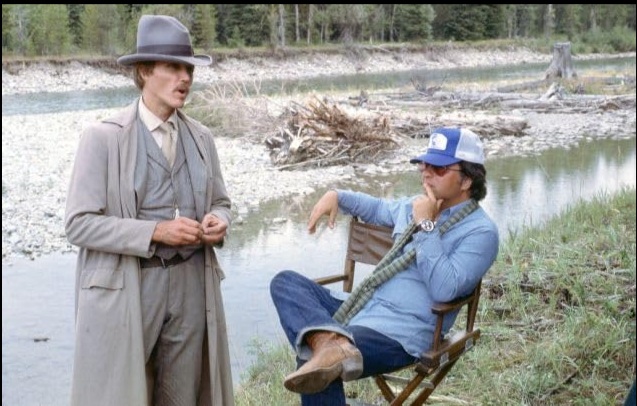
Sitting Duck: So several years ago, I purchased a copy of The Hollywood Hall of Shame by Harry and Michael Medved, which detailed the productions of several films that had featured epically bloated budgets (for their time) and inversely tiny box office receipts. And one of the most fascinating accounts involved Michael Cimino and his legendary failure Heaven’s Gate.
Cimino had an innocuous start in Tinseltown when he co-wrote Silent Running. Then he caught the eye of Clint Eastwood, for whom Cimino did some script doctoring on Magnum Force and then wrote and directed Thunderbolt and Lightfoot. However, the zenith of his career was The Deer Hunter. As a bit of foreshadowing, spending got a bit out of control, reaching nearly twice the original budget. But the box office performance was decent if not spectacular, so the backers let it slide. Cimino’s reputation was further enhanced when The Deer Hunter netted five Oscars, including the coveted Best Director and Best Picture.
His next big break came when United Artists experienced an identity crisis after several of their producers left over disputes regarding pay and creative control and went to form Orion. The new regime decided they needed something with their own stamp on it rather than just ride the coattails of the James Bond and Rocky franchises. Since Cimino was looking like the hot rising star, UA offered to back whatever passion project tickled his fancy.
That happened to be a screenplay that Cimino had been shopping around to various studios ever since he did Silent Running that dramatized an event from the early 1890s known as the Johnson County War. A significant reason for why Heaven’s Gate had remained untouched up to that point was that it was technically a western, and that genre had been falling out of favor throughout the 1970s. But UA greenlit it, possibly while telling themselves how The Deer Hunter hadn’t sounded promising on paper either.
However, the Oscar victory appeared to have gone to Cimino’s head. With no real supervision while on location, he went into Full Auteur Mode. Sets got torn down and rebuilt for barely perceivable flaws. The determination to get very specific lighting conditions for particular scenes often saw work on the film grind to a halt. There were a massive number of retakes for even the most trivial scenes (including a reported 52 takes of a guy cracking a whip). Little wonder that it went months overschedule with an end result of well over 200 hours of raw footage for the editing team to sort through and expenditures that totaled up to about quadruple the original budget. Meanwhile, UA suits ground their teeth while reminding themselves that The Deer Hunter also went overbudget.
The New York premiere was such a disaster that the film got pulled after the first week (with all the other premieres getting postponed) so that further editing could fix the issues. Not that it did any good, as it failed to gross so much as a tenth of its final budget, even when including the international receipts. Now there are some who would argue that Heaven’s Gate was a victim of unflattering publicity that skewed the public perception. However, it should be noted that about the same time, Apocalypse Now experienced media coverage of its production that was just as if not more vicious and it did okay at the box office.
In their concluding statements on the matter, the Medved Brothers remarked that Cimino was still relatively young (Hall of Shame having been published in 1984) and could potentially mount a comeback. After all, Spielberg could have seen his career destroyed by 1941, yet he treated it as a learning experience and managed to bounce back. And it almost happened when Cimino was given the opportunity to direct Footloose, with the condition that he stay on budget and on schedule. However, he allowed his prima donna instincts to take over again. So when it became apparent that Cimino wasn’t going to hold up to his end of the deal, he was shown the way out.
After that, Cimino made a small string of critical (when the critics could be bothered to notice them) and box office failures before just fading away. And I find that a bit depressing. Now unlike some people, I don’t think Heaven’s Gate is a masterpiece that was unappreciated in its time. I suspect its current resurgence has less to do with any qualities that were misunderstood in their time than with how it caters to certain political trends that are more in the forefront now than they were in the early 1980s. But while the schadenfreude from seeing hubris receive its just deserts can be appealing, witnessing such disproportionate self-destruction brings me no joy. Perhaps if he had a longer stay under the tutelage of Eastwood (who himself had witnessed firsthand the horrors of the budgetary Charlie Foxtrot that was Paint Your Wagon). Or if he had received a Corman apprenticeship. Even just having a producer on set willing to deliver a polite yet firm “No” whenever needed would have done him a world of good. But sometimes there’s no happy ending.
 Mutant Reviewers