This month, we asked the team what was some of their favorite “save the orphanage” plots from movies. Here, for posterity, are the responses:
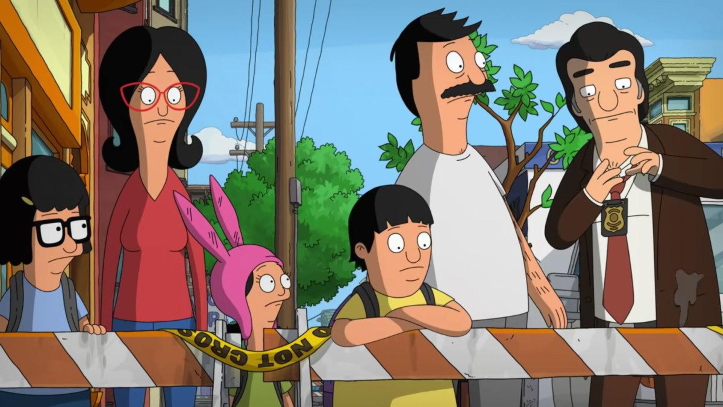
Anthony: I’m a Gen-Xer so I should go with an ’80s cult classic like The Blues Brothers or The Goonies. And predictably I won’t. I will, nay I MUST, go with the family. The Belcher Family.
I’m referring or course to The Bob’s Burgers Movie. I shall not hide the fact that I watched every single episode of the TV show multiple times, nor that my internet browser’s theme is Bob Burger’d. Heck, a quarter of my T-shirt drawer is devoted to the Belchers. I was apprehensive when the movie was announced, but I was happy to claim it did not let me down.
So throughout the show, there’s a constant reminder that the family is poor, the business isn’t doing very well even though Bob’s a great fry cook, and every time the landlord Mr. Fischoeder shows up, there’s a late-rent joke. The motion picture takes that aspect and makes it the main plot device. The restaurant is in bad shape and the bank is tightening its grip, and just as business is about to boom, a giant sinkhole opens up right in front of the friggin’ restaurant, meaning no money coming in at all for long while. So Bob has to improvise to keep afloat and save the restaurant.
It’s my favorite use of this trope because Bob’s Burgers is one of my all-time favorites, and the movie elevated everything that made it great. Seriously, I’ll take a SECOND Bob’s Burgers movie over a Rick & Morty movie anytime. That’s right, I said it, and I’m not taking it back!
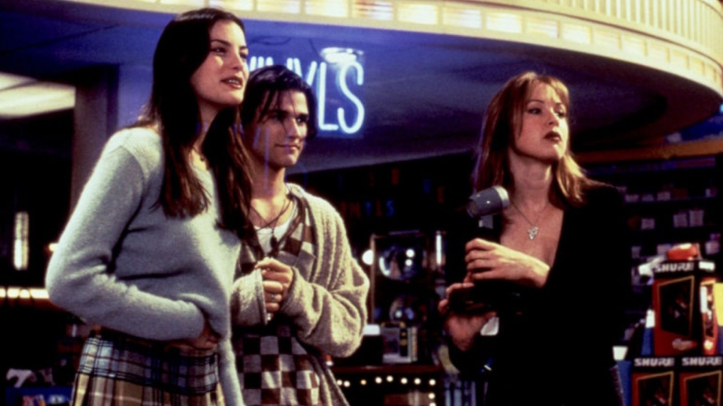
Justin: It’s definitely impossible to avoid putting Empire Records on this list, because who wasn’t jazzed to see the quirky crew of this record store pull out all of the stops to save it? In my head canon, it’s still open and running today, with the original crew’s kids now filling their shoes as employees. C’mon Hollywood, let’s get Empire Records 2030 in the works!
I’ll pull out a slightly more obscure ’90s flick for another example, which is 1998’s All I Wanna Do. I’ve been raving about this movie since stumbling upon it last year. It’s about ’60s all-girls boarding school that’s facing an unwelcome merging with a boys school. The campus is initially divided on whether to welcome or fight this merge, but ultimately the war begins, and it is glorious. How do they save their school? Watch it and find out!
 Sitting Duck: Mine is the anime series Amagi Brilliant Park. The “orphanage” in this case is a theme park that has seen better days. But what distinguishes Amagi Brilliant Park from other theme parks is that the bulk of the cast members (the preferred theme park vernacular for park employees) and even several of the administrative staff are faerie folk. More importantly, they subsist on the positive emotions generated by the park visitors. What this means is, should the park ever be shut down, they would cease to exist. And thanks to an arcane contract they are beholden to, that looks to be a grim possibility. Said contract stipulates that ownership of the park will default to a development corporation to do with as they please should the park ever fail to obtain an annual guest count of 500,000 for five years running. So naturally they’ve missed their goal the last four years and, with three months to go, they’re only at 250,000 for the current year.
In spite of this rather downer threat to their wellbeing, the series is predominantly a comedy. Much of this comes from the dysfunctional natures of the park’s cast members, giving it something of a Meet the Feebles vibe, but without the mean-spirited tone. Foremost in this regard are the park’s three primary mascot characters (who incidentally are not guys in suits) who may look like adorable anthropomorphic critters but are prone to some very family unfriendly behavior. For instance, the lead mascot has a violent temper that gets triggered whenever someone calls him a knockoff or if he even hears someone say knockoff (the joke being that his appearance is identical to a mascot character from creator Shoji Gatoh’s earlier series Full Metal Panic). As for the other two, one is womanizer who also likes to cook up homemade explosives while the other is a compulsive gambler who is in the middle of a bitter custody battle with his ex-wife and also happens to be a former military sniper.

By and large most episodes are self-contained, with each focusing on a particular crisis. Things like raiding a dragon’s lair so that they can cover payroll for the month or fending off an incursion at the attached water park by anthropomorphic seal pirates. You know, typical theme park concerns.
But the visitor count is always an ever-present concern and is brought to a head during the climax when, with just three hours to go before closing on the final day, they’re still 252 visitors shy of the target. As befits a Saving the Orphanage story, this final challenge is met with unorthodox tactics. These include the lead mascot calling his favorite bar offering to pay off the tabs of any customers who pass through the park gates before closing and an air faerie who runs a side hustle of posting videos of herself dancing on YouTube announcing on her socials that she’ll be presenting a live performance at the park. This final surge proves to be quite the nailbiter.

Drake: My initial response to this would of course be The Blues Brothers. After all, Jake and Elwood are attempting to literally save an orphanage, which needs $5000 for their property tax bill. But digging deeper, there’s something wrong with that plot point. After all, orphanages are specifically exempt from paying property taxes in Illinois, so I’m thinking Sister Mary Stigmata was being squeezed over a gambling debt. She looked like the type to play the ponies.
So, unwilling to delve into such nefarious activities, I’m opting instead to go with the wholesome, family-oriented tale of the six children who must save their home from foreclosure if they don’t come up with 20 grand. And granted, The Brady Bunch Movie does rely as well upon delinquent property taxes to push the story forward, but in this case it’s a valid point. The Brady house is not an orphanage (although it is filled with kids who are missing at least one parent), it’s not in Illinois (but California has similar exemptions) and there’s no one in that household blowing their paycheck at the racetrack (except maybe Alice). And sure, like the Blues Brothers, the Brady kids engage in a variety of shenanigans along the way before finally putting on a musical performance to save the day. But I’m sure that’s all just a coincidence…
 Mutant Reviewers