
“Well, you should see Polythene Pam. She’s so good-looking but she looks like a man.”

Drake’s rating: I went back to the ‘70s. Mistakes were made, regrets were had.
Drake’s review: OK, I admit it: I dutifully turned in a movie review for a flick shot in the 1960s, and then scampered right back into the ‘70s as fast as I could. What could go wrong, I asked myself as I avoided Justin’s incriminating gaze and fired up a flick from the latter half of the decade. After all, everyone likes the Beatles, right?
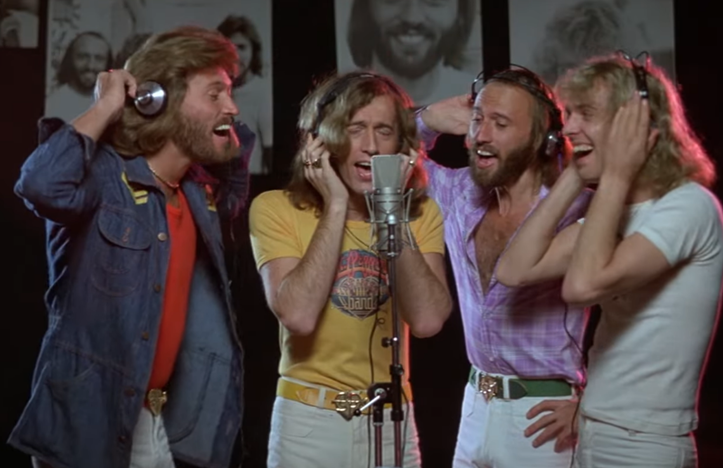
I was naive back then. I admit it. And now I sit here, a sadder but wiser Mutant, typing out a review of an unfathomably bad movie that defies not only logic and common sense, but lacks anything in the way of a cinematic experience. Sgt. Pepper’s Lonely Hearts Club Band isn’t a movie, it’s a two-hour music video that overstays its welcome within the first twenty minutes.
And, look, I get it. The Beatles were huge in 1978, eight years after they broke up. Their songs were still heavily played on the radio, there were still fans hoping for a reunion, and the Beatlemania stage show (“Not the Beatles, but an incredible simulation!”) was on a national tour. With music-driven hits such as Saturday Night Fever and Grease rocketing to the top of the box office, it seems like an entire movie centered around the music of the world’s most famous rock band would be a sure-fire hit.
Not so much, as it turned out. Mostly because those other movies had “actors” and “screenwriters” and “dialogue.” Sgt. Pepper’s Lonely Hearts Club Band has George Burns serving as the narrator, with the rest of the cast, led by the Bee Gees and Peter Frampton, uttering nary a line. Instead, they sing. Constantly. In every scene.

There’s no character development here, as there are no characters. There are just singers, singing. Constantly. In every scene. And maybe that wouldn’t be so bad, if the songs and the performers matched up well. In most cases, however, they don’t. Despite a nice rendition of “Here Comes the Sun” by Sandy Farina, Billy Preston banging out “Get Back” and Earth, Wind & Fire stealing the show with “Got to Get You Into My Life,” too much of the music here is a watered-down imitation of the original works.
Frampton and the Bee Gees rightfully had their own hits, but their musical styles are so contrary from the Beatles as to be distracting. About the time Barry Gibb is crooning (CROONING!) out John Lennon’s proto-punk banger, “Polythene Pam,” you know all hope is lost.
Sgt. Pepper’s Lonely Hearts Club Band wasn’t quite a commercial failure, although it did teeter on the edge. It did take a massive critical drubbing, however, and certainly didn’t help the careers of Frampton, whose most recent album had massively undersold compared to ‘Frampton Comes Alive!,’ or the Bee Gees.
Amazingly, the damage from the movie stretched even beyond the worlds of film and music.

Marvel Comics was also on quite a roll in the late 1970’s, after serious financial difficulties due to a variety of factors earlier in the decade. A large part of their rebound was thanks to Star Wars, which editor and comics legend Roy Thomas had the foresight to option. The film adaptation and subsequent comic book series was a massive success, and Marvel continued to delve into pursuing licensed properties.
At the same time, the company was promoting their Marvel Super Special series, a magazine-sized format with full-color processing rather than the standard four-color of the comics books of the time. They were effectively original graphic novels, a few years before that terminology took hold. The first Super Special featured the rock band KISS, while the next few starred Conan the Barbarian, more KISS, and adaptations of Close Encounters of the Third Kind and Jaws 2.
Marvel Super Special #7 was an adaptation of Sgt. Pepper’s Lonely Hearts Club Band. But good luck finding a copy.
Adapting a musical, of all things, to a comic book format is already a recipe for disaster, but to top it off, producer Robert Stigwood’s company was fairly uncooperative with Marvel and the film’s script* was constantly changing, necessitating late changes to the comic’s art and story which pushed back the publication date. When the movie flopped, Marvel dumped the whole thing for the American market and it was never published in the United States. A French version later appeared, as did a Dutch one. Artist and future comics legend George Perez said, “It was one of the nadirs of my career. I was so grateful that the book never got an American release.”
As an ardent fan of the late Mr. Perez, I can only share in his relief.
*It’s something of a revelation that this thing even HAD a script.
Intermission!
- Yes, that is an almost unrecognizable Donald Pleasence under that toupee.
- And that’s a very young Carel Struycken, who would play the part of Lurch in the Barry Sonnenfeld Addams Family movies, as well as Lwaxana Troi’s manservant Mr. Homn in Star Trek: The Next Generation.
- Steve Martin makes a cameo as one Dr. Maxwell Edison, who was basically a serial killer in the song, “Maxwell’s Silver Hammer.” This flick’s just toying with a darker turn.
- Peter Frampton punching Aerosmith’s Steven Tyler was not something I expected to see today.
- Oops! Dead heroine. Darker turn achieved.
- And now an attempted suicide by our hero. Summer movie fun, 1970s style!
- And a reprisal of the title song, with literally tons of ‘70s celebrities. This feels like a Love Boat reunion special.
- It’s over? It’s over! OK, no one tell Justin how bad this one was, because he’ll never let me live it down. And I promise to steer clear of bad ‘70s flicks for awhi… Oh, hey, what’s this? The Concorde… Airport ‘79? Well, that doesn’t sound so bad…
 Mutant Reviewers