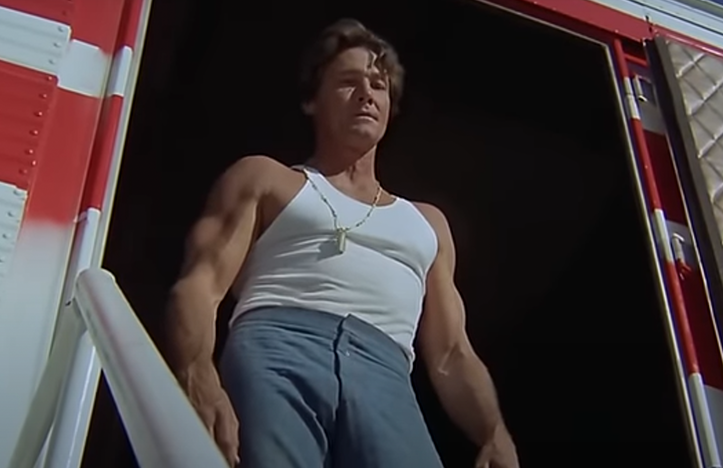
“Winning is too expensive.”

Drake’s rating: Living life a quarter-mile at a time, ‘70s style
Drake’s review: Fast Company might be the most surprising movie in the vast repertoire of Canadian director David Cronenberg, and that’s because it’s such an anomaly. There are no exploding heads here, no mind controlling video games, and John Saxon never turns into a human fly. Instead, this is a fairly straight-forward yarn about drag racing in the 1970s, a trim little flick that serves as a time capsule for the era as well as a paycheck for Cronenberg, who would be breaking through into the big time with Scanners and The Dead Zone in the coming years.
Still, although it’s far from familiar territory for a Cronenberg fan, Fast Company is a pretty good time. B-movie king William Smith (Action U.S.A.) is Lonnie “Lucky Man” Johnson, a top star on the drag racing circuit whose age is finally catching up to him. He’s a popular driver and a favorite with the fans, but he’s under pressure from his sponsor, FastCo. The company, or at least its representative, Phil Adamson (John Saxon, Enter the Dragon), wants to be in the limelight, but they care less about winning than selling their products and staying within a budget. So when Lonnie’s Top Fuel dragster explodes in the first race of the film, Adamson is just a bit peeved that he’s going to be footing a big repair bill.
Without a car, Lonnie should be just another spectator at the track, but Adamson needs him in the races (gotta sell that merch, after all) and so puts him in the Funny Car driven by Billy “The Kid” Booker (Nicholas Campbell, The Brood), which leads to no small amount of friction between the two drivers.
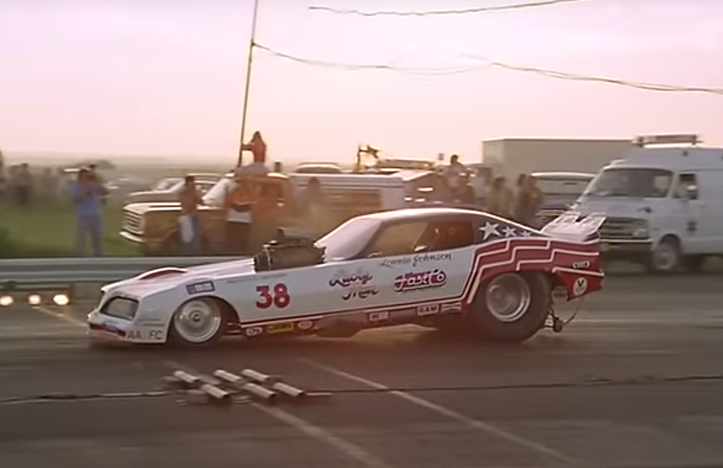
And here we need an interlude for a very brief explanation of the cars for the non-gearheads out there. The Funny Car was accidentally invented in the mid-1960s when drivers altered the wheelbases of their cars and shed weight by replacing fenders, doors, and the like with fiberglass parts. An announcer mentioned that the cars were “funny looking” and the moniker stuck, and Funny Cars soon became a racing class within the National Hot Rod Association.
Top Fuel dragsters, on the other hand, are the long, aerodynamic cars that are most commonly associated with professional drag racing. They had undergone a variety of changes in the 1970s, including a switch to a rear engine design to improve driver safety, and the Funny Car class started to edge into Top Fuel’s popularity due to their unique look. They were really starting to peak in crowd appeal in the late ‘70s and early ‘80s, which is no doubt one reason why the film makes the switch and focuses on Funny Car action over Top Fuel competition.
The other reason is likely that the Funny Cars have a natural cinematic appeal, and look more like real cars than the Top Fuel dragsters.
Nonetheless, this is something of a demotion for Lonnie, and leaves Billy with nothing to do but complain about the unfairness of life and cavort with the pretty hitchhikers he picks up on the long drive to the next race. His complaints pale beside Lonnie’s woes, however, since Adamson covertly cancels the rebuild of the Top Fuel car, with the plan to keep the “Lucky Man” behind the wheel of the Funny Car. And when Lonnie doesn’t play ball, Adamson decides that even a legendary driver might be just another replaceable part.
Fast Company is a solid racing flick. Although Cronenberg took on directing duties strictly for the money, he was also a racing fan and his enthusiasm for the sport shows through. He delves into the racers as people, whether it’s Lonnie facing middle age but still having that desire to remain competitive or his frenemy Gary “The Blacksmith” Black looking to get a decisive victory over his racing rival, Cronenberg keeps the focus on the characters.
Which is not to say that he ignores the racing. With a mixture of actual footage and choreographed car stunts, Cronenberg keeps the racing scenes entertaining without taking the film away from the actors. It’s really more of a character-driven B-movie than an actionfest, and the actors and director are all up for the challenge.
There’s nothing particularly unique about Fast Company, but it is a well-made movie with a very solid cast. Even if you’re only watching it to complete your David Cronenberg bingo card, you might be pleasantly surprised. It’s nothing spectacular, but Fast Company is a solid popcorn flick and a good time all around.
Plus, William Smith gets to punch John Saxon! That alone is worth the price of admission.
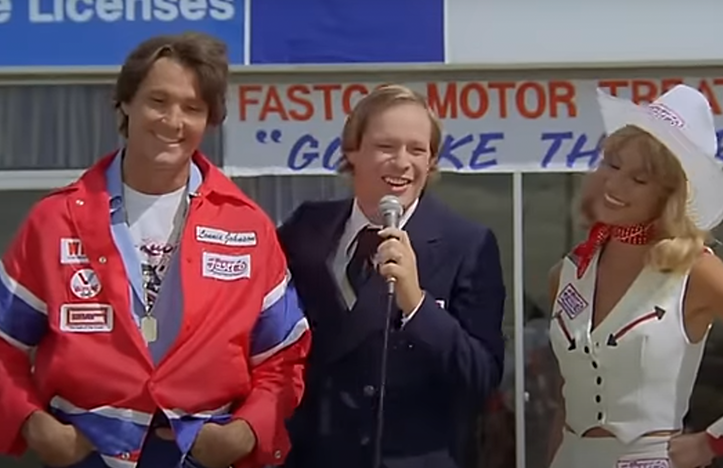
Intermission!
- OK, admittedly, that ending is a bit Cronenbergian.
- Bruce Lee wanted William Smith to co-star with him in Enter the Dragon, but Smith had another movie obligation and couldn’t work with Lee. As one of the world’s biggest William Smith fans, this is my most painful “What if?” ever. Smith’s Fast Company co-star John Saxon later landed the part.
- John Saxon is at his smarmy best here, playing Adamson as a sleazy rep who’s only in it for himself, and keeping secrets from his drivers and his employers alike. He’s a great foil for Smith, and it’s too bad they didn’t work together more.
- You may not recognize the face of actor Cedric Smith, who plays Gary Black, but you might recognize his voice as he was the actor behind the animated Charles Xavier in the 1990’s X-Men: The Animated Series.
- So which is faster, a Funny Car or a Cessna? Watch this flick and you’ll find out!
 Mutant Reviewers