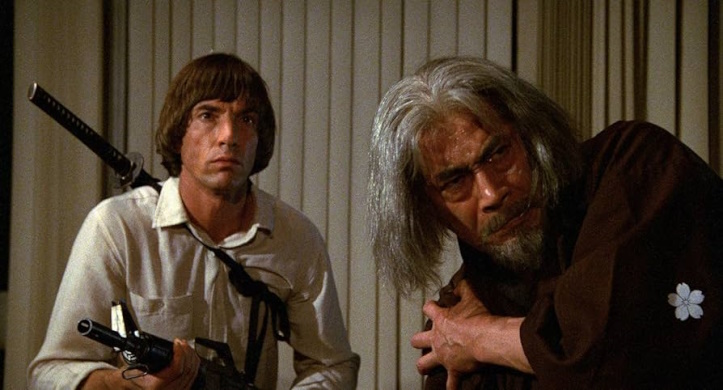
“One fights to survive.”

ZombieDog’s rating: Four throwing stars
ZombieDog’s review: The ’80s really was a time of anything goes, and many of the these films most likely would not be made today. But it also was a time when cultural exchanges were booming, with crossovers from Australia, the UK, Hong Kong, and Japan. While Hong Kong gave us the iconic karate films, Japan stepped in with the samurai and ninja. Japan was enjoying a rise in the 80s because it was starting to gain economic strength and reestablishing its identity. The Japanese movie I want to talk about today is a mix-and-match of genres that — either by happenstance or genius — turned out to be something wonderful.
The Challenge is a movie about a down-on-his-luck boxer from LA named Rick (Scott Glenn) who gets asked to smuggle a long-lost sword back to Japan for a large amount of money. As he didn’t appear to have anything else going on in his life, Rick reluctantly accepts as long as it’s not drugs. Upon landing things instantly go wrong: He’s abducted by armed men, forced to hand over the sword, and finds out it’s a fake. Catching a lucky break, Rick escapes, but is stabbed and loses consciousness.
He awakes at the samurai training compound of Sensei Yoshida and is given the story of what the sword actually means. It turns out that this sword is one of two identical swords that was meant to be handed down to the eldest son. Something went tragically wrong, and the swords were separated.
The true strength of The Challenge is that it contains two absolute powerhouse actors. Toshirô Mifune (who plays Sensei Yoshida) is nothing less than absolute acting royalty in Japan. He was in 16 films with Akira Kurosawa, arguably one of the best directors that has ever lived, and showed up in films such as Midway, 1941, and the 1980 Shogun TV miniseries which I have an unhealthy affection for. He shares the screen with acting giant Scott Glen, who’s been part of so many films that are nothing short of the building blocks of Hollywood like The Right Stuff, The Silence of the Lambs, and a personal favorite of mine, The Keep.
What we have here, folks, is some hardcore over-the-top acting talent. And even though it’s a B-movie, their acting skill is obvious.
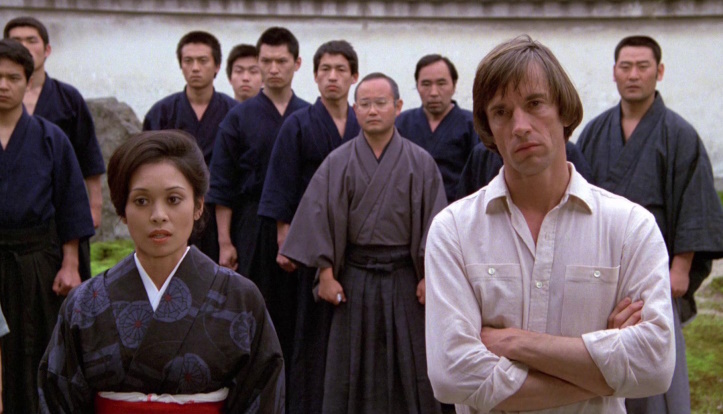
This could easily have been another “come to Japan and see the simplicity and beauty of their ways” type of movie. To the writer and Glenn’s credit, though, we are treated to a much more nuanced and believable character. Rick is a skilled boxer, yet he doesn’t know the fighting style of the people he is surrounded by. You get the sense that he knows they are just as skilled as he is, yet at the same time he also isn’t afraid to step into their world and play by their rules.
The samurai compound at times feels like a cult, and you have Rick being both amazed and angry at some of the actions they take. This is a fish-out-of-water story — although one where the fish is really angry. Because somebody (Richard Maxwell, John Sayles, Ivan Moffat) took the time to actually write something decent, we understand the reasons behind everybody’s actions, and I can only attribute this to taking your job seriously and going the extra step.
One of the main problems I have with The Challenge is that it is filmed in an extremely conventional way. All of the filming was done in 1980s Kyoto and Osaka Japan. I can only imagine that they used local film crews along with their equipment. It really feels like a 1970s TV show, and it’s shot that way too, with a large portion filmed either on sets or inside of buildings. This is sad, because at the beginning of the movie we see a gritty Japan with criminals, smuggling, and death — elements not really associated with modern Japan.
For the beginning filmmakers out there, if you instantly want to improve the quality of your film, go on location. Hire a location scout, find some super-cool locations, and create a unique style and feel for your movie, all without hammering a single nail into a set.
To add another dimension to the somewhat unusual nature to the film, it was directed by a very accomplished filmmaker John Frankenheimer. I somewhat second-guessed my interpretation of the film, and so I started skipping back-and-forth in the movie and comparing the lighting and camera usage and saw a huge difference from the beginning to the end. If you look at the first act, is most definitely looks like a ’70s cop show. Halfway through, they change it up. The lighting gets better, the camera usage gets more dynamic, everything becomes just a little bit better. I tried to find information in the production notes but there wasn’t too much. The only thing I can really come up with is that they started to see the dailies come in and they just didn’t like the way it looked. So, they went back got some more money and upgraded.
This film is not lacking in motivation. Frankenheimer wanted a different actress to play the granddaughter of Mifune because she spoke fluent English. However, the actress that they got took a crash course in English and in four months pulled off flawless English. This example perfectly encapsulates the effort I see put forth in the film.
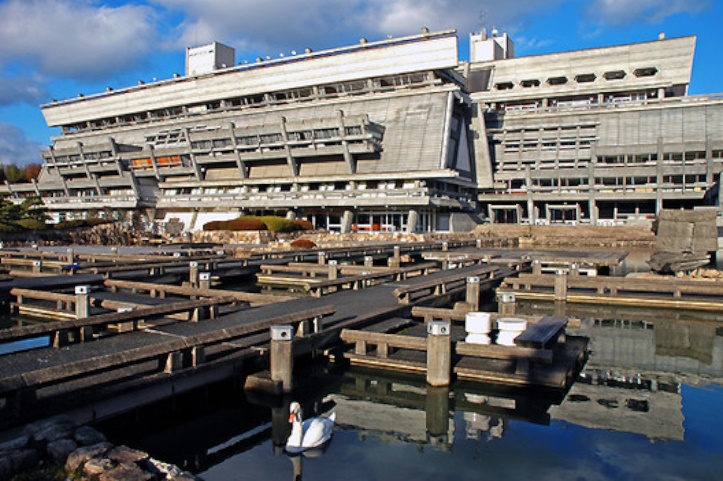
I do complain about filming locations, but at least they got to film at the Kyoto International Conference Center. The building looks awesome! I just wish they’d have done more of that sort of thing.
So, is The Challenge any good? I’m going with a resounding yes! The movie feels stereotypical in a lot of ways — and then again it isn’t — and the writing is good enough where an engrossing story is always unfolding. I would’ve liked to have seen some more martial arts and samurai stuff, although the film really isn’t about that. It breaks those stereotypes of a typical kung fu action movie and offers up something new.
In the end, this is a wonderful boxer-samurai-Yakuza in a battle-for-honor type movie. Stay to the end, everybody, you will be surprised with the outcome of the final battle.
 Mutant Reviewers