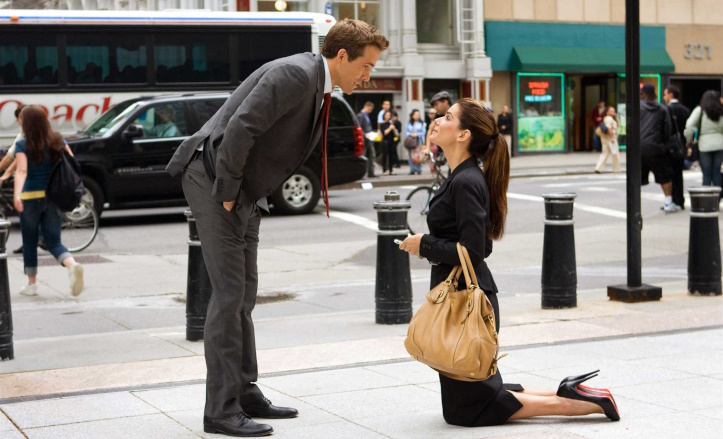
In this roundtable-style discussion retrieved from the Mutant archives, Sue and Justin debate the place and purpose of romance in movies!
Sue: Romance in the movies. An ongoing cliché that’s long since driven the genre into a dark corner, or that snuggly-wonderful cinematic staple that makes us feel as if we’ve just been dipped in fabric softener, rinsed in the gentle cycle of happiness and dried to a toasty bliss? Hmm. Must be laundry day. Anyway, guess where I stand?
I love a decent romance. I love the witty banter, the misunderstandings, the security of knowing that somehow it’s all going to be all right in the end. I love leading men who get over their testosterone-fueled cluelessness long enough to make a girl’s heart melt. I love the feisty yet vulnerable heroine. I love it when a man shows a sensitive side. Hugs and smooches and holding hands and sunsets, and heartfelt retractions of boorish behavior… These are a few of my favorite things.
Maybe this is because in the real world, I’m a total cynic when it comes to “twu wuv.” I’m always looking for the hidden agenda, the insincerity, the fly in the ointment, the unhappy ending. Is it so unreasonable to bask in a bit of escapism? Does predictability equate unworthiness? Isn’t the journey as important as the destination?
And so what if the curtain falls before hormonal bliss matures into paying the bills, getting little Jimmy to soccer practice, receding hairlines and middle-aged spread? Isn’t a romance supposed to focus on the initial wonder of a relationship?
Now I wouldn’t bother you with this Justin, except that I couldn’t help but notice a little cynicism of your own on the subject. You even made a poll out of all that you find flawed in romantic plots. So tell me. What makes a romance any more or less cliched, predictable or time wasting than… say… an action movie?
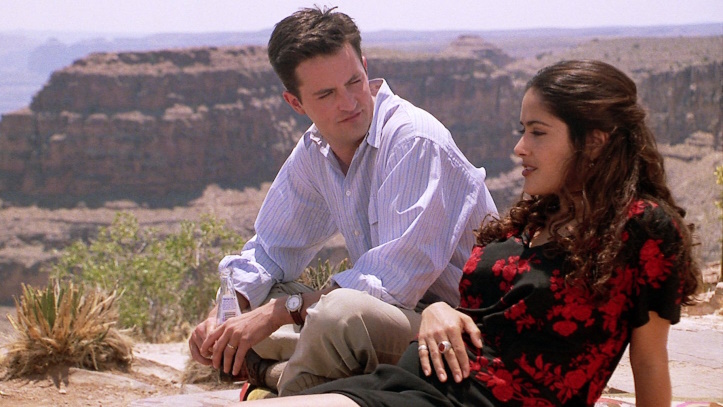
Justin: Ah, romance, where silly-hearts turn their fancy, and where even Hugh Jackman from the 19th century has better hygiene than us 21st century dudes.
Let me say this first: I don’t ever begrudge anyone their right to enjoy any movie or type of movie. Period. It might not be my cup of tea, but people get so incredibly snobby whenever someone admits to liking a second-hand brand of films, including horror, scifi, fantasy… and even, yes, romance. So any of my remarks won’t be aimed at any fans of the genre — you guys and gals can wallow in all the Kleenex fests you like, and mum’s the word.
So, romance flicks. Am I cynical about them? You bet your reheated, overdone leftovers I am.
There’s nothing intrinsically wrong with this movie genre. Pretty much every other genre also contains some form of romance, suggesting that we, as the on looking spectators, have an affinity for watching Joe and Jane do the ol’ smootchy kootchie. Romance is a very vicarious aspect — we can’t help but imagine ourselves in their shoes (or slippers), rooting for them to get the girl/guy because that’s what we would want for ourselves. And, unlike life, romance in movies is almost assured to come out the way you’d like. I can understand why people eat these up like candy; my wife is addicted to a never-ending stream of romance books and movies, and we’ve had a lot of conversations about why, exactly, they’re so enduring.
The problem is — and here I’m focusing on movies — is that romance in flicks is pretty much the same one exact story, down to a ritualistic formula as old as time, played out with only slight variations on the theme. You’ve seen one, you’ve pretty much seen them all. Out of all of the genres, romance holds the most sins when it comes to its extensive list of clichés; no romance flick is without at least a few of them. Sure, action’s got them, horror, definitely so, but almost every romance flick I see staggers under the weight of predictable events and outcomes, so much so that the marketers are forced to latch on to whatever small variation there is as the movie’s selling point. Hey, this time the guy’s a spy and she’s a deli counter clerk! This time they happen to meet five minutes before the world is about to end! This time the girl is Jewish and he’s a Philistine! Blah de freaking blah.
I’ve got a couple more strong points against romance flicks, but I’ll save them to later. To answer your main question, why rag on them when other genres are also formulaic? It’s because the romance formula offers so very little leeway to maneuver within — versus, say, action, where you might have the clichés, but the sky’s the limit when it comes to the set pieces and the imagination of the story — that it mocks and laughs at the I.Q. of viewers who should darn well be treated to a better story than Boy meets Girl, sparks fly, Boy dates Girl, Girl misinterprets a move on Boy’s part, big fight, Boy and Girl reconcile and kiss. Where are the romance films that start after the couple has already fallen in love? Is romance only the moments before two people decide they should get together and ends shortly thereafter? Where are the romance flicks that call the clichés for what they are and actually start showing real world people with real world relationships?
Sue: But Justin, my dear fellow, is not LOVE itself a “ritualistic formula as old as time, played out with only slight variations on the theme?”
To my way of thinking, real-world relationships tend to come under one of two broad categories: functional and dysfunctional. Cinematically speaking, a dysfunctional relationship tends to be labeled as a drama (Indecent Proposal) or suspense (Sleeping With The Enemy). A functional one is… well, too boring for marketing purposes. Sorry, but that’s the way it is.
The most necessary element of any story is conflict. Otherwise all you have are just home movies and “what I did over summer vacation” essays. For instance, I’m always entertained by my parents’ (49 years of marriage and counting!) arguments. “Take the last cupcake, honey.” “No YOU have the last one.” “Oh no, I insist…” They can go back and forth like that for ages — certainly long enough for me to nab the last cupcake for myself, thus preserving their spousal equity, dutiful daughter that I am. And while things like that might qualify as romantic conflict, I’m not convinced that they’d make for big box office numbers. Better than Gigli no doubt, but you could say the same for time-lapse photography of a dead raccoon bloating along the side of a highway.
So assuming Drama is about when things go sour, Romance is about the initial sparks-flying, heart-thundering, holy kamoly, infatuation that (if we’re lucky) we’ve all felt at one point or another; requited or not. It’s a rush. We can all identify with it.
It’s written that way and marketed that way, and those stories begin and end when they do because anything beyond those parameters is either “happily ever after” which is nice but yawn-worthy, or “things got crappy” which is drama. (Or possibly horror if there’s a wood-chipper involved.) It’s possibly a matter of definition more than plot shortage.
In any case, while I will admit that there is a predictability to the genre, the fun of a romance is not in the destination, but rather in the journey. (This is why a bazillion women, including your beloved, read truckloads of Harlequins and Silhouettes.) I’ve never heard anyone say that they won’t watch Bridget Jones’ Diary because they’ve already seen Runaway Bride. The girl might get the guy by the closing credits, but they’re apples and oranges for content. Ever After and Pretty Woman are both unapologetically Cinderella stories, but their similarities are few and far between. (As a matter of record, Richard Gere and Dougray Scott are both astoundingly yummy, but I digress.)
For that matter even the destination is not always set in stone, which is a major deviation from the literary standards of the genre. My Best Friend’s Wedding is a good example of that. So is Moulin Rouge!
And can’t the stigma of cliché and predictability be applied to Action and Adventure? Did we not know from the get-go that Indiana Jones was going to score the Ark of the Covenant? Was there ever a question that Will Smith was going to put the hurt on the aliens come Independence Day? Would Batman or Spider-Man LOSE? I don’t think so. The same goes for Horror. We know people are going to die. Probably they will die while screaming like offended piglets. We know that no matter how certain it seems that the villain is finished when the closing credits roll, that he’ll be back for the next eight or nine sequels.
Whether it’s fair or not, any movie of any major classification with an expectation of earning big bucks is going to have predictable elements to it. That’s the nature of the business. Sell what works. With all due respect to you, my distinguished colleague, I fear that your specific bias against romantic movies might be just a tad unfair.
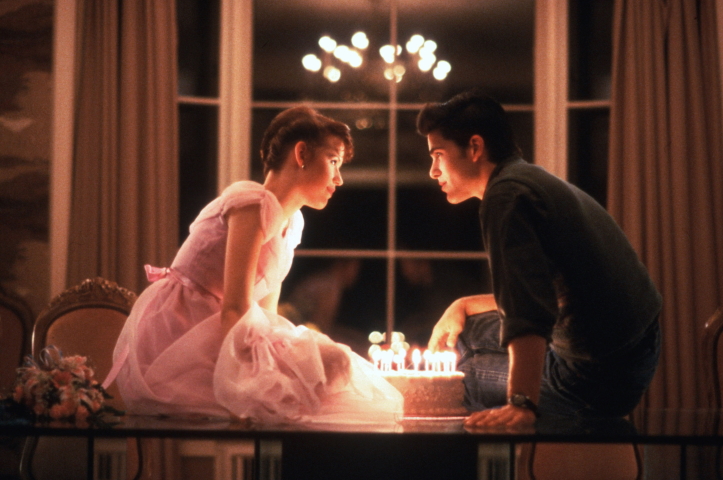
Justin: I wasn’t saying that other genres lacked predictable clichés — it’s a fact, but what I feel is that romance is doubly, triply guilty in that respect, an overwhelming glutton of photocopied plots that refuse to differ except in the setup, but not the play or resolution. In comparison, action is a wide open field that can encompass one man fighting a horde of terrorists, a group of firefighters battling a blaze, a family running from foghorn-toting Martian invaders. You name it. And, sure, there are predictable elements, but it’s more common to see action movies that buck the trend and become more unconventional with storylines and conclusions than you ever will with the majority of the romance genre.
Let me ask you this: How many sub-genres are there of romance? I’m not talking movies that have romantic elements to them but are primarily of another genre (like horror or drama), but a movie that is first and foremost a romance but separates itself into a distinct sub-genre. Other than segmenting them into sexual boundaries (boy-girl romances, boy-boy, chimpanze-gorilla), I can’t see it. Meanwhile, other “predictable” genres like horror have dozens of sub-genres (slasher, suspense, creatures, serial killers, plagues, what have you) that allow for much more variety within the genre and freedom for the filmmakers.
I think that romance writers have just written themselves into a teeny tiny corner that’s only got room for coincidental meetings, the promise of cute chubby babies in the future, and rugged cowboys that need taming from a new farmgirl hire. It stymies the mind, because romance should be much broader with its stories than it tends to be. If I have to see one more movie where a seemingly perfect guy and girl — single for no reason other than the plot demands it contrary to how it would be in the real world — who somehow meet, have terrifically perfect dates, fall in love, do the waterbed dance, have some sort of falling out (usually over some dumb miscommunication), place some sort of idiotic bet with their friends, but still end up together… I swear I’ll scream. Girlishly.
Here’s a good — but rare — example of a romance movie I’ve seen that’s worked outside of the tight lines the genre is famous for. The Family Man with Nicholas Cage. Not, in my book, a great flick, but it’s notable as a romance that went outside of the usual boundaries. It starts with the end of a relationship — a guy who gave up the girl for something stupid — but has the ghost of Christmas Whatever shoving him into an alternate present where he did get married. Suddenly, this romance is about a guy falling in love inside the bounds of a marriage, exploring both outside and inside of a marriage simultaneously. It’s a really creative concept that plays out well, even to the ending which isn’t predictable nor standard. I just wish we’d see more of that sort of thing, instead of the same-old, same-old.
And it IS same, and it IS old. I think romance lovers are just as thirsty for strong movies that take risks with the direction of the genre as anyone else (why did Ghost become the #1 film of 1990, after all?). We just don’t see it anymore.
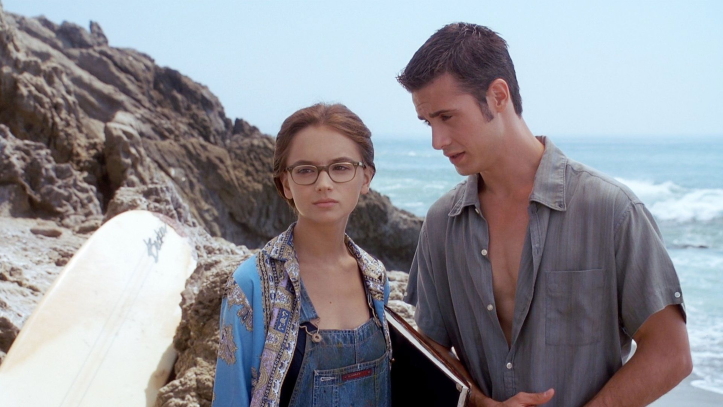
Sue: I think it’s a little interesting that you didn’t answer my question about the definition of love itself. But I digress.
You and I might not be quite as diametrically opposed as I first thought. We both love new, interesting and above all GOOD plots. The difference between us is that I don’t have quite the same bias against formulaic romances as you do. I also see the same formulaic rut in every other genre – no matter how they’re packaged. That’s the crux of the matter. While I don’t claim to be an afficionado of horror, I still don’t see any difference between a slasher, a creature and a serial killer flick. People end up just as messily dead in horror as people end up sappily in love in romance. It’s just the way it is. All stories fit certain formulas – protagonist/antagonist/climax – these are fundamental. How they’re presented is where the entertainment factor comes in.
You know, your question about how many romantic sub-genres there are really threw me for a while. The best answer I can think of, after much thought and a few cups of coffee, comes down to the differences between romance imprints you find on the shelves at finer bookstores and Wal-Marts everywhere. There’s historical, there’s suspense, there’s drama, comedic, saga, adventure, gothic… the list goes on. Interestingly enough, that list of imprints reads very much like a dictionary of movie genres.
With that, I find myself reaching a strange contradiction when it comes to labeling what any given movie (at least those containing more relationship fodder than a wolf whistle or manly hug) really is. Probably this is the reason why we see a lot of cross-genre advertising. “Romantic comedies” for instance. In that case, I wonder if we’re looking at a chicken vs. egg phenomenon. Is a movie a romantic drama, or a dramatic romance? Is it a romantic comedy, or a comedy with romance? Man, I just don’t know.
Just out of curiosity, and off the top of my head, I looked up Far and Away on IMDb, and discovered that it’s referred to as an Adventure/Drama/Romance. Gone With The Wind? Drama/Romance/War. Emma is oddly enough labeled as a Comedy/Romance, but I would have pinned the historical tag on it as well. Go figure.
Romance, like action, like drama, is not necessarily a stand-alone. Even Ghost, which you cited, while a terrific romance, could also fairly be labeled as drama, action, and even paranormal/sci-fi. I don’t care really because no matter what angle I look at it from, it’s still an awesome movie – no argument there.
I understand, and don’t disagree, with your desire to see the genre stretch in new and interesting ways. But I think that when it, is stretched, when it does cross into new and uncharted territory, it runs the risk of being reclassified as something else entirely. As I said before, the difference between “Romance” and “Drama” might be nothing more or less than the functionality or dysfunctionality of the relationship being portrayed. To that end, it might not be that the writers have placed romance in a corner, but that those who define such things, don’t always recognize it for what it is.
When I wrote my piddly little book and it was picked up for publication (and no I am NOT practicing self-promotion, so bear with me) my opinion, (and the opinion of the publisher) was that it was “Literary Fiction”. However, according to the library records, it’s “Domestic Fiction” and even “Wisconsin Fiction”. I have no idea who came up with those, but it just goes to show that any story that bucks a trend risks being defined in all sorts of strange ways. Ergo, a romantic movie that doesn’t fit the standard formula, could easily be called something else entirely. Love Actually is one of my favorite romance movies – yet is mainly seen as a comedy.
Setting aside your chimpanzee/gorilla quip, one movie that I’m very much looking forward to is Brokeback Mountain. The idea of two men carrying out a long-term romantic relationship with each other in a time and place when such things were practically unspeakable, fascinates me. The potential to break new ground and look at new issues and difficulties, is definitely there. Whether it lives up to that promise or not remains to be seen, but I’ll be interested to see whether, and how, it strays from formula. I’ll be equally interested to see if it ends up being marketed as a romance, a drama or even as a western.
In any case, it’s been nothing short of groovy, having this conversation – even if we don’t see eye to eye. Thanks Justin!
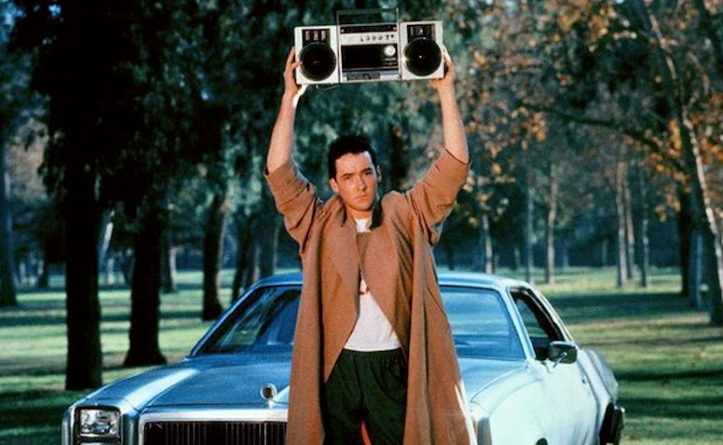
Justin: Seeing as how I married into a relationship with another human being who is a massive fan of romance, I’ve enjoyed trying to learn more about her book/movie affection without necessarily enjoying it at the same level. I’m sure she considers my “weird movies” the same. Likewise, I’m glad we had this chat, because I really did want to understand more about the attraction these — still formulaic, still mostly unoriginal (to me) — flicks have on some people.
I still maintain that, similar to how horror flicks are pumped out, romance is mass-produced on an author assembly line somewhere to feed the addiction of people who’d rather settle for more quantity now than more quality later. Not to be unfair and bring up another angle in this discussion after you’ve lost your chance to respond (woohoo!), but I also find most male figures in romances degrading and pathetic — probably a lot like how women feel about how their gender gets the superficial treatment in a good guns-and-blammo fest. If I, a guy, am to relate to what’s happening on the screen, I have to be able to relate at least a little bit with the guy up there. Yet so many romances simultaneously make the guy a perfect, ideal fantasy of what women “want” in guys AND also make the guy an utter wimp, nothing more than a pair of perfectly sculpted arms and female-written dialogue that’s akin to those “Mr. Wonderful” dolls that spout the opposite of what any real guy would say.
If I’ve ever owned up to liking a more mainline romance (one that isn’t sharing so much shelf space with another genre), it’s almost always due to the clever dialogue and deep characters. Both male and female. I want to see that they’re not perfect, but identifiable with all the rest of us normals. I want to see stories that explore the romance of a great relationship before AND after they hook up for that final magical “ever after” kiss. And I want a car chase in there, somewhere. My attention flags when Katie Holmes is wooing the Prince of Paraguay in a garden of roses and petunias.
As always, the more I learn, the less I know. I might mock, jibe, or laugh at romances from time to time, but I won’t spit on them or the people who like their kind. You’ve had a lot of good points about the diversity of romances that I may not have seen before, and I’ll keep an eye out for that in the future.
 Mutant Reviewers
The degredation of the romance to Hallmark formula movies is one of the problems with the entertainment industry in the past decade. Where’s my Proposal or Cutting Edge that are funny and romantic at the same time? What’s the twist besides overhearing something and jumping to the wrong conclusion? I mean yes, it worked for Three’s Company for years but these often trivial issues are said to be deal breaking. I love romance but most recently leave me cold. Good thing I still have my Shag DVD. I’ll be over here having the most fun.