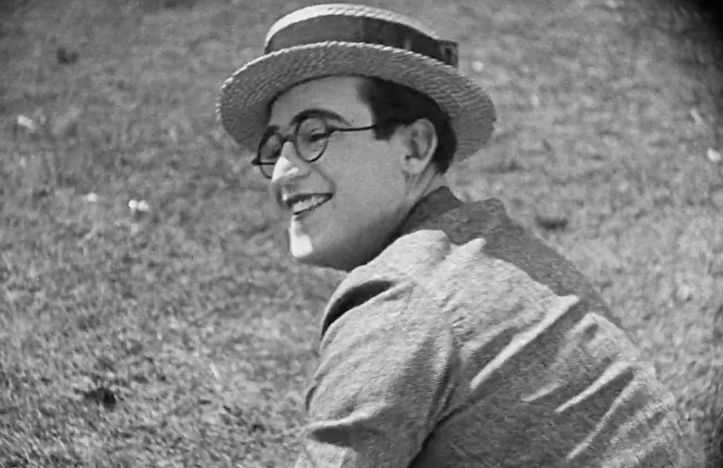
“Looks like they were trying to cure you before you got sick.”

Drake’s rating: Harold’s a doctor? Wait, I thought it was Kumar who went into medicine.
Drake’s review: I’ll admit, if you give me the chance I’ll happily talk your ear off about silent movies. I find it to be an endlessly fascinating rabbit hole to dive into, as it was the genesis of an entire art form that took the world by storm. And when it was over, it was over. Silent movies were seen as an embarrassing anachronism about five minutes after the credits for The Jazz Singer rolled, and studios could not move on from them fast enough. Talkies arrived with a bang, and silent films were relegated to warehouse shelves and the dustbin of history.
Well, almost. Over the decades silent movies would pop up here and there, usually at film festivals or on television. Comedies especially had longevity, their timeless visual gags and impressive stunt work finding appreciative audiences generations removed from their creation. Buster Keaton was “rediscovered” by young fans in the ‘60s due to his work on the Frankie Avalon/Annette Funicello beach movies, Mack Sennett’s Keystone Cops could be found as nostalgia filler on many a TV station well into the 1980s, and Charlie Chaplin’s brilliant work, unlike that of many of his peers, never quite went away.
But as big as all of those other comedians were, in the 1920s the undeniable number one comedy star (and one of the biggest movie stars of the era, period) was Harold Lloyd. Best known to later generations for hanging off of a giant clock in his 1923 classic Safety Last, Lloyd was a young star who had initially appeared as “Lonesome Luke*,” a character drawing upon the influence of Chaplin’s Little Tramp before creating what became known as his “Glass” character. Donning a pair of round, horn-rimmed glasses, Lloyd became a bright-eyed font of energy, channeling the optimism of the decade into a relentless can-do character who connected with audiences better than Lonesome Luke ever did.

That optimism is certainly on display in Dr. Jack, in which Lloyd plays Dr. Jackson, a happy, good-natured sort who is loved by his patients in the small, rural town of Magnolia Meadows. The good doctor helps out children and little old ladies, even when they’re not sick. He doesn’t rely on medicine so much as good humor and kindness, even going so far as to interrupt a poker game to keep a young girl’s father from losing his paycheck.
The antithesis of Dr. Jackson is Dr. von Saulsborg (Eric Mayne), a grifter who has come into the employ of a well-to-do father who is endlessly worried about the health of his daughter (Mildred Davis). Von Strausborg has no interest in “curing” the girl, as she’s not even really sick, but his employment depends upon the “Sick Little Well Girl,**” as she’s called in the movie, to be convinced that she’s in constant need of his care.
A chance meeting between Dr. Jackson and the girl, as well as the machinations of her father’s lawyer (who is not a fan of von Strausborg), brings the two together and soon love is in the air. Dr. von Strausborg has a good thing going, however, and he’s not ready to give it up just because some lively young upstart has come along. Cue antics, madcap comedy and a dash of zaniness.
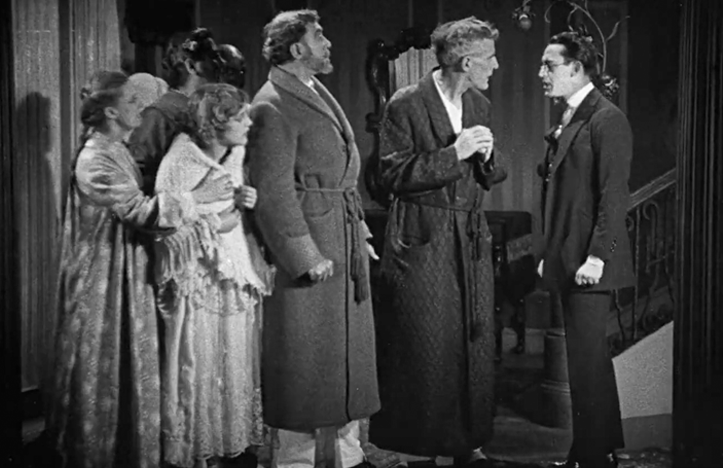
Dr. Jack is a good Harold Lloyd movie, but not a great one. In the early Twenties, comedians were starting to flesh out their films, adding more plot and characterization, and stretching them out from what were known as “two-reelers,” which ran up to thirty minutes, to five-reel features. Dr. Jack is a five-reel film, but feels like it could well have been shorter. Running at just under an hour, it nevertheless feels padded, with the poker sequence taking up a surprising amount of screen time while the final act, a frenzied chase around the father’s mansion, is too drawn-out and loses steam well before the climax.
Still, the good outweighs the bad here. Lloyd is eminently likable, and the succession of events that take him from his home, where he hurriedly crank-starts his car with one hand and eats breakfast with the other, through his small hometown as he checks in on the various denizens who rely upon him, is a fun, energetic sequence. At the very least Dr. Jack is an entertaining introduction to Lloyd’s work, and in particular the Glass character that became his trademark.
*It was fairly common at the time for silent actors, especially comedians, to be identified as a particular character, which allowed audiences to identify with them and also know what to expect from their films. Lloyd was honestly taking a chance in changing from Lonesome Luke, which had been a popular character, but he made a bold choice in moving out from under the pervasive influence of Chaplin to create something new.
**That sounds like the name for the worst-ever applicant for the Legion of Super-Heroes, until you remember that Arm-Fall-Off-Boy exists.
Intermission!
- Harold Lloyd and Mildred Davis co-starred in fifteen films together. They were married in 1923 and Davis retired from acting, only making a single comeback for 1927’s Too Many Crooks (an unfortunately lost film).
- Unlike many of his peers, Lloyd did continue to work into the 1930s and ‘40s. But his popularity faded, as his character’s upbeat nature was less effective with Depression-era audiences.
- Lloyd had also kept control of his character and his films, and was much more financially secure than many other former Silent stars. Ironically, this control meant that, even as Keaton and Chaplin were gaining new fans decades later, Lloyd did not, as the asking prices for his films were too high for many TV stations.
- Fully retired from movie-making by the 1950s, Lloyd’s interest in cameras led him to become an accomplished pin-up and cheesecake photographer, and he reportedly became a common fixture at the famous Spider Pool shooting location in Los Angeles.
 Mutant Reviewers