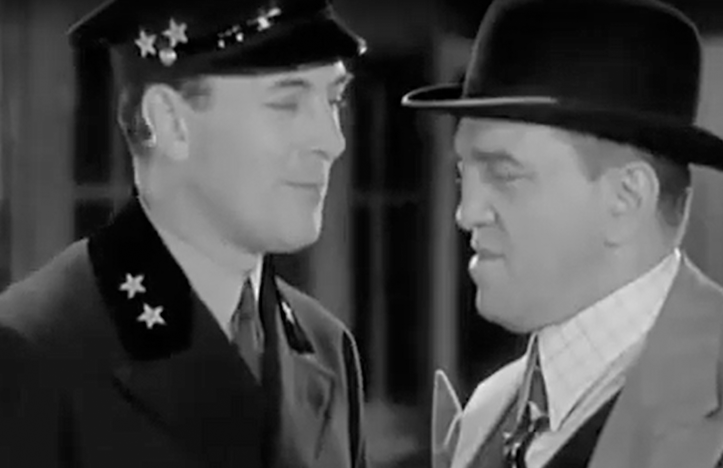
“You can get away with murder, but you can’t pull that stuff on me!”

Drake’s rating: Welcome to the PD Club!
Drake’s review: So I may be a few days late in mentioning this, but Happy Public Domain Day, everyone! As of January 1st, 2024, a whole batch of books, movies and plays from 1928 have entered the public domain, their copyrights having permanently expired. Now while most of the public’s attention has gone to the fact that the earliest Mickey Mouse cartoons have hit PD, the fact is that every film made in 1928 is now free of copyright in the U.S. Which is pretty dang cool.
Less cool is the fact that so few of these films have survived to the present day. Whether from studio fires, the dreaded vinegar syndrome* or simple carelessness, it’s estimated that at least 75 % of Silent Era films have been irrevocably lost. The Racket itself was thought to be a lost film, until the single known copy was found in producer Howard Hughes’ vault after his death and now, nearly fifty years later, it’s basically owned by all of us. So what did we get for this Public Domain Day? Well, let’s see.
Crusading cop Capt. James McQuigg (Thomas Meighan) busts up a gang war and arrests noted racketeer Nick Scarsi’s right-hand man Chick. Nick, played to thuggish perfection by former math teacher Louis Wolheim, is not without influence however, and pulls the strings on his pet politician to get the charges dropped. Soon after at a birthday party for Nick’s younger brother, the college-bound Joe (George Stone), rival mobsters make an uninvited appearance. Surreptitiously holding a gun under the table, Nick shoots and kills his enemy Spike Corcoran. McQuigg, already on the scene, arrests Nick, but a friendly judge releases the mobster before he can see the inside of a jail cell. Pulling even more strings, Nick has McQuigg relocated to an out-of-the-way police precinct so that Nick can carry on with his nefarious deeds without the cop looking over his shoulder.
Bright-eyed cub reporter Dave Ames (John Darrow), formerly of the Omaha Bee newspaper, is ready and willing to listen to McQuigg’s side of the story, but the captain’s not one to publicly complain. When McQuigg finds out that he’s only being kept out of the way until after the election, however, he knows he has to act before then, or the Organization will run the entire city.
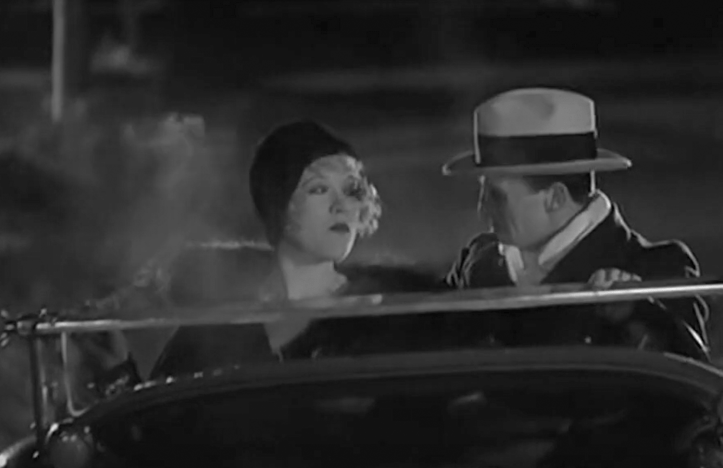
Meanwhile, Joe Scarsi gets into trouble and finds himself arrested in McQuigg’s precinct on a hit-and-run charge that escalates to manslaughter when the victim dies. Refusing to buckle under to political pressure to release the younger Scarsi, McQuigg puts the squeeze on Nick by convincing Joe’s erstwhile girlfriend, nightclub singer Helen (Marie Prevost) to testify against him. But when Nick does strike back, he learns that McQuigg can only be pushed so far…
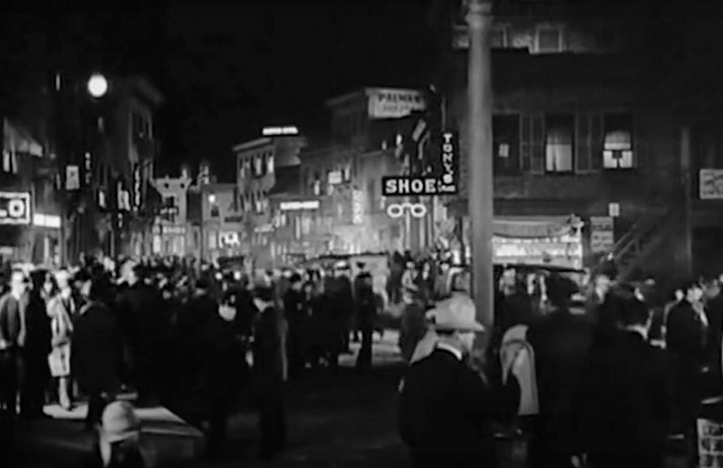
The Racket was the third feature to come out of the Caddo Company, a production company formed by a young Howard Hughes in 1926 and it was a winner, earning an Academy Award nomination for Outstanding Picture in 1929. The gist of the story will be familiar to anyone who’s ever seen a gangster movie, and in particular shares points of similarity with Brian De Palma’s The Untouchables. This is certainly no coincidence, as both films were based on the criminal career of notorious gangster Al Capone. Both feature an incorruptible cop against a surly mobster, with a cinematic game of cat & mouse playing out to fairly pat, but audience-satisfying, ending.
But while The Racket holds up pretty well even today, back when the 1930s began it no doubt would have been seen as a rather dated relic of an earlier era with its action and screen time being split between Captain McQuigg and Nick Scarsi. In 1931, James Cagney redefined the cinematic gangster in William A. Wellman’s Public Enemy and the box office floodgates opened. Violent, unpredictable and undeniably charismatic, Cagney’s Tom Powers set the stage for the gangster to take center stage in the movies, with Johnny Law generally being reduced to an ancillary role meant primarily to bring the stories to their fierce conclusions. Gangster films may have made their debut in the 1920s, but it was the thirties that defined their place in American cinema and set the stage for films like The Godfather trilogy and De Palma’s own Scarface.
Still, The Racket is a fun flick from the tail end of the Silent Era. Less gritty and melodramatic than the movies that would swiftly follow, it’s nonetheless a solid piece of filmmaking and a worthwhile addition to the public domain. So go on, take it for a spin. After all, you own it now.
*Vinegar syndrome is basically an irreversible breakdown in the chemical elements of film that cause a release of acetic acid, which gives off a vinegar-like odor. More happily, Vinegar Syndrome is a video distribution company that is intent on digitally preserving a variety of exploitation and cult films before they are lost to the ravages of time, thereby ensuring the fact that I’ll never have a lack of trashy films to review.**
**Sorry, Justin.
Intermission!
- It should be noted that The Racket must have hit very close to the mark indeed for some of Chicago’s movers and shakers, as it was banned from the city during its 1928 release.
- The Chicago ban on The Racket didn’t deter Hughes from going to the Al Capone well again in 1932, however, when he produced the original Scarface.
- Although most are irretrievably lost, silent film reels are still being found in vaults and private collections around the world, and transferred onto a digital format by film enthusiasts and historians.
- Although The Racket lost the Academy Award to Wings, director Lewis Milestone did win a pair of them himself, for Two Arabian Nights (another Caddo picture, also starring Louis Wolheim) and All’s Quiet on the Western Front.
- Louis Wolheim was indeed a math instructor at Cornell University, where he had obtained a degree in engineering. His distinctive flat nose was the result of a football injury.
- Known for his expressive face, George Stone had a lengthy film career. He wasn’t typecast as a gangster, but he did work in several films in the genre, most notably Little Caesar with Edward G. Robinson.
- Classic character actor Walter Brennan has an early role in the film, in a blink and you’ll miss it scene at the beginning.
 Mutant Reviewers