

I’ve never reviewed a whole series before. I think that’s what’s been holding me back. I like to do the job properly, y’know? Encapsulating my impressions of an entire series into a thousand words or so is really forking problematic. I mean, I can get positively Homeric over a single movie – and Misfits of Science (1985-86) had fifteen episodes! SO MUCH TO SEE! SO MUCH TO SAY!
And yet it vanished. Like… tears. In… rain.
Or not. Actually, you can still find it on YouTube of all places. But why would you want to?
Why? Because it’s fun!
1985/86 was a weird time for me. I was busy having a life. Lots of it. There wasn’t much television involved, but there was plenty of other activity, oh yes. (Look, I was at university living in shared accommodation. I could afford a TV, or I could afford mind-altering substances. Let’s be honest. In the eighties, who in their right mind would have taken the TV?)
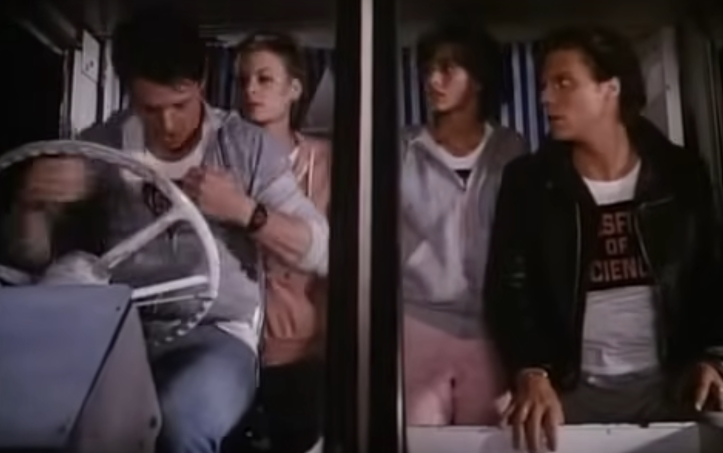
But I did regret not seeing more of Misfits of Science. I caught the opening episode and a couple of others (when I was visiting friends whose parents could afford televisions) and by all the dark gods, I wanted more! MOS was an early stab at the superhero ensemble concept, with a healthy dash of comedy. It was the sort of thing that more or less pointed the way to the kind of work James Gunn has been doing with Suicide Squad and Guardians of the Galaxy, except set in Reagan-era Los Angeles and equipped with the sort of budget that would have embarrassed a BBC science fiction show.
(For those not familiar with the legendary tight-arsedness of the Beeb in regard to genre stuff, I urge you to check out Blakes’ Seven. More on that anon.)
So, there’s this scientist Billy Hayes (Dean Paul Martin. He used all three names in the credits. Wonder why?) who works for A Big Corporation called ‘Humanidyne.’ What kind of scientist is Billy? Who knows? But he’s got a seriously eighties haircut. And he’s the nice-guy central figure of the show, cajoling and collaborating and co-ordinating and other things starting with ‘c’ to bring together the team of Misfits, who are:
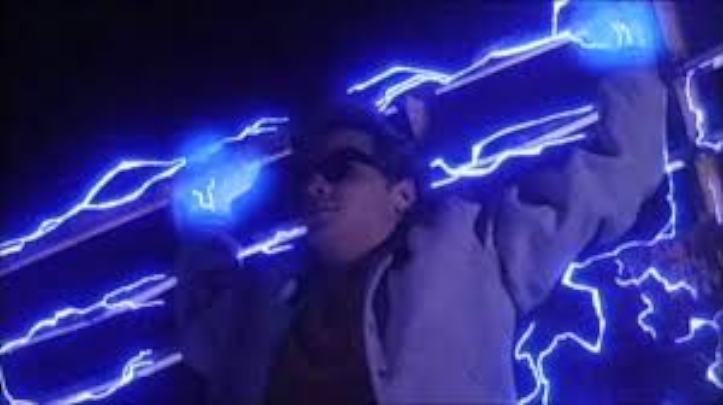
- Gloria Dinallo, played by a young (and seriously cute) Courteney Cox. She’s telekinetic. We know this because sometimes she touches the back of her head with both hands, and then the screen image strobes into negative for a brief period, whereupon stuff moves inexplicably around the set. Oh, yeah: dig those crazy eighties SFX!
- Dr Elvin Lincoln (Kevin Peter Hall), a 2.13m tall black scientist who hates basketball and has the ability to shrink down to 15cm for brief periods. (Yeah, I live in the metric world. Suck it up, you primitive screwheads!) Cue a lot of fairly sad green-screen work, and plenty of gags about finding clothing to fit a guy the size of a Ken doll.
- Johnny Bukowski (Mark Thomas Miller), a rocker with the ability to absorb electricity, hurl lightning, and run super-fast. But don’t get him wet, ‘cos he’ll short-circuit and die. (No explanation is ever offered as to how he manages not to die by dehydration. Okay. No big deal. I’m good.) Johnny B also has a slicker version of the haircut that eventually thrust MacGyver to international stardom. Didn’t work so well for Johnny, though.
There are also a few regular support characters. Dick Stetmeyer, the uptight boss of the lab where Billy “works” is played by Max Wright, who would flee the MOS ship as it went down to join the muppet-alien extravaganza that was “Alf.” (Shame on you, Max. Shame!) Diane Civita plays Miss Nance, the long-suffering “secretary” of the lab (why does a research lab have a secretary more or less in the middle of things?) And then there’s the lab itself, and of course the team’s vehicle – their trusty ice-cream truck.
“I’m sorry,” you say. “Did you say ice-cream truck?”
Yeah. I did, and it definitely qualifies as a support character. That’s how this super-team gets around, and it’s the perfect symbol for the show as a whole. You see, in the first episode Billy pulls this team together along with a big frozen guy who’s been in cryogenic suspension since Amelia Earhart disappears. He’s got ice powers, but all he ever says is “Amelia” in a heartbroken howl. He’s also blue, with cheap-ass Xmas-tree frosting on his beard and eyebrows because yeah, savagely shoddy eighties FX rule! Anyway, the only way they could keep Ice-man (which is what they called him) alive was by transporting him in cold storage. Hence the ice-cream truck, and attendant comedy hijinks.
Now, what makes the truck such a perfect symbol is the fact that Marvel Comics had an Ice-man (X-Men) character, and apparently they took umbrage to MOS borrowing the name. And of course, Marvel had lawyers while MOS had… I’m not sure what, to be honest, so Ice-man appears only in the very first episode of the series and is never seen again – but they still drive everywhere in the ice-cream truck!
By now, you will have worked out that the show didn’t take itself too seriously. That was the joy of it. These ‘superheroes’ didn’t have costumes. They had crappy day-jobs. Frequently they didn’t actually want to get involved with the nonsensical weirdness that Billy was into, which kind of made Billy’s persuasive approach and his nice-guy-next-door charisma into a superpower of its own. But the comedic approach to superpowered folks was downright refreshing. I mean, we’d seen something similar from The Greatest American Hero (we’ve reviewed that, right Justin? Link me here if we have! If not, oh, hell. Looks like I’m gonna take another bullet…) but the comedy there was all limited to the costumed guy’s unfamiliarity with his powers and the show actually took itself way too seriously.
Misfits of Science does not make that mistake. In fact, MOS seems rather to borrow from the legendary Buckaroo Banzai (come on, Justin… no WAY we haven’t touched that one, right?) in creating a chaotic, haphazard weirdness around the Humanidyne lab. Just as Buckaroo Banzai has its iconic ‘watermelon-in-the-lab-gear’ thing happening in the backround, the Humanidyne labs are constantly full of amusing images and characters, a sort of low-key mayhem that Billy has to navigate every week as he sets up the team’s next quixotic mission.
And that chaotic, low-key mayhem sets the tone for the whole show. Billy and the others just roll with the vibe, accepting lunatic impossibilities and tossing them into the mix with the ‘extended family’ metaphor, the ‘crimefighter’ tropes, and the inevitable commentary on the industrial/military complex behind the red, white and blue luchadore mask of the USA.
You see where it’s all going, right? A mixed bag of misfits brought together by a quirky, good-hearted charismatic leader-type… constantly struggling with lack of money… bickering and disagreeing, but ultimately coming together to Do The Right Thing on a weekly basis. The template covers a myriad of sins, from The A-Team through to Firefly. But MOS was ahead of its time. The quirky humour and off-beat storylines didn’t fly with audiences who weren’t yet ready for television to take the piss out of itself. The low budget kept the SFX cheap and cheerful, whereas the viewing audience was increasingly used to the look of big-screen FX magic courtesy of Lucas and Spielberg and their ilk.
Viewed now, the humour is a bit too eighties. It lacks a biting edge, and the fundamental family/niceness of the show has a certain saccharine quality that TV no longer promotes or values. It’s a bit mawkish and the writing can be predictable despite the frequently lunatic storylines. Nevertheless, MOS stands the test of time. You can watch it now and not hate either yourself or the original creators of the show. It may be ‘nice’, but it’s definitely fun and you should take the opportunity to look it up on YouTube, watch a few episodes, and wonder at what might have been if things had been just a little different.
Favourites? Well, episode 15 (“The Avenging Angel”) has a lot of fun with pro wrestling. Episode 8 (“Fumble On The One”) takes a damn funny poke at the legendary The Bionic Man. (Love the ‘bionic surgery scene… and how did they get the rights to use the Mission Impossible theme?) And in the final episode (“Three Days Of The Blender”) Billy is mistakenly imprisoned as an enemy secret agent, and brings his own unique version of ‘co-operation and togetherness’ to the prison experience. But honestly, all the episodes have their moments. Yeah, it’s cheesy as hell, but what’s not to love?
Oh, and get this: one of the episodes was written by a guy called Tim Kring. If that doesn’t ring any bells, maybe I should remind you of one of the really big hit series of the noughties: Heroes.
Gee – I wonder where he got the idea, eh?
 Mutant Reviewers
For more on Blake’s 7, I’m currently working on a Failed TV Pilots feature concerning a show that would have had Paul By Gawd Darrow as a regular. With luck It’ll be up Saturday after next.