
This month we asked the Mutants what everyone thinks about legacy sequels, especially in the modern age of Hollywood dragging back old properties for One More Go:
Justin: Back in 2023, I wrote a piece called Let Indy Die Already about the importance of letting franchises end. This was in response to the rise of the legacy sequels and rebooted franchises that were and continue to plague the industry. I stand by my thoughts there, as I see more harm than benefit coming out of the legacy sequel trend.
Sure, we’ve gotten a handful of great follow-ups and enough fanservice to feed starving hearts for years, but at what cost? So many franchises have become irrevocably tarnished by terrible leadership, direction, and writing, including Star Wars, Star Trek, and (yes) Indiana Jones. I’m beyond tired of legacy sequels at this point. Just let them go and start creating new stuff already!
That said, if I had to choose between a reboot and a legacy sequel, I guess I’d pick “legacy sequel” unless — UNLESS! — it’s Judge Dredd. The 2012 Dredd is one of the most underrated action scifi flicks of all time, in my opinion.
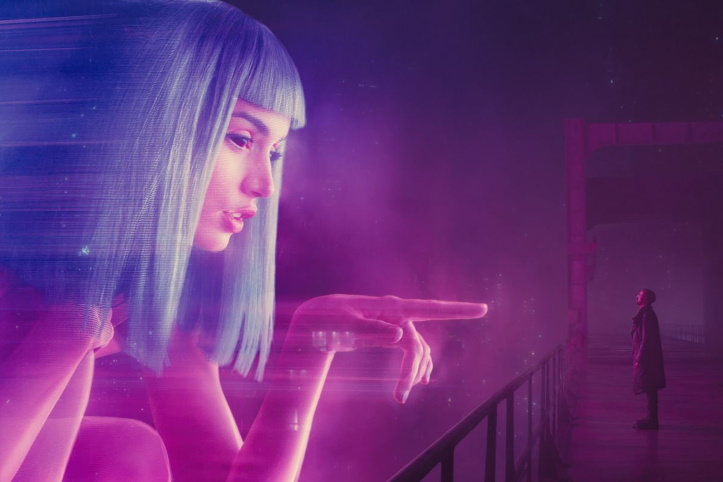
Thomas: As I see it, legacy sequels can go in one of two directions. Either they’re dominated by their returning casts and obsessed with retelling the same story, or they develop a fresh idea that not only makes a great movie but also brings new life to the whole series.
Blade Runner 2049 pulls us back into that exciting world but flips the original story on its head and takes its sweet time to explore a subversive original story. Harrison Ford is back, but he isn’t that important. Good. Indiana Jones and the Dial of Destiny can easily be described as “Here we go, it’s Indiana Jones again”. It’s all about Harrison Ford. Not so good. Star Wars: The Force Awakens has widely been critiqued for repeating many of the same Star Wars beats, but it does take Han Solo in a direction we’ve never seen before, and ultimately makes it clear that this new era is not about him. Great.
This is why The Matrix Resurrections is also in my good books. It’s a very different film to the original, and sure, maybe it doesn’t live up to the action hype of the first Matrix. But it’s doing something bold and I find it really refreshing. It’s also why Jurassic World: Dominion is so painful, becoming the worst of its trilogy. The first Jurassic World may be a re-tread of Jurassic Park, but at least it isn’t dominated by legacy characters who don’t have any new stories to tell.
I guess my overall opinion is that legacy sequels just shouldn’t be about Harrison Ford.
Drake: Nearly 12 years after Gilligan’s Island ended, NBC reunited most of the cast for a movie that would finally see the castaways rescued from the island they had been stranded on since 1964. A two-part TV movie, Rescue from Gilligan’s Island saw Gilligan, the Skipper and the rest try to acclimate to life in the late 1970s before getting on a boat, taking yet another cruise, and ending up stranded on their old island once again at the movie’s end. It was just a big loop that made sure everything ended up the same.
Pretty much every legacy sequel seems to follow a similar path. Characters who were shown doing something decades ago are still doing the same thing, because the filmmakers can’t grok that they may have, y’know, moved on with their lives. Han Solo? Yeah, he’s a smuggler again, even though when last we saw him he was a general for the Alliance. The Alliance itself? Back to fighting an empire that doesn’t call itself the Empire, but is still pretty much the same old Empire. The characters got older, but nothing really changed, because change is hard and it’s scary and the creatives behind these legacy flicks are a cowardly bunch who are far too timid to risk having an original idea. Probably because it would die of loneliness.
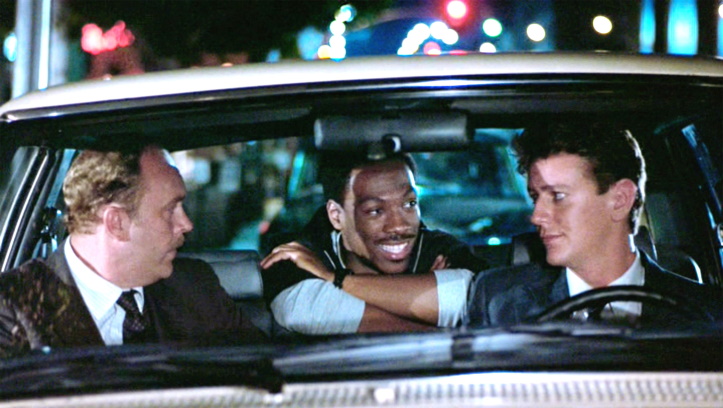
And the Star Warses aren’t unique, here. Beverly Hills Cop: Axel F put Eddie Murphy’s Axel Foley back in California, wearing the same clothes and making the same jokes as he was 40 years ago, with nary a thought that the character is now in his sixties and life just doesn’t roll on by and leave you untouched. Unless you’re the star of a legacy sequel, I guess. Then you’re immutable, right up until the actor who made you famous croaks and you’re replaced by a ghastly CGI replica.
So, no. Not a fan of these legacy sequels, at least from the few I’ve watched. Which, no, do not include any new Indiana Jones flicks, because there are only three of those. THREE! And you will never convince me otherwise.

Sitting Duck: This is more of a legacy retelling than a legacy sequel. However, a good example of how bad these can get is the Denis Villeneuve adaptation of Dune, which had been preceded by the intriguing but ultimately flawed 1984 film directed by David Lynch and the underappreciated 2000 miniseries directed by John Harrison. Part 1 showed some promise. It was interesting to see a Paul Atreides who actually looks like a teenager. They finally got the ornithopter designs right. The way they staged the hunter-seeker fight worked. But there were also a couple of red flags, in particular how the Harkonnens were just so boring (not something the prior two attempts were guilty of). Still, it was enough that I was willing to give the next installment a shot.
As it happens, Dune 2: Wormsign Boogaloo brutally abused my childlike trust. The biggest error committed was reducing the timeskip from three years to six months, which among other things resulted in the absence of Alia. Cutting her from this part of the narrative was especially baffling considering that Villeneuve intends to adapt Dune Messiah and possibly Children of Dune as well. In particular, Alia having killed Baron Harkonnen was a key point in her character arc. Making these sorts of core alterations in an adaptation of such a complex property will inevitably result in narrative snarls that will tangle into an incoherent mess (just look at Amazon’s Wheel of Time streaming series).
My guess is that Villeneuve didn’t want to deal with the headaches of employing a child actor. A poor excuse, as there are options. You could hire a little person performer, ideally one with Angelo Rossitto measurements. Better yet just have her as a high-end motion capture CGI character. Now to those of you currently shrieking, “Burn the filthy heretic!” hear me out. Granted, such constructs are commonly regarded as Uncanny Valley chimeras, with the dwarfs in the live action Snow White movie being an obvious example. And that is exactly why it could have worked. Alia as a child is supposed to be a freak that people instinctively find abhorrent.
Other characters have been subjected to inexplicable alterations. Stilgar went from a mostly book accurate portrayal in Part 1 to this credulous dolt who conceives all sorts of signs and portents from the most innocuous happenings. While he did end up falling under the spell of the Messianic propaganda surrounding Paul in the book, it had been a more believably gradual process.
And I’m not sure what to make of what they did to Chani. As well as having no chemistry with Paul, she tends to come across as a sitcom harridan. Particularly when Paul comes out of his coma and she greets him with an epic bitchslap. Then there’s the way she’s reimagined as a sort of secularist firebrand that makes no sense. Religion is at the core of the Fremen identity and is a major factor in what keeps them going. So someone who vocally rejects these precepts as Chani does here by any reasonable conjecture would not be tolerated within that society. What’s more, her constant denouncing of the Mahdi prophecies as a crock as they are visibly being fulfilled makes her look out of touch. I remember when I read Dune Messiah for the first time and I got to the part where Chani died. That moment was a gut punch. However, a death scene for this version of Chani would only provoke an indifferent shrug from me.
 Mutant Reviewers