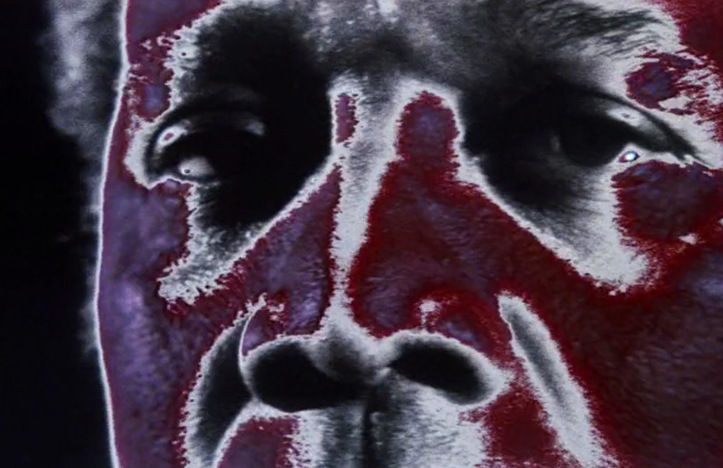
“Shapeshift. We do it for kicks.”

Drake’s rating: I’m now thinking of calling the Mutant Mice “Micen.”
Drake’s review: I’m not sure why, but 1981 was the Year of the Wolf, at least as far as Hollywood was concerned. Joe Dante’s The Howling was a big success that year, as was the John Landis film An American Werewolf in London. But sandwiched in between those two werewolf movies was another lupine-oriented flick that received much less attention and took something of a box office drubbing.
Which is a real shame, since Wolfen is a darn good movie.
Combining police mystery and horror film, Wolfen sees NYPD Detective Dewey Wilson (Albert Finney, Miller’s Crossing) investigating the deaths of a wealthy land developer and his wife, along with their bodyguard. The higher-ups are quick to point the finger at a supposed terrorist organization, but Wilson isn’t so sure.
He becomes even less convinced as other bodies turn up, at least one of them with a bit of fur on it belonging to a wolf. Or at least, something wolf-like, as the animal expert Wilson consults doesn’t quite recognize it and can’t pin down the exact species of wolf it might belong to.
That doesn’t particularly sit well with Wilson, who has heard a strange wolf-like howl a time or two while running down leads, and he’s beginning to think that there’s more to these murders than meets the eye. He’s right, of course, and while the title of the movie and the clues presented gives us some idea of where Wolfen is going, it’s not the whole picture. And that deviation from expectations might be one reason Wolfen didn’t find its audience back in 1981.
Of course, there are also problems inherent in cutting Wolfen down from the original director’s rough cut of some four-plus hours to just under 120 minutes. Plots were no doubt sheared, characters abbreviated and concepts dropped altogether, so what we see isn’t necessarily what the director was intending to show us. That’s fairly obvious with the so-called anarchists who supposedly targeted the land developer. They seem like they should represent an important part of the film, and be a legitimate lead for Wilson to follow, but their presence is quickly noted and then forgotten about until the movie’s almost over, when they’re made a scapegoat once again by a police captain anxious to just end the case.
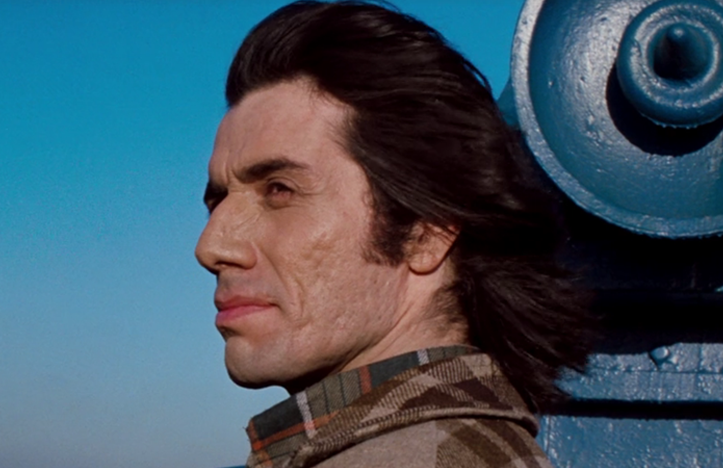
More is made of the Indigenous men who work the high-rise constructions and bridges, as Wilson comes to suspect a man named Holt (Edward James Olmos, Blade Runner) of having some implication in the killings. And Holt does know something, even if he happily spends a bit of time leading Wilson (and the audience) on a bit of a wild goose chase, but he’s not going to give that information to the detective on a silver platter. He knows Wilson is going to have to have some first-hand experience with the unknown before he really believes in it.
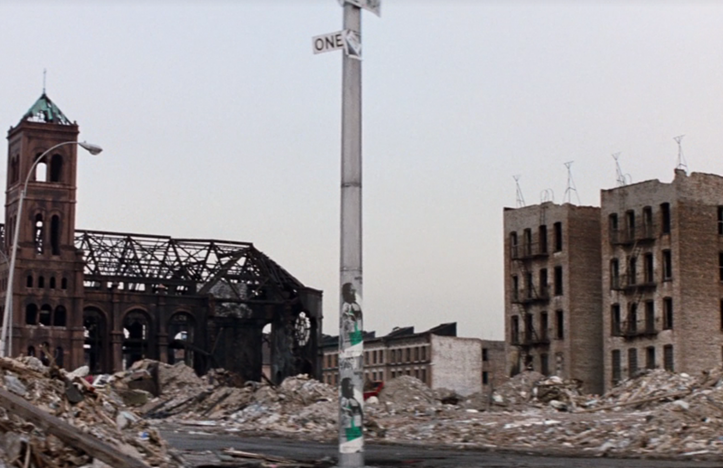
There are some interesting concepts at play here, including the idea of something strange and mysterious, and potentially an apex predator, living in the shadows of the city. They nest in the South Bronx, a place that was in the early ‘80s featured in more than one movie just to showcase the urban decay that had consumed the area. Buildings lie in ruins, torn down by wrecking balls to lie in heaps of brick and mortar. Or they stand, just barely, looking positively post-apocalyptic in their ugly decline. But people still walk down the sidewalks and live among the wreckage, and in Wolfen there’s something that sees these people as prey.
There’s obviously a sociopolitical message going on as well, what with unexplained deaths and disappearances being completely ignored until the rich guy gets killed, and with the Indigenous workers being very critical towards modern civilization even as they help to build skyscrapers and bridges. But even though these elements help to flesh out Wolfen and distinguish it from your average monster flick, it still feels like they were severely cut down in editing, with just enough kept in to make you wonder where else the story originally went.
Still, I find Wolfen to be a very good movie. I’ll never stop being curious about the additional material that director Michael Wadleigh shot, or where it might have taken the film, but the version that survives in nonetheless a solid supernatural thriller. Sure, it’s a bit overstuffed and, thanks to the cuts, underdeveloped, but it’s still an interesting film that deserved more recognition than it got.
Give it a try sometime when you’re in the mood for something wolfy, but not full-on lycanthropy.
Intermission!
- Director Michael Wadleigh is better known as the documentary filmmaker behind Woodstock. He never directed a feature film again after Wolfen.
- In addition to Finney and Olmos, the great Gregory Hines has an early role as a medical examiner who is quick to figure out that there’s something out there, and that something is hungry.
- That thermal imaging camera effect was a unique special effect at the time, and was featured in the advertising. A similar effect was later used in Predator.
- Wolfen was based on author Whitley Streiber’s novel The Wolfen. It’s said to be somewhat different from the movie, and as soon as I can shoo the Mutant Mice away from my desk I’m going to track down a copy.
 Mutant Reviewers