
A little while back, Justin wrote a piece called “Movies are dead: Welcome to the era of cultural stagnation” about the current state of movies and how their place in society had progressed. He felt that movies had suffered a loss of creativity in the extreme, so much so that we’ve entered a kind of time where our culture gets diluted.
Before we get going I want to point out that Justin is the driving power behind this website. He puts in more effort, passion, and love than all of us combined. The time I spent with him I feel as though has not been wasted. Still, I don’t agree with his take here, and I want to provide a rebuttal explaining why.
The Classic Cult Movie
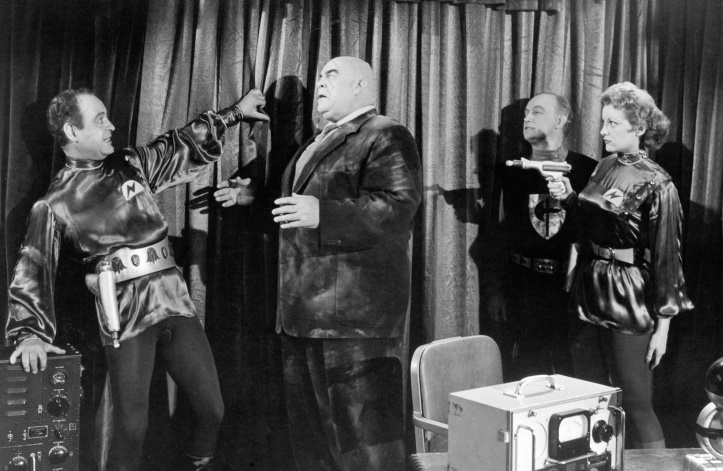
If you come to our site, then you know exactly what “cult” is. Movies like Night of the Living Dead, Rocky Horror Picture Show, and Plan 9 from Outer Space are examples of the classics.
However, these movies were never intended for mass consumption but were intended for specific subgroups of society. That’s what made them strong. Movies like Cheech and Chong were made for people who appreciated stoner comedy, college movies had always had a bit of raunchiness is to them, and teenage sex comedies had a little bit of both. When’s the last time you’ve seen any of these types of movies? Hold your answer for a second…
I grew up in the age of cable TV and late-night TV. Both of these together created a hungry animal that was starved for content. When cable started appearing around the ’80s, it had roughly 50 years of content to draw from. It became pretty clear that certain movies started to gravitate towards the top as some of the best.
But there was another level of film that gravitated toward the late-night viewer, the person who was looking for something more tangible in the movies he or she was watching. The Universal Monsters series and the drive-in movies of the ’50s started to coalesce around this viewer. These movies were kitschy, fun, offbeat, and perfect for late-night viewing.

Nostalgia
Cult movies are never new. A cult movie needs to ferment over time in order to find its audience. This idea alone implies nostalgia. The best cult movies resonate and stand the test of time. I can’t tell you how many times I’ve dug out one of these movies and played it like a deep cut.
In the 90s, it became known that the French were thoroughly enjoying Jerry Lewis pictures from the ’50s and ’60s. Nothing really wrong with this, it was just seen as weird. But there was something even stranger, when they changed the person who was dubbing the lines, they didn’t enjoy them as much. The first voice actor sung to them, in his tone he communicated the humor of the situation, and they loved it.
This is exactly why cult movies became popular, they all have something that appeals to a certain subgroup of society.
When I was a kid, they had The Son of Svengoolie (1970-73) who showed all kinds of monster movies along with sci-fi and is basically responsible for my introduction to cult films. I can’t tell you how many Godzilla movies I saw on his show, yet I can tell you that I’m still a fan to this day.
The beauty of the Godzilla films was a guy in a suit stomping cardboard buildings. There is no better example of true cinema than Godzilla. Godzilla takes the viewer aside and says, “Look, we know it’s fake, you know it’s fake, just go along with us for the ride.” This is suspension of disbelief at its most pure. It’s also nostalgia. The way I felt as a kid watching Godzilla stomp the fleeing villagers is exactly the way I feel today. I still enjoy it, they are fun and as I get older, I find new ways to appreciate them.
Just because I think nostalgia is one of the components of a cult film, this is not to say that I can’t watch a new movie and instantly know it’s going to be a cult film. It happens all the time. Nostalgia in my opinion only makes them better, passing time only makes them more entertaining, multiple viewings over the decades reinforces this perspective.
The Movie Industry
So, is Justin right? Has the movie industry stagnated? This is not a simple question to answer, although that is exactly the answer I’m going to give. No, it is not stagnated.
The movie industry right now is pumping out more output than it ever has. I think stagnation, in the way Justin means it, is to suggest that there’s nothing original or particularly creative that’s being made. This is a fair criticism, although I don’t think it understands exactly the purpose of the movie industry. The movie industry has only one purpose, to make money.
Going back to the question I asked: When’s the last time you seen the stoner comedy or a raunchy teen sex comedy? They don’t make them anymore.
When you invest $100 million in a film you have two goals. First, you want to make your money back. Second you want to make a profit if possible. That’s it folks. It’s been that way from the beginning and it’s that way now. Yes, there is an artistic component, and yes from time to time studios try to make artistic films. They almost exclusively do this at a loss probably for tax purposes and accolades. I guarantee that whatever the subject the film it was approved by a group of committee members. They’re testing to see if a new demographic will yield results. They’re not members of a movement, they are businessmen trying to make money. They will tap whatever current ideas are floating around, whatever definable demographic group there is, or any current trend that will play well in the theater. And to be honest, this is perfectly okay.
There’s a bitter pill to swallow here, and that is if you’ve seen a movie you didn’t like because it has subject matter you find objectionable, the film probably wasn’t for you. Wait there’s more! As you get older you gradually leave the dominant group and enter into an ever shrinking cluster. See that’s why Matlock was so popular. Nobody else was making anything for seniors.
So does this mean that we’re in a monoculture? Once again, I’m going to say no. A while back, I had the chance to go to a Bollywood (the film industry in India) film festival. I was privileged enough to ask the event director a question I’m certain that he’s heard 100 times, “Why is there always dancing and singing in Bollywood movies?” He slung out the answer like he had said it 100 times before, “The people of India know what they want for their movies, their real lives are harsh, and they want to be taken away from the everyday experiences. They want singing and dancing in their movies.” Don’t forget that India has over 1 billion people, 12 distinct ethnic groups, and 22 languages. They are far from culturally ideal.
The same thing has happened here in America. As a country, as a group of filmgoers, we have basically decided what form cinema will take. When the film industry invests $200 million and gets $1 billion in return, do you seriously think they’re not going to notice? What’s more, they keep doing it and keep getting the same return.
I’ve been hearing this a lot lately, “If it ain’t broke don’t fix it.” Charlie Chaplin produced 81 films, Buster Keaton had 19 2-reel films, Basil Rathbone as Sherlock Holmes made 14 films, Hope and Crosby’s on-the-road movies made seven flicks, there were seven at-the-beach movies with Frankie Avalon and Annette Funicello, 1966’s Mission Impossible TV series converted to eight feature films, 1977 Star Wars… well, I would have to contact NASA at this point to figure out how many sequels and prequels.
I could go on, my point is variation on a theme is Hollywood’s bread-and-butter.
AI
Yes, AI is coming, and what that means I don’t have a clue. I can tell you this though, flashback about 25 years to around the year 2000. Both software and hardware tools for making music were becoming insanely affordable. Being a music lover I anticipated a deluge of independent bands flooding the Internet with their music.
I searched tirelessly and found that there was no more and no less people producing music and releasing it. Wait five years I kept saying. Nothing, nothing, nothing. There has been new music produced, yet not nearly at the rate that I was anticipating.
What happened? I do have a theory; I think the millennials and generation Z pumped all their creativity into YouTube and the Internet. Say what you will, but YouTube is amazing. It is essentially the depository of all human knowledge. I would say this is largely due to generation Z and millennials creative input. They also made podcasts, blogs, and provided content for such. My point is you never really know how something’s going to unfold. Technology can take on a life of its own and be applied in ways that are completely unexpected.
Movies started out without sound, then the talkies came in, then color, practical effects only grew in complexity until they were computerized, new lenses, new ways of recording audio, new technology to transmit and play movies, different aspect ratios, the film industry has always pushed the boundary of making movies. I see AI as no different. If something’s good, it will be good no matter where it comes from.
I have seen the short videos that AI has been producing, and they’re interesting to say the least. I want you to remember something though, you not just going to be able to type in, “Make a good movie.” It’s going to take significantly more than that. You’re still going to need that spark of creativity. You still have to write a script, decide the style, pick actor types and motivations, color palette, lighting, sound design, wardrobe, pacing and everything else that goes into a movie. Yeah, you might be able to skip some of this with automation, nevertheless you’re still going to need consistent looking characters, consistent sets, let’s not forget about editing. I imagine that AI will be a tool like any other tool.
Nouveaux Cult
I’ve been writing for this site for almost three years now, and I still struggle wondering exactly what we’re talking about. I often am drawn to pop, cult, drive-in movies, and B-movies. I personally think people who love these kinds of films are greater fans of cinema because they find things to love in films that other people disregard.
I told you about my gateway film experiences as a child, but I didn’t continue to when they truly affected me. During my teens and early 20s, there was a healthy flow of subculture that came from Night Flight (TV-series 1981-88), MTV, and ’90s satellite receiver. Let me just say this, if you’re open to it and you search for it, you will almost always find something.
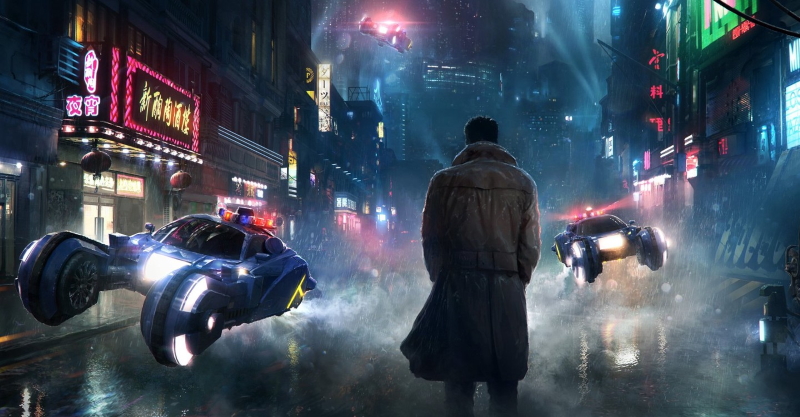
The cultic goodness that I experienced in those years was beyond formative, it added to essence the of what I was. What set it in stone was the day I was flipping through a High Times Magazine and saw an article called “Movies to watch while you’re stoned.” The movies they had listed were: 2001 (1967), Blade Runner (1982), and Eraserhead (1977). I will be willing to bet that even if you don’t imbibe you would understand why these movies were picked. It’s important to see how this is a lifestyle, something to be shared, more importantly something to be nurtured.
There are 9500 studio movies released each year, more than 500 hours of new video content are uploaded to YouTube every minute, which equates to 30,000 hours of content uploaded per hour, or 720,000 hours daily, there are short and independent film websites such as Filmdoo and Vimeo and dozens of others, film festivals, international films, and, lest we forget, there’s 100 years of cinema to sift through.
Being a lover of cult movies is not a passive hobby. Yeah, there’s a lot of crap being produced, you have to be part conservator and part fearless adventurer. It’s like when you go on a road trip and you get off in a town you’ve never been in, there’s all the same fast-food garbage, although if you drive down the road a bit, you might find that awesome hole in the wall restaurant that you will remember for the rest of your life. The point is, some of the best films never rise to the top, you have to get in there and find them.
 Mutant Reviewers