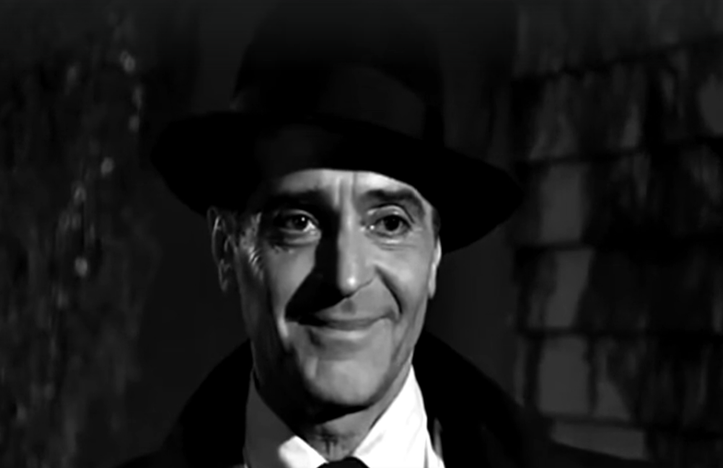
“I can never tell about him. He keeps very irregular hours.”

Drake’s rating: He said, he liked, the ocean
Drake’s review: In 1958, Hammer Films premiered the film that would redefine the cinematic vampire genre for the next two decades. Dracula, known as Horror of Dracula in the United States to avoid confusion with the Bela Lugosi classic, introduced Christopher Lee in the titular role that he would become famous for, and surprised audiences with a full-color feature that spawned eight sequels and a host of imitators. It is, inarguably, one of the most influential horror films ever made.
But Dracula wasn’t alone in bringing the Transylvanian vampire back to the screen in 1958. United Artists took their own swing at updating the character as well, including bringing the Count into the modern day with The Return of Dracula. Unlike Hammer’s home run, however, UA hit a single and then got tagged out while trying to steal second base.
On the positive side, Francis Lederer is a decent Dracula. The Prague-born actor brings a bit of menace to the role, and his natural accent is an asset in his portrayal of the vampire. A veteran of three decades on the screen in both Europe and the U.S. by 1958, Lederer feels fairly at ease here. He lacks the overt charisma of Lugosi and Lee, but he nonetheless acquits himself well enough throughout the film.
That’s the good. The bad is… pretty much everything else. For reasons undoubtedly tied to the budget, the movie is set in the present day,* with all the scripted awkwardness that implies. Escaping from vampire hunters in Eastern Europe, Dracula boards a train and quickly kills a young artist. Taking the man’s place, the vampire travels by rail, boat and rail once again, eventually finding himself in the deceased artist’s final destination of Carleton, California. Because there’s nothing vampires enjoy more than suburban living.
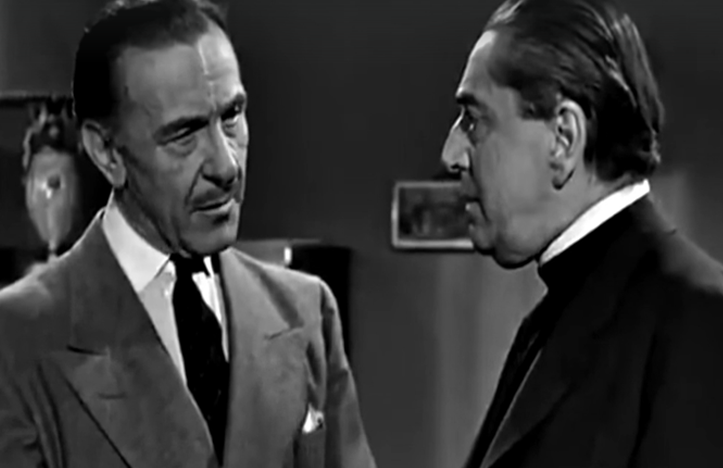
Dracula pretends to be Bellac, the man he killed, and finds the artist’s extended family happily waiting for him at the train station. And from there it’s a fairly typical Dracula movie, except that we don’t get Gothic castles, flying bats, low-cut bodices or wary villagers. Instead we have tract housing, a 1950s family, ponytails, and whiny teens. It’s a fairly blatant attempt at cramming together the world’s most famous vampire and the teen horror movies of the day, and those parts are simply incompatible.
The problem is, and this was evident in Hammer’s own Dracula A.D. 1972 some fourteen years later, Dracula really doesn’t work well in a modern setting. He needs castles and fog and terrified peasants to really ramp up the terrifying atmosphere. Sticking him in a modern era without updating the character just makes him look silly.** Even Blade Trinity couldn’t pull it off, if that movie actually existed which it definitely doesn’t. Trust me, the series ended at Blade II.
The Return of Dracula seems to be forgotten today, which it probably should be. Heck, I’m guessing that it was even overlooked back in 1958, as soon as audiences got their first glimpse of the unquestionably superior Hammer film. Aside from the somewhat inspired casting of Lederer, what we have here is a fairly lackluster attempt to bring Dracula into a modern-day setting, shot on the cheap and looking like an overly-long TV show.
This one’s for Dracula completists only, and even they’ll find it lacks bite. Everyone else can move on to more interesting fare featuring the Count. Like maybe Judd Hirsch’s portrayal in the Kenner toy company production, The Halloween That Almost Wasn’t.
No, I’m kidding. Unlike Blade Trinity, that does exist, but don’t go looking for it. You won’t like what you find.
*The present day of 1958, of course.
**Something the creators of Love at First Bite realized, and leaned into.
Intermission!
- The introductory narration tells us that Dracula was never proven to be destroyed, and so the “search continues till this very day.” Wow, spoilers right off the bat.
- I’m pleasantly surprised that the vampire hunters move in on Dracula at dawn, just as the sun is rising. Far too many Van Helsing wannabes try to engage him at night, when he’s awake and perky. Of course, the coffin is empty, but still, good planning, guys!
- Uh-oh. The poor artist is given a name and a backstory. That means he’s toast.
- I wonder if Dracula is disappointed that the train was going to Carleton and not Santa Carla.
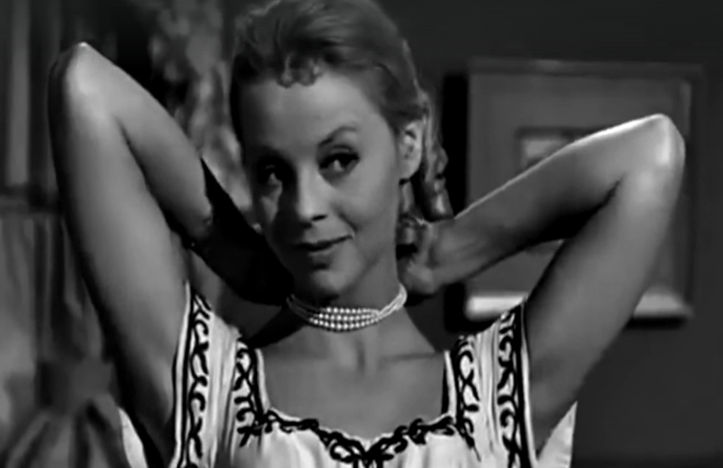
- The mother not seeing Bellac “since he was a little boy” is pretty funny, considering Lederer is eight years older than the actress playing his supposed aunt.
- Drac’s just rocking that jaunty hat.
- The requisite annoying little brother needs a smack upside the head.
- Getting a lot of ketchup with that stake!
- Man, Dracula is kind of a klutz here. I’m not sure I’ve ever seen him stake himself before.
 Mutant Reviewers