This month’s Mutant Roundtable question was put forth by Sitting Duck, who asked us all what movie we actually like from a director we hate. Well?
Sitting Duck: Stuart Gordon is a director who has always annoyed me, particularly in the way he handles Lovecraft. While Re-Animator may be a beloved cult classic that even Siskel and Ebert liked, as a Lovecraft adaptation it’s akin to a Jane Austen novel adapted by Michael Bay. Then there’s his version of The Pit and the Pendulum. There’s one scene in it which I suspect was inspired by the scene in the Roger Corman version of The Masque of the Red Death where Vincent Price is leering at a naked Jane Asher. But while Corman manages to remain classy (as classy as that sort of thing can be, anyway), Gordon takes the basic concept and makes it a million times more gross.
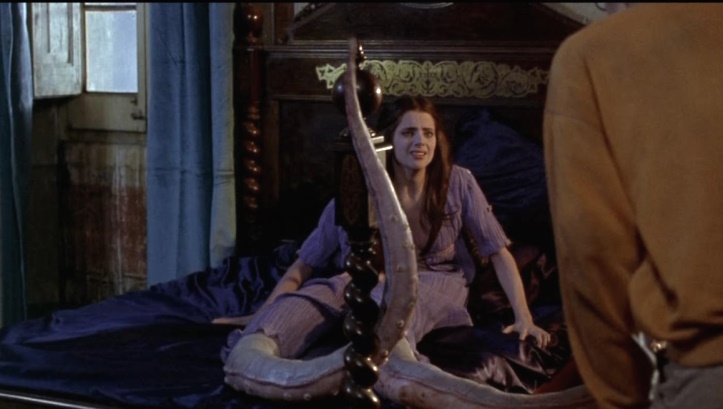
An exception occurs with his 2001 film Dagon, which is actually an adaptation of the Lovecraft novella The Shadow Over Innsmouth rather than his early short story of the same name. It’s not that he dials back the weird, gross sex stuff. This is Stuart Gordon we’re talking about. It’s just that the weird, gross sex stuff kind of sort of fits the narrative of The Shadow Over Innsmouth? Maybe? Well more so than From Beyond. And at least he does a good job of realizing the chase sequence.
And for many of you, I suspect that, if you were to meet a woman who looked like Macarena Gómez and she told you that she’s your long-lost biological sister and she really wants to ride you like a seahorsey, you might end up trying to convince yourself that incest isn’t really that bad. Even if her lower half consists of a pair of squid tentacles.
Now for something really controversial. Hayao Miyazaki is an animator hailed as a genius of his medium. And I cannot abide him. Perhaps it’s because the first film of his I saw was Howl’s Moving Castle (which I despise for many of the same reasons Eunice did). But whatever artistic talents he may possess, they are countered by him being a sanctimonious bore.
Turns out I had to go back to before he became an angry old man yelling at clouds when he got his first directorial effort with The Castle of Cagliostro. Perhaps being new at the job and working in the well-established Lupin III franchise kept him from indulging his worst instincts. Or maybe said instincts didn’t exist yet. Whatever the case, The Castle of Cagliostro became the archetypal Lupin III movie (though The Fuma Conspiracy still has the best chase sequence).
Another thing that made it important is how it softened the lead character, arguably in a good way. Previously, Lupin had been much more morally ambiguous, almost to the same extent as Diabolik (while the character is most frequently compared to James Bond, I’m pretty certain the Giussani Sisters influenced Kazuhiko Katō to some extent). But here he much more heroic, gallantly rescuing a princess while having no intent of shagging her later (which the older version of Lupin totally would have done).
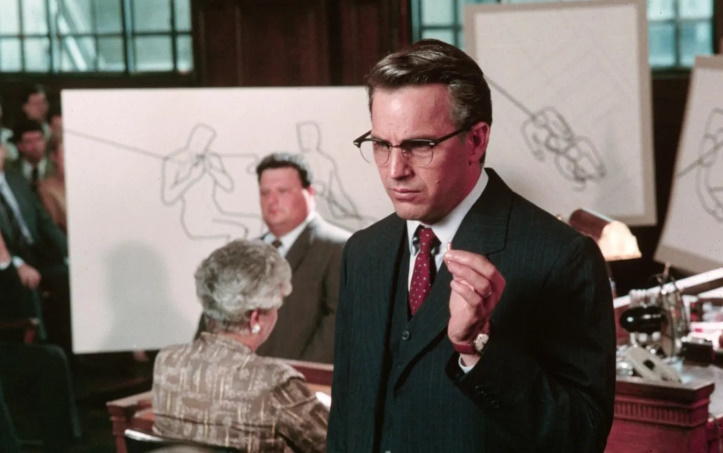
Al: Everything Oliver Stone makes feels like a letdown to me. Great ideas, but the execution is always a heavy-handed, sprawling, unfocused mess. And yet somehow, the messiest, sprawling-eat, heavy-handedest film in his career — JFK — is a total darling of mine. I love the cast, I love the bizarre performances, I love the plot that feels like it’s rolling out in five directions at once. It captures that feeling of paranoia and swimming in the vast ocean of a conspiracy better than any film I’ve ever seen. Even at 3.5 hrs, I’ll sit down to watch JFK any day of the week.

Justin: Like about 98% of intelligent filmgoers, I haven’t given Brett Ratner a single thought since the mid-2000s. For starters, he’s kind of a horrible human being and doesn’t need to be anywhere near my internal happy place. For another thing, he’s a no-talent hack that nearly sunk the X-Men franchise right when it should’ve been hitting its peak.
But I’ll make this one — and only one — concession: Red Dragon wasn’t half-bad. I still prefer Manhunter (the original take on this source material), and I know it’s a shameless effort to keep Anthony Hopkins playing Hannibal Lector far past the years when he should’ve, but it wasn’t terrible. Edward Norton is usually a dependable watch, and Danny Elfman showed up to do the score. I believe I called this “competent but not exceptional,” which is as high amount of praise that I’m ever going to give Ratner.
Now go back and scurry into your sewage drain pipes, sir, and never make another movie again.

Drake: There are quite a few filmmakers I’m up and down on, simply because that’s the nature of the beast. It’s difficult to make more than a small handful of movies that keep appealing to your initial audience, especially if you want to grow as a creator and expand on the themes of your early output. I’m much more likely to note a clunker from a filmmaker I like, rather than dwell long enough on one whose movies I don’t care for to find a gem in their collection.
But, if I have to answer this (and I do, since Justin is aching to try out his brand new Mutant Thwackstick), I’m going to go with Ron Howard’s Rush. Now Ron Howard the person I know next to nothing about (save that he was a child star for basically his entire adolescence), and he seems very nice in the few interviews I’ve seen or read over the years. Ron Howard the director, however, is someone whose films I could never get into. Splash? Eh. Cocoon? Saw it once, didn’t like it. The Paper? Terrible. Honestly, his films are so heavy-handed that they make the often maudlin Steven Spielberg look like a deft hand in comparison. His characters live in a world of their own, their motivations lived out expressly for whichever film they’re inhabiting, but have zero depth past their two hours of run time.
And that kind of made him a solid choice for a movie about Formula One. Much like the Hollywood Howard grew up in, the F1 circus is a tiny little world of its own, with stars and starlets, managers and directors, and massive amounts of international money being spent on an annual basis. I grudgingly watched the movie and, despite Howard having the same flaws as he has always had, Rush worked because F1 itself is barely cognizant of the world outside of its own bubble. Sure, I’ll quibble with inaccuracies in the details (no, James Hunt wasn’t going around punching reporters… although he may have drunk a few under the table), but overall Rush worked because Howard was portraying a lifestyle that he surely must have found familiar.
Now I’ve gotta scoot before Justin finds out I can’t stand Willow, either…
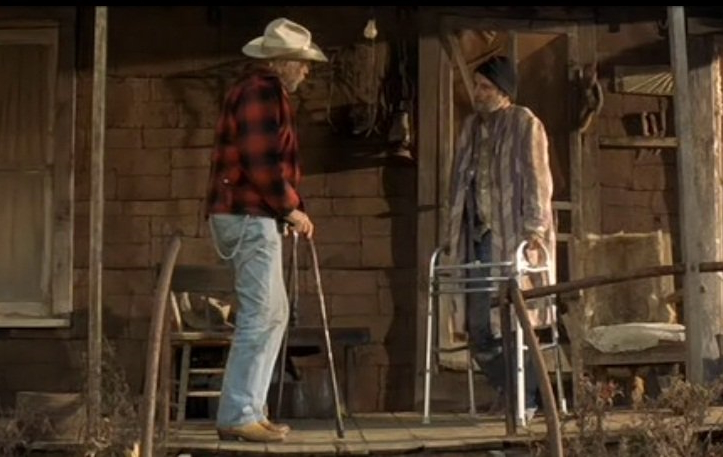
Anthony: Just to be clear, I am NOT disparaging David Lynch, I have just never been interested by his work. I’m not saying his movies are bad, I’m just not part of his target audience, at ALL. Except when it came to The Straight Story, possibly the most accurate title ever bestowed on a movie.
No metaphysical gimmick, no super/para-psychological shenanigans, it’s just a beautifully human story about an elderly man taking a trip across country to see his estranged brother one last time before it’s too late, and doing it the only way available to him: on his garden tractor. The entire movie deserves praise, chief among it all for its lead actor, the late great Richard Farnsworth in his final performance before checking-out for good. But it’s really the final scene that gut-punched me into being haunted by this beautiful little film, maybe because it struck quite close to home.
ZombieDog: In aesthetics and art history, the constant mantra is that you are only supposed to evaluate each individual work and not consider the artist who created it. I’ve always felt this approach to be problematic. The approach was basically developed for Renaissance art where the artist wasn’t always known. To me it seems incredibly difficult to remove art from the artist, especially with people like Van Gogh, Michael Jackson, or Marlon Brando. These particular artists personal lives are filled with such chaos and extravagance that it’s hard to see past their personas to just evaluate the art on its surface.
Keep in mind I don’t know this person as in real life. Actually, I’ve never ever met a famous actor, not once. The only aspect I have to evaluate are rumors and in this particular case; for my choice, the legal system. Roman Polanski was charged in 1977 with drugging and raping a 13-year-old girl. It’s fair to say that this is a pretty foul act and to make matters worse he fled the country.
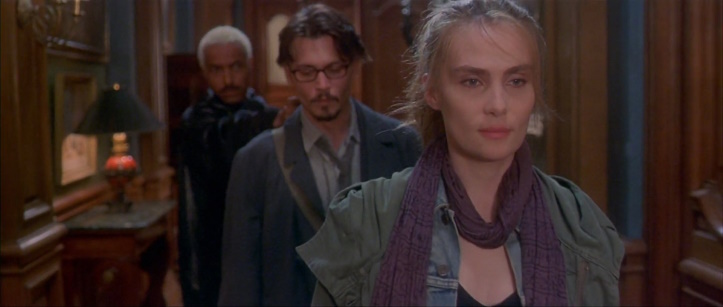
The problem is, he makes incredibly good films. The Ninth Gate (1999) and Ghost Writer (2010) are two of my all-time favorites and have just about everything I love in film. The pacing, cinematography, casting, you name it everything is spot on perfect. They emulate perfectly that ’70s style and mood. With multiple Academy nominations and one victory “best director” win for The Pianist (2002). It’s fair to say he is extremely accomplished at producing high level cinema.
In my mind, I look at Polanski with total honesty. He has done bad things, he has done good things. The exact same as the rest of humanity. I’m not saying that he or anybody should be excused for their bad deeds if they’re famous or have done good things to counterbalance. What I am saying is that humans are a complicated mix of various deeds all of which carry the weight of the intent behind them. Life is complicated folks.
 Mutant Reviewers