
“Death to Videodrome! Long live the new flesh!”

ZombieDog’s rating: An ’80s five star
ZombieDog’s review: Cult movies are like rare gems — often overlooked or simply forgotten about. The elements that make good cult usually exist on the extremes, with subject matter such as drug use, excessive violence, or less-than-traditional storylines. For those of us who love cult movies, these are exactly the reasons why we seek them out. The willingness to tell stories that would otherwise not be told is reason enough to watch.
However, searching for the unusual does carry with it some risks. The danger is some of these movies can stick with you whether you want them to or not.
Videodrome was written and directed by David Cronenberg, who has a significant list of cult films that are really the benchmark of measurement for the genre. Around the ’80s, Cronenberg was on fire and pumped out five films that would set the tone for cult movies to come, including this, The Brood (1979), Scanners (1981), The Dead Zone (1983), and the masterpiece of the bunch, The Fly (1986). If you’re curious as to what a cult film is, pick anyone of these and you will not be disappointed. Cronenberg has basically dedicated his career to the genre.
In this film, James Woods stars as Max Renn, a television producer and director who is looking for the next hot thing. His TV station predominantly shows softcore porn with a heavy romantic overtones, but Max is looking to change that. A hacker friend exposes him to 53 seconds of a video featuring violent sadistic torture and rape, and Max is instantly hooked. He becomes obsessed to find the producers of “Videodrome,” and in his search leaves no stone unturned while calling in favors from people who deal with the underworld.
This is where things start to get strange.
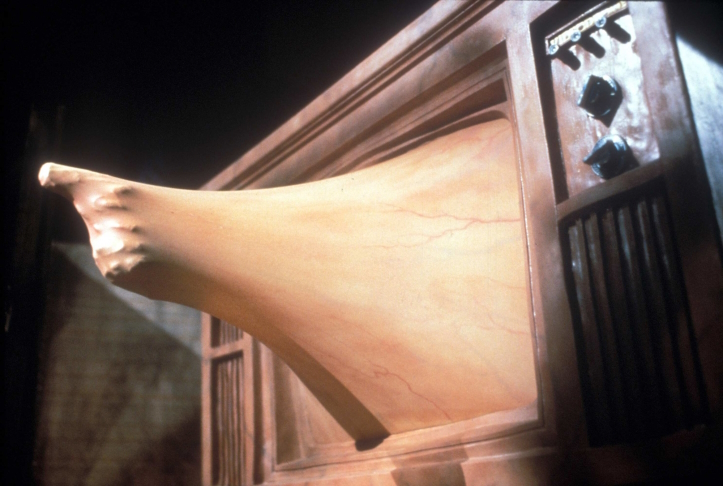
While Max is looking for clues as to anything related to this show, he starts to hallucinate and begins to embrace more violent extreme behaviors. It’s important to point out that while the movie is set in Toronto, the locations that Cronenberg chooses are sheer genius. He shows us a city that’s disintegrating, with decay and apathy filling the screen, and it’s here that Max finds Cathode Ray Mission.
The Mission feeds into this apathy by offering wayward souls a chance to get reconnected with society. Its main philosophy is if you watch TV, you will be healed and become one with what you’re seeing and with everything. It’s definitely a bit out there, but this is where Max meets Bianca O’Blivion (Sonja Smits), the daughter of Mission founder Brian O’Blivion (Jack Creley).
Without hesitation or fear, Bianca asks Max if he is there to kill her. Stunned by her question, he begins to tell her the circumstances that led him to the Cathode Ray Mission. He desperately wants to see her father, but soon finds out Brian’s been dead all this time — killed by Videodrome.
During this whole section of the movie, we feel as though it’s difficult to tell what’s real. This is Cronenberg’s first attempt at working with altering with perceptions of reality. We do see this approach later in 1991’s Naked Lunch (sourced from a book written by William S Burroughs in 1959) and 1999’s eXistenZ , both of which twist reality in such a way that it’s impossible to tell what’s real. Cronenberg’s ability to visually tell these stories is amazing. There’s a heavy cerebral content which constantly keeps us guessing and mesmerized.
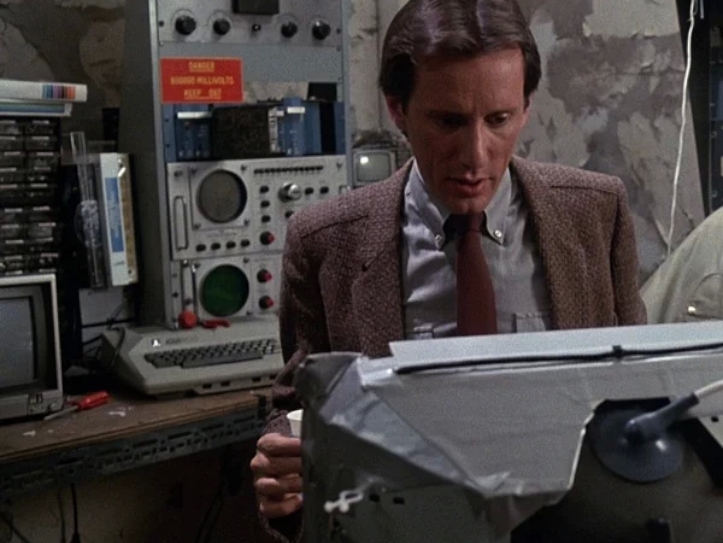
So is Videodrome a perfect cult film? Sadly no. While it’s definitely worth your time, the movie feels like it was rushed and there are huge chunks of plot and dialogue missing. This could have been done for effect, although it just produces some nondescript confusion. To make matters worse, the movie clocks in at 89 minutes, which is barely enough to get the film going, let alone deal with the concepts that are being thrown at us. This story would do well to be in a 10-part Netflix series; there are layers upon layers of ideas that would be sheer pleasure to sift through.
Don’t get me wrong: I would absolutely put this film on a list of cult movie royalty in addition to describing it as a work of definitive cinema that pushes the boundaries of what’s possible in visual storytelling. I was actually amazed on my re-watch that the majority of the practical effects still held up. Additionally, while not a constant, there are moments when Cronenberg embraces very distinctive cinematography, which shows that he was a master even back then.
That being said, heads up, because this movie contains realistic depictions of torture, rape, murder, and deviant sexual practices involving the giving and receiving of pain. These depictions are ’80s versions, so they may not be the worst, yet the ideas are there nonetheless.
This is a difficult review to write because in the end parts of this movie are distasteful and without a doubt not for everybody. I would have to say again that if you are interested in cult movies this is absolutely required viewing. It’s important to remember that the cult genre isn’t just kitschy and offbeat — it really does push the boundaries of what’s acceptable in society. While there may be other films that have come out since then that have depicted exactly the same actions, this film broke ground and revealed a genius filmmaker and writer.
 Mutant Reviewers