
Christmas usually comes with lots of gatherings over a meal, whether it’s at work or at home with the family or with friends in a restaurant, and those meals are usually pretty specific to the occasion. So year after year you enjoy the same kind of food at the same time of the calendar, over and over and over, enough to at some point make you simply sick of cranberry sauce. Decades of such dinners make a corn dog look like the promised land.
For me it’s the same with movies. I love me some zany Bill Murray, but I’ve watched Scrooged SO many times he’s become simply annoying, and don’t get me started on rooting for Joe Pesci to 86 that hellspawn of a rich kid. So why not change the menu this year? Try something different yet traditional. Get fresh by going old school! Let’s one-horse-open-sleigh our way back to the era of black-and-white films and rediscover some absolute classics you may have never had the chance to enjoy.
Don’t worry, I promise Hans Gruber will still fall off Nakatomi Plaza at the stroke of midnight. Or something.
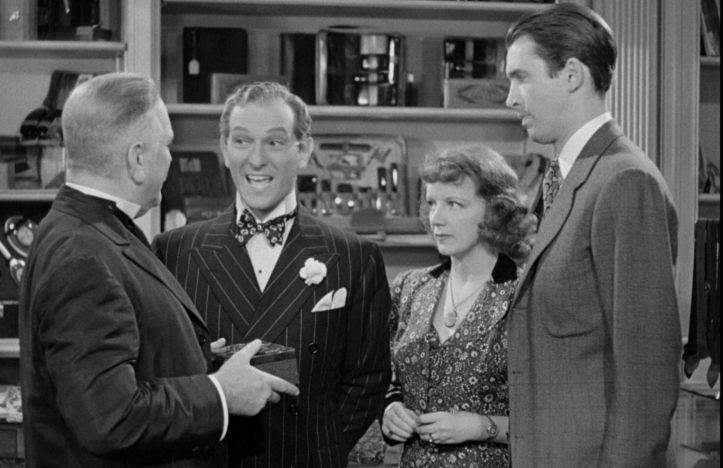
The Shop Around the Corner (1940)
Although It’s a Wonderful Life has come to define both Christmas classics and James Stewart’s onscreen persona, it wasn’t the iconic actor’s first foray into that holiday. Six years prior, a younger, leaner and quite dapper Jimmy played the top salesman in a Budapest department store (why a store in Hungary was populated by English-speaking employees and clients is something I have not yet worked out) who must co-exist with a jealous employer, a snaky rival, a forsaken cigarette box and a young woman recently hired with whom he keeps locking horns.
His only escape from the daily grind is in corresponding with a lady friend he never met yet fell in love with and hopes to propose to on Christmas. What is he to do when realizing that friend and foe are one and the same? Contrary to the late 90s remake with Meg Ryan and Sheriff Woody (renamed You’ve Got Mail), this one is lively (aside from the suicide attempt…), briskly paced, and an absolute joy to watch from start to finish. It also happens to help display the toll taken on a person by five years of war, considering that a year after this film Stewart enlisted to fight in WWII, where he flew 20 missions in B24 bombers then came back to movies looking like a completely different man.
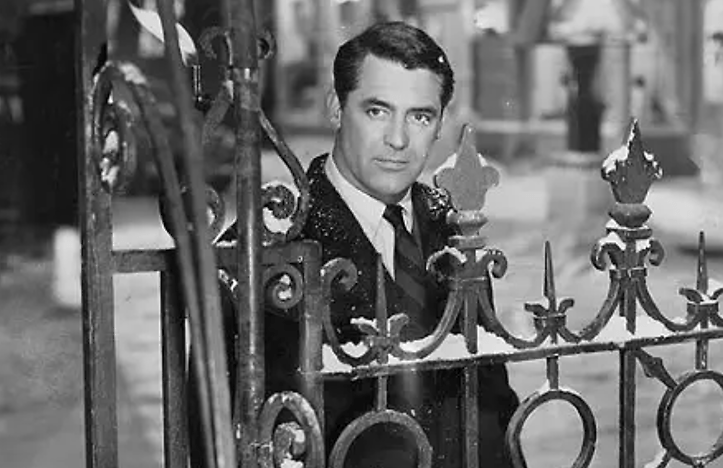
The Bishop’s Wife (1947)
Cary Grant almost missed out on what became the most praised role of his career, that of a besuited angel who offers guidance to a church leader but becomes a little too friendly with the man’s desperate housewife. Legend has it that when original director Bill Seiter left mid-production, his replacement Henry Koster quickly surmised that Grant and co-star David Niven had been mismatched in their respective roles. Koster lobbied to have them switch, and they did so — though with much apprehension.
Yet the result speaks for itself. The change made into a timeless classic what might have been just another entry in either actor’s filmography. Again, this was remade in the ’90s, with Denzel Washington and Whitney Houston, and again the copy pales in comparison. Seriously, if the ice skating scene doesn’t make you smile and fill your heart with the joys of a winter wonderland, then you’re just a mean one, Mr. Grinch.
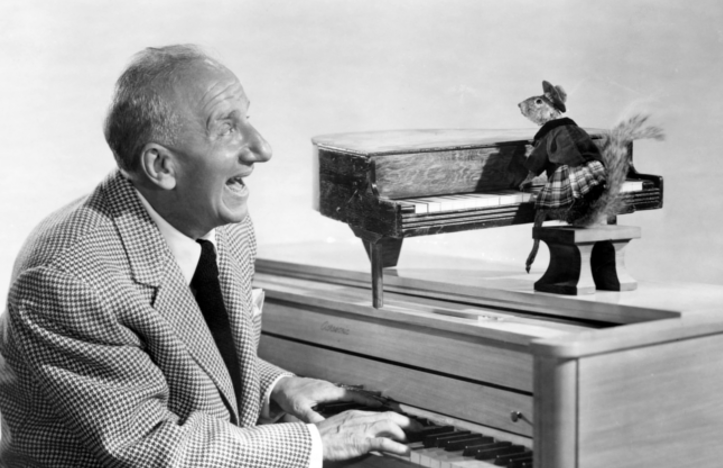
The Great Rupert (1950)
Rodents were all the rage in the 1940s, with the Mouse at Disney, the Bunny at Warner, and a vermin named Hitler in Germany. So by the end of that decade, powerhouse director-producer George Pal entered the fray with a squirrel — and a stop-motion one too. The titular nut cracker, once part of a vaudeville act, sees his human partner fall on hard times and abandon him in town. The little guy makes his way back to his owner’s old haunt and starts meddling, consciously or not, into the affairs of the current tenants, so that the terrible no-good Xmas they’re having turns much more jolly.
It makes for the perfect family viewing in that kids and their grown-ups will all find a great big fill of fun, and if anything, it’s a perfect excuse (not that any is ever needed) to enjoy a performance by the irresistible Jimmy Durante. Just be warned, you won’t believe how amazing the squirrel animation is for a movie released in 1950.
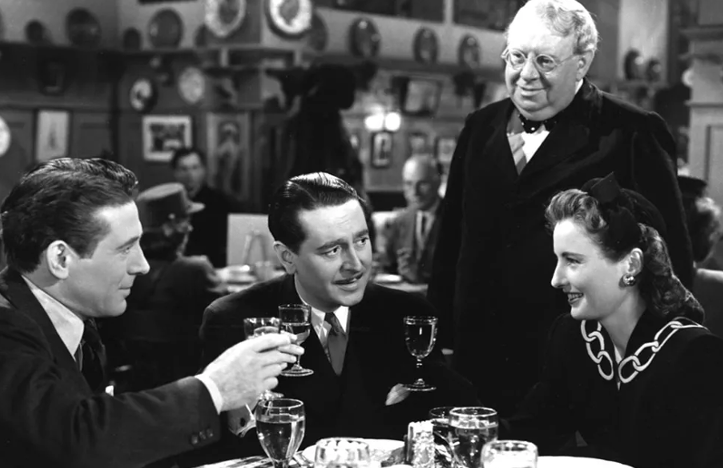
Christmas in Connecticut (1945)
Please keep in mind that, like my joints and knees, this film is the product of many many many years ago, quite a different time in our world with different values as well. On the other hand, anything with Barbara Stanwyck gets a free pass with me. That being said, Barb stars as magazine writer Elizabeth Lane (no relation to Lois) who made a name for herself as an amazing cook, farm wife, and mother of the year. Problem is it’s all baloney: She couldn’t make a salad to save her life, and she’s a single New Yorker who gets her recipes from a friend.
So when her publisher pushes her into cooking a Christmas dinner on HER farm for a returning war hero who’s a big fan, to make a great feature for the mag, she has to make the tough choice of marrying a farmer to keep up the charade, what hijinks may come. As I said, different times. But as dated as the views on women are, it remains a wonderful holidays screwball comedy, and it has femme fatale Barbara Friggin Stanwyck in a very funny role. Once more, got a remake in the ’90s, happens to be absolutely worse than year-old dried fruit cake, and makes a great case for why director Arnold Schwarzenegger will never “be back” behind the camera again. Follow Stanwyck if you want to laugh.
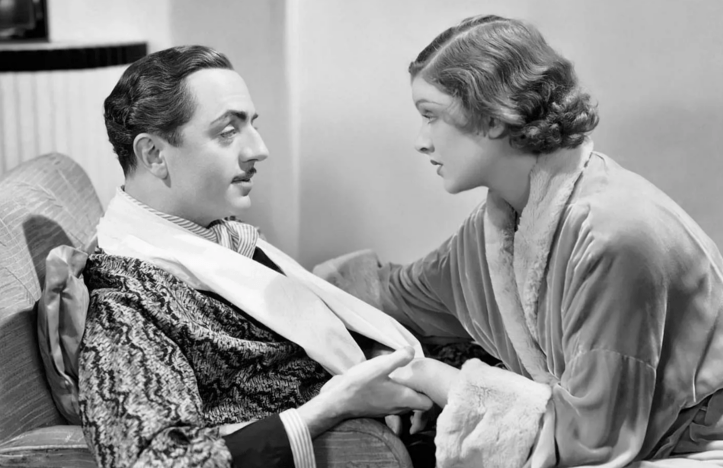
The Thin Man (1934)
“Next person who says ‘Merry Christmas’ to me, I’ll kill ’em.” You do not wanna jingle on the wrong side of wealthy socialite Norah Charles, unless you’re her new husband, former private detective Nick Charles, and you’re not. Because the gentleman has quite the pedigree of being portrayed by the immensely charismatic (and handsome, let’s be frank) William Powell, and created by crime-story royalty Dashiell Hammett. The author made the Charles’ book series uncommonly light and comedic compared to his usual hard-boiled tone, and that choice transitioned flawlessly to celluloid.
The story sees the pair investigate the disappearance of a former client of Nick’s during a Christmas trip to New York, mostly for the fun of it, while merrily drinking and bantering. Here Powell gives the repartee to Myrna Loy, partner with whom he shared such palpable chemistry onscreen that the duo was cast together again in various projects a whopping 14 times. And as enjoyable as all the Nick & Norah movies are (much like the Pink Panther series, those movies kept the appellation of Thin Man even though the titular character only appeared in the original), the original entry in 1934 remains the finest. Also a must-see for any film buff notwithstanding the time of year.
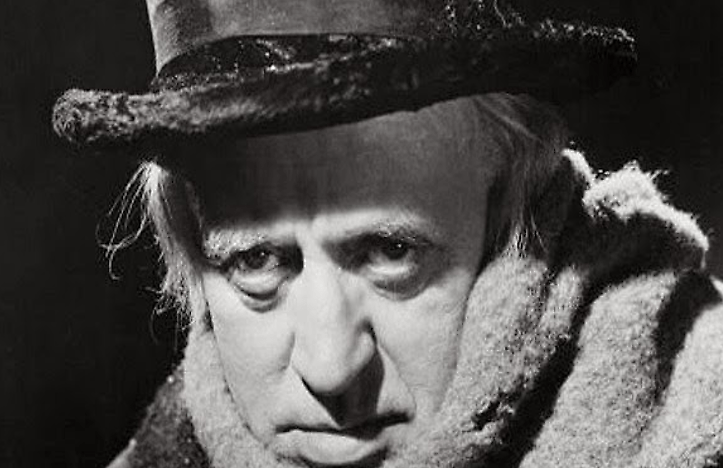
Scrooge (1951)
I do see the irony of advocating to watch something different but then recommending the most-often adapted of Charles Dickens’ stories. However in this case, the adaptation is arguably the best, certainly my personal favorite, and the lead performance by Alistair Sim would become the one every subsequent Scrooge characterization would be compared to.
So definitive was Sim’s work in fact that he was invited to reprise the role for an animated version in 1971, that one being the only adaptation of the story to win an Oscar. It simply never feels dated, compared to most others take on A Christmas Carol. Sometimes you empathize with Scrooge, sometimes you just hate him, but rarely can you be made to actually feel one way than change your mind completely about him in the same film as you do here. A staple of holiday television from the 1950s to 1970s, it rarely gets showcased anymore, and that’s a damn humbug.
 Mutant Reviewers