When a movie was a big hit back in the day, a cheesy, quick, and poor-quality novelization was sure to follow. In this series, we’ll look at the tie-in books that were churned out in weeks based on the scripts and the author’s own demented mind.
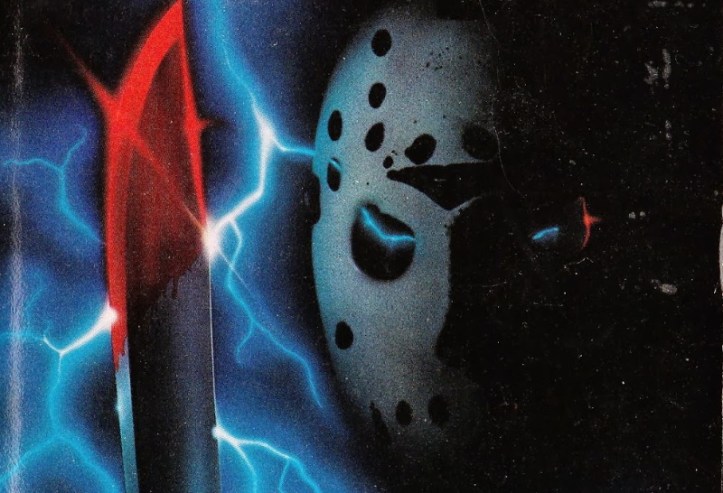
Jason Lives: Friday the 13th Part VI
Novelization by Simon Hawke, based on the screenplay by Tom McLoughlin. Signet 1986, 191 pages.
The first thing that came to mind while reading this book was “bad fan fiction”. Then, “above average fanfic.” Then, “ugh.” I read this first because the idea of putting a slasher horror film to page fascinated me. Slashers are full of surprise cuts that make the audience jump, but it’s pretty hard to surprise someone who’s reading at their own pace. Besides, it’s not like Jason is that complex of a movie villain; he just shows up and sort of stabs everything without saying a word.
As a novel, Jason Lives teeters between long paragraphs full of macabre descriptions and the most basic of characterization and dialogue. Simon Hawke is obviously in love with his descriptors, throwing a clumsy metaphor at you every other sentence. Unfortunately, he couldn’t care less about his principle characters, giving them very little backstory and only one or two defining characteristics apiece (Tommy Jarvis is obsessed and determined; Megan is cute and stubborn; the sheriff is dense and stubborn).
To flesh out 191 pages that contains about 18 pages of actual story, there are lengthy stretches where Hawke tries to dive into Jason’s mind, trying — and failing — to give depth to a being that just kills over and over again. What else? There are some lovely sections of prose about Jason’s decaying body and how it knits back together; some rather disturbing incestual references between the sheriff and his daughter; surprisingly shy sex passages (enjoy the words “pelvis” and “crotch”, cause you get them almost exclusively); and at least three comparisons between characters and — why not? — Sylvester Stallone. It’s a quick read that lacks any real fun or rising tension.
A notable difference from the movie is the epilogue that features Jason’s father, the elusive Mr. Voorhees, who comes to visit his wife and son’s grave at the local cemetery.
Notable Lines:
- As much as he hated to correct John Lennon, the world was beat or be beaten, eat or be eaten.
- [The rabbit] was paralyzed with fear for a split second, then smashed flat, its body bursting like a paper bag full of raw hamburger.
- The feral eyes, uneaten by the teeming swarm of writhing maggots, as if the worms somehow knew something no one else could know…
- “Why? Because I’ve seen enough horror movies to know masked weirdos are never friendly,” Lizabeth said.
- Feeling a little guilty, Dad? She knew he wasn’t really thinking anything improper, but he was a man and he couldn’t help but notice it when she forcibly reminded him that she had grown into a woman.
- She had long legs and her jeans were so tight they looked painted on to her firm flesh.
- Little Nancy stood before her, dressed in her pajamas and holding the red-stained machete out toward her. Red droplets fell from the blade onto the floor.
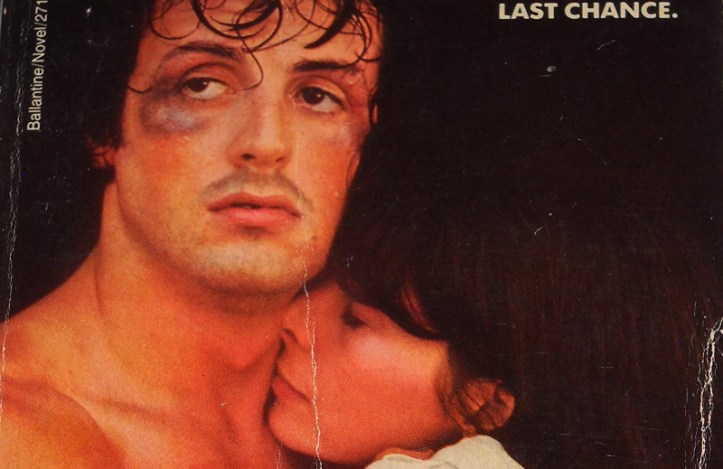
Rocky
Novelization by Julia Sorel, based on the screenplay by Sylvester Stallone. Ballantine 1976, 118 pages.
Before the mid-eighties, when the video rental market allowed people to check out their favorite films at their convenience, your only chance of reliving a great theater experience was either to hope for a TV-edited broadcast or to grab the film novelization. Thus, there was a much bigger demand for these buggers, and even smaller or more niche titles could find themselves transferred to paperback (versus today, as only the really big blockbusters are given novelization treatment).
Rocky, the book, shows how far the process of novelizations have evolved. Clocking in at a lightweight 100-plus pages, it makes for a lightning-quick read, despite the lengthy paragraphs that possibly never ended, even after I finished reading them. While I’ve never seen the movie — I know, I hang my head in shame — I wasn’t expecting much out of a thin booklet about boxing. And as if you couldn’t see it coming, I ended up enjoying this read far, far more than I anticipated.
Not to say it isn’t perfect. I find it a bit odd that Rocky was adapted by a woman considering its subject matter, but hey, equal opportunity and all that. Sorel’s biggest weakness lies in dialogue; against the better wishes of most creative writing teachers, she uses local dialogue spelling frequently, which gives it a slightly hokey feel (for example, she has Rocky say “K.O.” as “kayo”). To make the problem worse, no one speaks without being interrupted every other line by actions, details, and generous adverbs. So someone starts talking, then Sorel describes what they’re thinking, or interprets their feelings, or points out a dog moseying across the street, and then takes her sweet time getting back to the conversation, which most readers will have forgotten about. The romantic bits also communicate a “I’ve never been kissed before, but I’ve read about it in TigerBeat, and wrote about it in my diary a lot” quality.
Yet in the end, this liver-spotted book — with the pages turned that unattractive brittle yellow — came to life during any action scene. The final ten pages or so had me seriously reading, not just dutifully observing the words. The bout between Rocky and Apollo Creed gets an accurate, brutal reporting, as the author thrusts us right into the ring. I really loved that. The back of the book promises that “this will have you laughing, crying, and cheering out loud!” Although I did not do any of those things — my dog would not have approved — the spectacular finish and the brevity of the entire novel made for a satisfying experience.
Notable Lines:
- His head was buzzing the flight of the bumblebee, and his body felt as if it had been reshaped with a meat mallet.
- …a kind of shoulder-to-shoulder shantytown where the poor lived and died like link sausages chopped from the mainstream of other link sausages.
- He boomed, “Nobody speaks for me! My voice is the voice of brightness. My thought is the thought of rightness!”
- His body quivered as he downed the raw eggs in one swill.
- Suddenly he was surrounded and led into the freezer area, like a ship trapped in ice being rescued by a troupe of penguins.
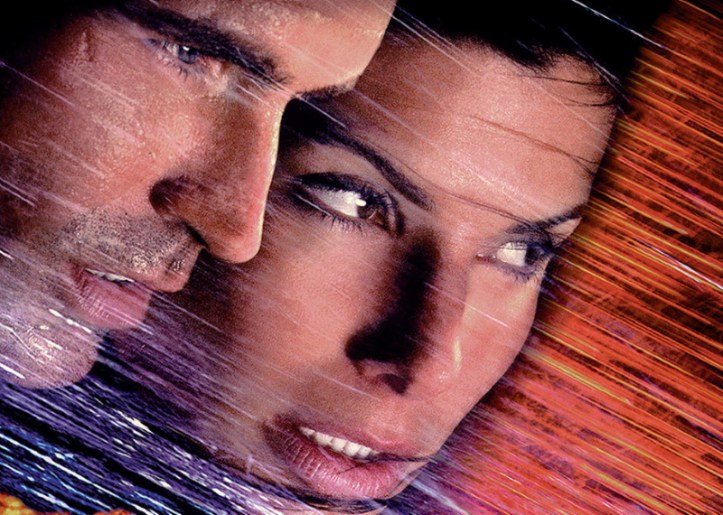
Speed 2: Cruise Control
Novelization by George Ryan, based on the screenplay by Randall McCormick and Jeff Nathanson. Harper 1997, 250 pages.
I had fun with this one. Oh boy, did I ever.
When I first saw Speed 2 sitting on the book shelves, a sort of instant literary orgasm washed over me. Speed 2! In book form! It honestly boggles the mind. I took this so-called “book” down with me to Mexico, and I enjoyed tormenting my friends on the trip with me. I’d be reading, cackling to myself, underlining passages, and inevitably one of them would ask,
“What are you reading?”
Right then, I would wield the cover at them, my voice booming “SPEED 2! THE NOVEL!” My hands shook as the sheer power of crap flowed through them, the thunder in the distance drowning out their screams as their eyes melted like that Nazi in Raiders of the Lost Ark. Then, to make their misery complete, I would read selected passages out of the novel (some of my favorite lines are below). I toted this book around for a few days, reading out loud to anyone I could find, until suddenly I found myself awakening from unconsciousness in the middle of the Mexican desert, a scorpion on my nose.
Do I even have to tell you this is a bad book? Worse than bad, it’s just boring. The story’s not the fault of the writer — Speed 2 was such a tepid movie, especially compared with the first — but it’s such a hack job that I’m surprised it wasn’t written by six teenage geeks from Usenet on a Saturday afternoon.
Notable Lines:
- “For my birthday two years ago, he bought me pepper spray. I thought it was perfume — and ended up in the emergency room.”
- Her dreams of Alex as a smiling cop with a ten-speed bicycle were dashed on the cruel rocks of today’s reality.
- “We’re on the red-eye,” he answered. “Just like my eyes will be if you say no. Red. From crying, Annie.”
- “You’re just a kindergarten teacher gone wrong,” she said.
- But as far as he was concerned, the dude still had things to learn from the LAPD. And he was the one who would teach him.
- Not even Houdini had tried all this! Hell, not even Annie’s previous cop boyfriend, whatever his name was…
 Mutant Reviewers