 Welcome, dear readers, to my return to the Great Voice Actors article. Since it’s been a while I’ll take this time to let any new readers, or veterans who forgot, know that this series is devoted to voice actors and their voice roles, specifically in animation. I can’t very well list a voice actor’s entire filmography of live-action, commercial, and radio gigs and generally don’t even try unless the actor in question only did one or two animated roles. A notable exception is made from time to time, but the purpose here is to highlight what has long been an underrated talent.
I sincerely apologize for letting this series take a backseat for so long, but I hope that today’s Transformers-themed GVA can make up for it just a bit.
At the very least, it’ll get Kaleb off my back.
Past: Chris Latta
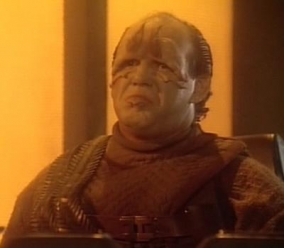
Much like my last true-to-form GVA spotlight, today I’m highlighting a great talent taken from us too soon, but not before imprinting fans of voice acting with his distinct take on some of their favorite characters and character types. Phil Hartman embodied smarmy, morally ambiguous characters, as Chris Latta defined whiny, ambitious villains who sound like a castrated Rod Stewart.
Born Christopher Latta in New Jersey, 1949, his name was later legally changed to Christopher Collins when his stepfather adopted him. Once he joined the Screen Actors Guild he adopted the last name Latta again to avoid confusion with another actor signed up under Christopher Collins. Most of his voice work credited him as “Latta”, while his live roles were all as “Collins”, at least from what I can tell by looking at his IMDB profile, leaving me to wonder how this was supposed to avoid confusion. I know that it’s been common in the past for voice actors to use different names in different voice projects to avoid trouble with the union, but would that apply to taking live roles? If anyone knows, feel free to leave me a comment.
Collins/Latta/Collins (or CLC, if you will) got his voice acting debut in 1979 in the English dub of Star Blazers (Space Battleship Yamato) as Sergeant Knox and Comet Empire General Dire. A few years later, in 1983, Latta originated the voice of one of his most famous characters, Cobra Commander (as well as Breaker and Steeler), for the five-part miniseries GI Joe: A Real American Hero. As the mini-series became more popular and eventually spawned more miniseries, movies, and a TV show that I think a couple of you saw, CLC ended up voicing Gung-Ho and Ripper as well.
A couple of years after the second GI: Joe mini-series aired, the InHumanoids was launched and CLC took on the roles of D’Compose, Granhue and Tendril. In this same year he got his other most notable voice role as Starscream in The Transformers. He also voiced Wheeljack and Sparkplug Witwicky, among others, but it’s his portrayal of the intelligent and treacherous Starscream that most fans remember and future voice actors try to emulate (except in the live-action movie, which was apparently too high-brow for such a high-pitched voice).
Yes, that was sarcasm.
Toward the end of his career he was the first to voice two more iconic characters: Mr. Burns and Moe Syszlak of The Simpsons. He only voiced them for a few episodes before Harry Shearer and Hank Azaria took the parts over, the former making the voice his own and the latter mimicking the original perfectly (and, from what I’ve read, dubbing over CLC’s original performance).
Sadly, Christopher Collins passed away in 1994 of what official reports say was a cerebral hemorrhage following a long illness. Many of his former friends and co-workers have since made cryptic comments in interviews and the Transformers: The Movie DVD commentary that have lead fans to believe that his untimely passing was drug-related.
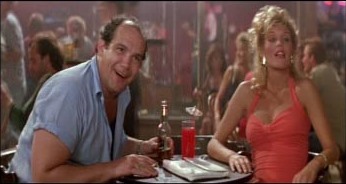
Whatever the case may be, a great talent was lost but at least we’ll have his body of work, and that priceless scene in Roadhouse, to remember him by. What, you didn’t know about that?
His Other Voice Roles You Should Know (and knowing is half the battle…)
- The Sandman (Spider-Man and His Amazing Friends)
- Darkstorm, Cravex (Visionaries: Knights of the Magical Light)
- Big Boss, Coyote, Sparky (Rover Dangerfield)
Past: Frank Welker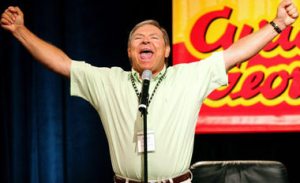
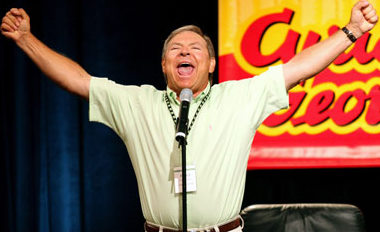
“I hate trying to do justice to brilliant people.” This is something I recently said while discussing this article, and it’s been absolutely true throughout the GVA series. In fact, it’s part of the reason that it took so long for me to do another one of these. Frank Welker downright intimidates me when it comes time to tell other people about how amazing he is, especially when trying to honor him properly in a silly article written by someone who watches crap like Hercules In New York. It doesn’t help when the man has a filmography so long that listing it is used as an interrogation tactic in some countries.
Be that as it may, people like Frank Welker deserved to be talked about and that’s what I’m here to do:
*ahem* Frank Welker has been in everything, ever. Good night!
What? Alright, fine. Mr. Welker began a stand-up career in the ’60s (in fact, most male VAs I read about, including Latta up there, were also comedians) and had already amassed some impressive collaborations and a couple of live-action roles when he took on his first and longest-running gig as Freddy Jones in Where Are You, Scooby Doo! For forty-three years he has been the only voice of the character, with only A Pup Named Scooby Doo and one video game as exception.
Four years after taking on this iconic role he joined the 1973 Super Friends TV series as Marvin, Wonder Dog, and Android Wonder Dog. Later versions of the show saw him as Darkseid, Kalibak and Mr. Mxyzptlk.
A billion other roles later, he joined the G.I. Joes in A Real American hero as Rock ‘n’ Roll, Short-Fuse, Timber and Wild Bill. Frank being Frank, those weren’t the only Joes he ever voiced, but this ain’t yer fancy IMDB and I still have a few more prolific roles to talk about.
One of my favorite characters that Frank has voiced is the sinister, growling Dr. Claw (and Brain and M.A.D. Cat!) from Inspector Gadget. Pretty much everything I’ve read credits him differently for the role, saying he only voiced Season 1; didn’t voice all of Season 1; voiced Seasons 1 and 2… The only thing I’m sure about is that there were a few episodes he wasn’t available for and Don Franks (father of Cree Summer, the voice of Penny) took over as Claw. If you’d like to hear the difference in the two check out the audio on the Behind The Voice Actors website.
Transformers fans: have you noticed how in some episodes (and the Bay Tragedies) Soundwave lost that robot-like quality to his voice and sounded exactly like Dr. Claw? (Just say yes so I can make the segue. Great, thanks.) You have? Well that’s because Frank Welker used the same voice for both characters. A vocoder is used to get that metallic effect, and some episodes mistakenly left it out. You hear that, Director Who Shall Not Be Named? It was a mistake, as in something that shouldn’t happen.
Speaking of things that shouldn’t happen, he didn’t get to continue voicing Megatron for the live-action movies but, although Hugo Weaving wasn’t bad, he was brought back on for the role in the video games based on the movies. More Transformers voices: Skywarp and the vast majority of original Decepticons; Autobots Mirage, Trailbreaker, Chromedome and Sludge; and, post 1986-movie, Wheelie and Galvatron (a role he took over from Leonard Nimoy). It was pretty much Frank Welker Speaks In Funny Voices: The Show!
Mr. Welker is considered a voice god for his ability to create the sounds made by non-speaking, and even non-living things. Kath Soucie said of him “He can create every sound that you might hear in a jungle: the drip of the raindrops, the wind rustling in the trees, and all of the inhabitants that you might encounter there.” And boy, she wasn’t kidding. His list of sound effect credits alone are enough to keep one busy for an afternoon. This talent, coupled with his speaking roles, have propelled him into the position of all-time top star at the box office. No, not among other VAs; of all time, as in he’s number one and Samuel L. Jackson is second on a list dominated almost entirely by household names. The sheer amount of talent this man has at using his voice to imitate and create is incredible.
His Other Voice Roles You Should Know (and knowing is half the battle…)
- Bronx, Cagney and others (Gargoyles)
- Santa’s Little Helper (The Simpsons)
- Dr. Viper, Dr. Elrod Purvis, Al (Swat Kats: The Radical Squadron)
- Abu (Aladdin)
- Nibbles (Futurama)
- Dr. Ray Stantz (The Real Ghostbusters) Thanks to reader Sitting Duck for pointing that out
For putting up with my rambling for so long, here’s a fun video of Frank doing animal sounds, Scooby Doo, and talking like Freddy (which is basically his normal voice). Thanks for sticking with me through my fangirling!
 Mutant Reviewers
Welker was also Ray Stantz in The Real Ghostbusters.
Regarding the whole pseudonym issue as regards voice actors, this was the subject of a rant in the January ’04 edition of the now defunct Dub Track column at Anime News Network. Before reading it, I had always thought that the use of pseudonyms was a polite fiction where, as long as you didn’t use your SAG name, the union bosses would let it slide. But apparently they are ignorant and these voice actors live in fear of being visited late at night by burly SAG representatives who ask if they like their kneecaps.
BTW if you’re interested in trying out the series mentioned in the column, it should be noted that the first two episodes of Last Exile are terrible, but it vastly improves afterwards.
Ah! I can’t believe I forgot to add in Ray! Throughout the article I kept reminding myself to mention that role, since The Real Ghostbusters was one of my favorite shows as a kid. I felt it was getting a bit long there towards the Inspector Gadget paragraph and it must have been at that point that I really focused on saying what I wanted to about Dr.Claw/Soundwave and ending the article. I tacked his role as Ray on in the “Other voice roles section” and gave you credit for pointing it out.
That’s a very interesting article you pointed out. I find the whole listing-the actors-but-not-their-character(s) thing very strange. I really don’t know much about how union rules work, but it sounds as if it’s difficult to get a straight answer from anyone on it. At the voice actors panel I attend during MAG I just kept hearing the word “union” over and over and over when anyone talked about getting into voice acting, and since then I’ve been meaning to find more information on the topic.